Published: October 26, 2023
For producers seeking reliable, high-purity food-grade calcite powder, selecting the appropriate milling technology is paramount. This article explores the application of Raymond Mill technology, specifically from LIMING HEAVY INDUSTRY, in processing calcite to meet stringent food safety and quality standards. We will examine the operational principles, key features for food-grade compliance, and how this established grinding solution ensures consistent fineness, product integrity, and efficient production for the food and pharmaceutical industries.
Calcite, a naturally occurring form of calcium carbonate (CaCO3), is a vital additive in numerous food products, serving as a calcium fortifier, acidity regulator, whitening agent, and stabilizer. Its use in items like baked goods, dairy alternatives, beverages, and nutritional supplements demands powder of exceptional purity, controlled particle size distribution, and freedom from metallic contamination. Processing equipment must, therefore, not only achieve precise fineness but also be constructed and operated to prevent any introduction of impurities during grinding.
LIMING HEAVY INDUSTRY's Raymond Mill presents a proven solution for this demanding application. With a legacy dating back to 1987 and a steadfast commitment to scientific R&D and precision manufacturing, the company has refined this grinding technology to meet modern industrial challenges. The mill's design is inherently suitable for non-metallic minerals like calcite, operating on the principle of grinding via rollers and rings. The system is a closed-circuit airflow design, where material is fed into the grinding chamber, pulverized between the grinding rollers and the ring, and then carried by the airflow to the classifier. Oversized particles are rejected back for regrinding, while fine powder meeting the size specification passes through to be collected by a cyclone and bag filter. This closed-loop operation is crucial for minimizing dust emission and protecting product quality.
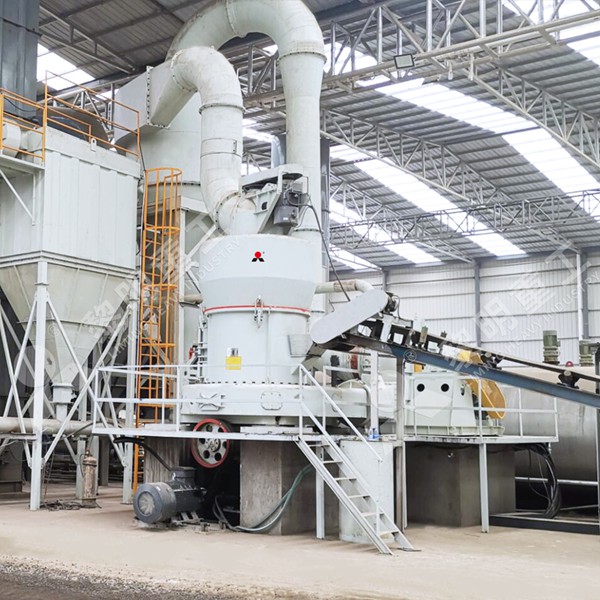
For food-grade processing, several specific attributes of the Raymond Mill are critical. First is material contact integrity. Critical wear parts like grinding rollers and rings can be lined with specialized, food-compatible materials or high-chromium alloys that resist abrasion and minimize the risk of metallic shedding. The mill's internal surfaces are designed for smoothness and easy cleanability. Secondly, the integrated pulse dust collector is not merely an environmental add-on; it is an essential component for product recovery and ensuring a clean, contained production environment that meets Good Manufacturing Practice (GMP) guidelines. The system's ability to process materials with moisture content below 6% is also advantageous, as it helps maintain powder stability and prevents microbial growth.
The fineness control is a standout feature. The Raymond Mill can produce calcite powder in a range from approximately 44μm to 613μm (corresponding to about 325 to 30 mesh). This adjustability allows producers to tailor the powder's properties—such as its rate of dissolution, mouthfeel, or visual appeal—to specific end-use applications. The consistent particle size distribution achieved through the mechanical classification system ensures batch-to-batch uniformity, a non-negotiable requirement for food ingredient suppliers.
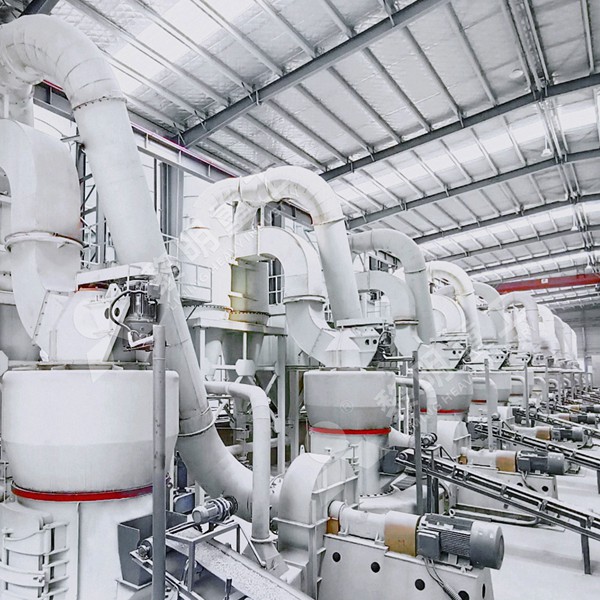
Operational efficiency and reliability are further hallmarks. The Raymond Mill system, which includes the mill, classifier, fan, and dust collector, is designed for continuous, stable operation with relatively low energy consumption per ton of output. Its robust construction, backed by LIMING's modern manufacturing facilities spanning over 80,000 square meters, translates to high availability and lower long-term maintenance costs. The company's focus on "technological progress and technological improvement" means that while the core principle remains timeless, advancements in bearing technology, lubrication systems, and automated control have been integrated to enhance performance and ease of operation.
When compared to other fine grinding options like ball mills or vertical roller mills for this specific application, the Raymond Mill often offers a compelling balance of capital cost, operational simplicity, and product quality for the target fineness range. While ultra-fine grinding mills like the MW Micro Powder Mill are ideal for sub-5μm products, the Raymond Mill efficiently covers the coarse to medium-fine spectrum most commonly required for direct food additive use. Its dedicated design for non-flammable, non-explosive materials like calcite makes it a specialized and optimized choice.
In conclusion, for the production of food-grade calcite powder, the Raymond Mill from LIMING HEAVY INDUSTRY stands as a robust, reliable, and precisely controllable grinding solution. Its closed-circuit design, focus on material integrity, adjustable fineness, and efficient operation align perfectly with the stringent hygiene, quality, and consistency demands of the food industry. By leveraging this mature yet continually refined technology, producers can confidently supply high-purity calcite that meets both regulatory standards and end-product performance expectations.
Frequently Asked Questions (FAQ)
1. What is the typical moisture content requirement for calcite fed into a Raymond Mill for food-grade powder?
The Raymond Mill is best suited for grinding materials with a moisture content generally below 6%. For food-grade calcite, it is recommended to feed dry or pre-dried material to ensure optimal grinding efficiency, prevent clogging, and maintain the powder's stability and shelf life.
2. How is metallic contamination prevented during the grinding process?
Prevention strategies include using wear parts made from high-chromium alloy or other food-grade compatible hardened materials that resist abrasion. Additionally, the grinding chamber can be designed with smooth, non-porous surfaces, and magnetic separators are often installed in the feeding system to remove any incidental ferrous particles before milling.
3. Can the fineness of the calcite powder be adjusted during operation?
Yes, one of the key advantages of the Raymond Mill is the adjustable fineness. This is primarily achieved by regulating the speed of the built-in classifier. Increasing the classifier speed allows only finer particles to pass, resulting in a finer product, and vice-versa, allowing for real-time adjustment within the mill's operational range.
4. What auxiliary equipment is essential for a complete food-grade calcite grinding line?
A complete line typically includes a jaw crusher for primary size reduction, a vibrating feeder, the Raymond Mill itself, a pulse jet baghouse dust collector (critical for product recovery and clean air), a screw conveyor or bucket elevator for material transfer, and an electrical control cabinet. Pre-drying equipment may be necessary if the raw calcite is damp.
5. How does the closed-circuit system contribute to food-grade production?
The closed-circuit airflow system minimizes the release of fine powder into the workshop environment, supporting GMP conditions. It also ensures high collection efficiency, as the cyclone and bag filter capture nearly all produced powder. This containment protects worker safety, reduces product loss, and prevents cross-contamination.


