Published: October 26, 2023
The production of high-quality PVC pipes relies heavily on the consistent supply of finely ground, high-purity calcite powder, which acts as a crucial filler and modifier. Selecting the optimal grinding system is paramount for achieving the desired particle size distribution, whiteness, and chemical stability that directly influence the mechanical properties, surface finish, and cost-effectiveness of the final PVC product. For decades, the Raymond mill system has stood as a proven and reliable technology for this specific application. This article explores the integral role of calcite in PVC pipe manufacturing, delves into the operational principles and advantages of modern Raymond grinding systems, and examines how Liming Heavy Industry's engineered solutions are tailored to meet the stringent demands of this industry, ensuring efficiency, consistency, and environmental compliance.
Calcite, or ground calcium carbonate (GCC), is more than just an inert filler in PVC pipe formulations. Its incorporation significantly enhances key properties: it improves impact strength and stiffness, increases dimensional stability under heat, provides excellent weathering resistance, and contributes to a bright, white appearance. Most critically, it reduces raw material costs without sacrificing performance. However, these benefits are only fully realized when the calcite powder possesses a consistent and controlled fineness (typically within a specific micron range), low moisture content, and high purity. Any deviation can lead to processing issues like poor dispersion, surface defects in the extruded pipe, or compromised mechanical integrity. This is where precision grinding technology becomes indispensable.
The Raymond mill, a cornerstone of industrial milling for over a century, has evolved significantly. At its core, the system operates on the principle of grinding via spring-loaded rollers against a stationary grinding ring. Material is fed into the grinding chamber, where it is pulverized. The resulting powder is then carried by an upward air stream to an integrated classifier. Oversized particles are rejected and returned for further grinding, while correctly sized fines pass through and are collected by a cyclone or bag filter. This closed-circuit, negative pressure operation minimizes dust emissions. For calcite processing in PVC production, this technology offers distinct advantages: it produces a consistent product with a narrow particle size distribution, handles moderate hardness materials like calcite with high efficiency, and its integrated drying capability is ideal for achieving the necessary low moisture levels (<0.5%).
Liming Heavy Industry Co., Ltd., with over three decades of expertise in manufacturing crushing and grinding equipment, has refined the Raymond mill system to address modern production challenges. Our systems are engineered not as standalone machines but as integrated solutions. A typical configuration for calcite includes a jaw crusher for primary size reduction, a vibrating feeder for consistent material flow, the Raymond mill主机, a high-efficiency turbine classifier for precise particle separation, a pulse-jet baghouse dust collector ensuring workshop cleanliness and product recovery, and an automated electrical control system for stable operation and easy adjustment.
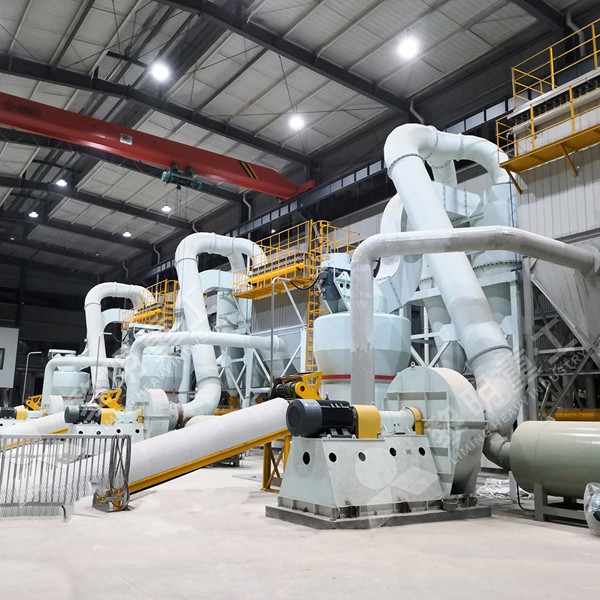
The synergy of these components is critical. The advanced classifier allows operators to fine-tune the fineness between 44μm (325 mesh) and 613μm, enabling producers to tailor the calcite powder for different PVC pipe grades—finer powders for pressure pipes requiring superior surface finish, and slightly coarser grades for drainage pipes. The high-efficiency impeller design of the air blower ensures sufficient airflow with lower energy consumption. Furthermore, the pulse dust collector is not an afterthought but a core component, designed to meet stringent environmental standards, capturing over 99.9% of particulate matter and allowing clean air exhaust, which is a non-negotiable requirement for sustainable manufacturing.
Beyond the traditional Raymond mill, Liming Heavy Industry's research and development focus on "scientific research tackling key problems" has led to the development of next-generation grinding technologies that offer alternatives for specific project scopes. For instance, our MTW European Type Trapezium Mill represents a significant evolution. It incorporates a curved bevel gear integral transmission, an internal efficient multi-layered turbine classifier, and a streamlined air duct system. These innovations result in higher grinding efficiency, larger capacity (suitable for large-scale PVC compound production facilities), and even lower energy consumption per ton of calcite powder produced. For applications demanding ultra-fine calcite fillers (d97 < 10μm) to enhance certain PVC characteristics, our MW Micro Powder Mill, leveraging advanced grinding technology, provides an excellent solution for superfine processing.
Implementing a Liming Raymond grinding system for calcite preparation delivers tangible benefits for PVC pipe manufacturers. Operational reliability translates to uninterrupted supply of filler material to the extrusion lines. Energy efficiency, a key focus in our design philosophy, reduces the overall carbon footprint and operational costs of the pipe production process. The system's robustness ensures low maintenance requirements and long service life, while the precision in particle size control guarantees batch-to-batch consistency, a critical factor for maintaining the quality standards of the final PVC product. In an industry where margins and performance are tightly linked, investing in the right grinding technology is a strategic decision that pays dividends in product quality and plant profitability.
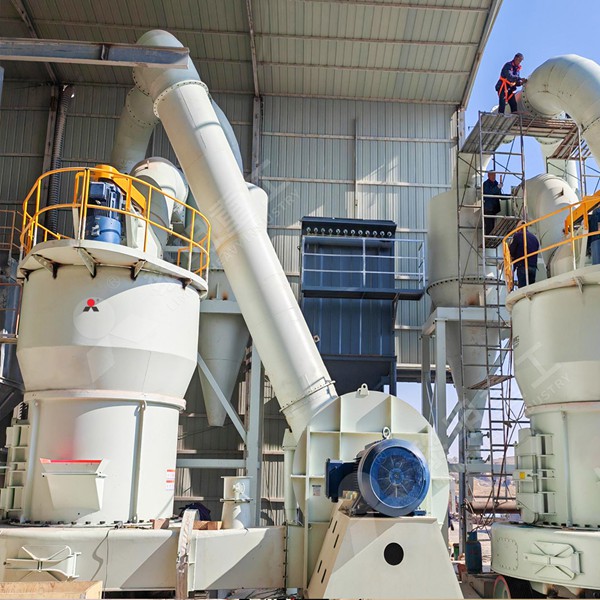
In conclusion, the role of finely ground calcite in PVC pipe production is irreplaceable, and the technology used to produce it must be equally dependable. The modern Raymond grinding system, particularly as engineered and optimized by Liming Heavy Industry, provides a comprehensive, efficient, and clean solution. By integrating precise grinding, classifying, and dedusting into a cohesive system, we empower PVC manufacturers to achieve superior filler quality, enhance their final product's performance, and operate in an environmentally responsible manner. As the industry continues to evolve towards higher efficiency and sustainability, the advanced grinding solutions from Liming Heavy Industry are poised to remain at the forefront, supporting the global infrastructure built on durable, reliable PVC piping.
Frequently Asked Questions (FAQ)
1. What is the typical fineness range achievable for calcite powder using a Raymond mill system in PVC production?
Our Raymond mill systems for calcite are capable of producing powders with a fineness range typically between 44μm (325 mesh) and 613μm. The integrated high-efficiency classifier allows for precise adjustment within this range to meet specific requirements for different PVC pipe grades, such as smoother surfaces for pressure pipes.
2. How does the system handle the moisture content in raw calcite to ensure it meets PVC processing standards?
The Raymond mill system features integrated drying capability. As hot air flows through the grinding chamber during operation, it simultaneously dries the material. This process effectively reduces moisture content to below 0.5%, which is essential for preventing agglomeration and ensuring optimal dispersion and processing in the PVC compound.
3. What are the key environmental features of your grinding system?
The system operates on a closed-circuit, negative pressure principle, minimizing dust leakage. It is equipped with a high-efficiency pulse-jet baghouse dust collector that captures over 99.9% of particulate matter, ensuring emissions comply with national environmental protection standards and maintaining a clean workshop environment.
4. For a new PVC pipe plant, what factors determine the choice between a traditional Raymond mill and your MTW European Type Grinding Mill?
The choice primarily depends on required capacity, desired energy efficiency, and project scale. The MTW European Type Grinding Mill, with its advanced transmission and curved air duct design, offers higher output capacity and lower energy consumption per ton, making it ideal for large-scale, modern production lines focused on total cost of ownership.
5. What kind of after-sales support and service does Liming Heavy Industry provide with the grinding system?
We provide comprehensive support including detailed installation guidance, operational training for customer technicians, readily available spare parts, and remote technical assistance. Our service network aims to ensure maximum uptime and optimal long-term performance of the grinding system.


