Published: October 26, 2023
The pursuit of ultra-fine, high-purity nano calcite powder for advanced material applications demands precision grinding technology capable of delivering consistent particle size distribution, superior surface morphology, and scalable production. Liming Heavy Industry Co., Ltd., leveraging over three decades of expertise in mineral processing equipment, offers advanced Raymond Mill solutions specifically engineered to meet these stringent requirements. Our mills bridge the gap between traditional grinding and the nano-scale frontier, providing a reliable, efficient, and controllable process for producing calcite powders that are integral to composites, polymers, coatings, and high-performance ceramics. This article explores the technical adaptations, operational principles, and material science benefits of utilizing Liming's Raymond Mill technology for advanced nano-calcite production.
Nano-calcite powder, characterized by particles typically under 100 nanometers, imparts significant enhancements to material properties, including increased tensile strength, improved thermal stability, superior optical characteristics, and enhanced barrier performance. Producing such powders consistently and economically is a core challenge for the advanced materials sector. Liming Heavy Industry addresses this challenge through continuous innovation in its Raymond Mill series. While traditional Raymond Mills are renowned for processing materials to fineness levels of 44μm (325 mesh), our engineering focus has been on pushing these boundaries through systemic optimizations in grinding mechanics, air classification, and process control, enabling reliable production into the finer micron and sub-micron ranges suitable for many advanced nano-composite applications.
The core of our solution lies in a refined grinding mechanism. The system utilizes a centralized electronic control system that integrates grinding, drying, powder selection, and conveying into a single, automated workflow. For calcite processing, this ensures minimal contamination and consistent heat management, which is crucial for preserving the mineral's crystalline structure and surface chemistry. The grinding roller assembly, under controlled pressure, grinds the pre-crushed calcite against a stationary ring. The fineness is primarily governed by the integrated high-precision turbine classifier. By precisely controlling the classifier's rotational speed, the system can selectively allow only particles meeting the target size distribution to pass through to the collection cyclone, while coarser particles are recirculated for further grinding. This closed-circuit system is key to achieving the narrow particle size distribution required for nano-material performance.
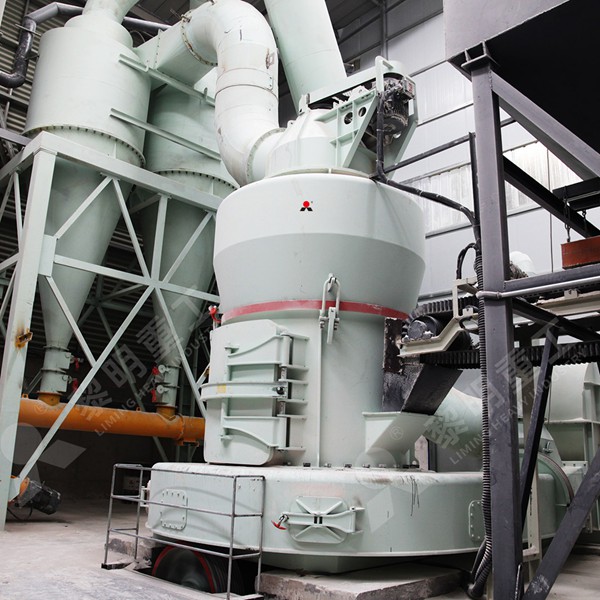
Beyond the grinding chamber, the design philosophy emphasizes overall system stability and environmental compliance. The entire pneumatic conveying path is sealed, and equipped with high-efficiency pulse dust collectors. This not only ensures a clean working environment and meets stringent international emission standards but also maximizes product yield by capturing ultra-fine particles that would otherwise be lost. For moisture-sensitive advanced material grades, the integrated drying function, using hot air introduced into the mill housing, allows for the simultaneous drying and grinding of calcite feedstock, ensuring optimal powder flowability and preventing agglomeration.
Scalability from pilot-scale research to full industrial production is a critical consideration. Liming's Raymond Mill models offer a capacity range suitable for experimental batches through to large-scale continuous output. This scalability allows material scientists and production engineers to develop and refine nano-calcite formulations on a smaller system before seamlessly transitioning to high-tonnage production without compromising on the fundamental powder characteristics. The robust construction and use of wear-resistant materials in contact parts ensure long-term operational stability and consistent product quality, which are non-negotiable in cost-sensitive advanced material supply chains.
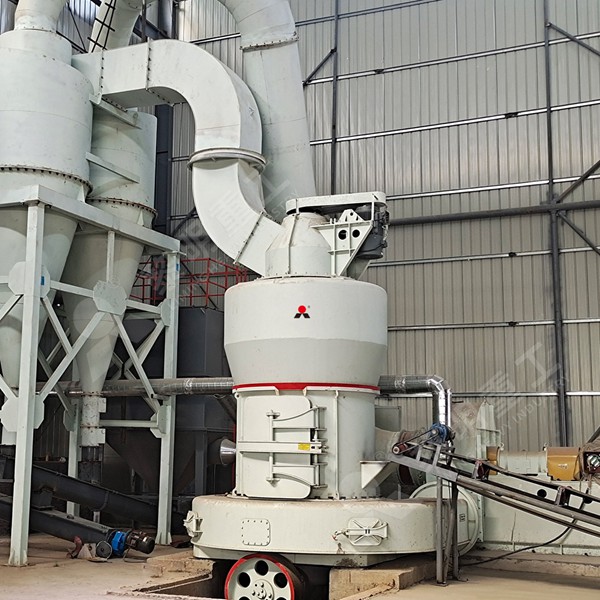
In practice, the application of our Raymond Mill for nano-calcite extends across multiple high-tech industries. In polymer composites, the uniformly dispersed nano-calcite acts as a reinforcing filler, enhancing mechanical properties. In paints and coatings, it improves opacity, durability, and rheology. In biodegradable plastics and advanced ceramics, its functional properties are leveraged to tailor product performance. The reliability and adjustability of our milling systems provide manufacturers with the tool needed to innovate in these dynamic fields.
As a modern joint-stock corporation with integrated research, manufacturing, and sales, Liming Heavy Industry persists in a strategy of scientific R&D aimed at enhancing product competitiveness. Our dedicated team focuses on the technological frontiers of fine and ultra-fine grinding, continually refining our Raymond Mill technology. For partners in the advanced materials sector, this translates to a collaborative relationship with a technology provider committed to evolving alongside the demands of next-generation material science, ensuring that our grinding solutions remain at the forefront of enabling innovation in nano-calcite and beyond.
Frequently Asked Questions (FAQ)
Q1: What is the typical fineness range achievable for calcite powder using Liming's Raymond Mill?
A1: While optimized for high-efficiency grinding, our standard Raymond Mill can produce calcite powder in a fineness range between 44μm (325 mesh) and 613μm. For applications requiring finer particles, our MTW European Type Grinding Mill or MW Micro Powder Mill are recommended, with the latter capable of achieving fineness up to d97 ≤ 5μm.
Q2: How does the system ensure consistent particle size distribution for advanced material applications?
A2: Consistency is achieved through the high-precision, speed-adjustable turbine classifier integrated into the system. It acts as a gatekeeper, allowing only particles within the target size range to exit the grinding cycle. Coarser particles are continuously returned for further grinding, creating a homogeneous final product.
Q3: Can the mill handle calcite feedstock with some moisture content?
A3: Yes. Our Raymond Mill systems can be equipped with integrated hot air drying capabilities. Heated air is introduced into the grinding chamber, allowing simultaneous drying and grinding, which is essential for processing natural calcite and ensuring optimal powder quality.
Q4: What are the key maintenance aspects for grinding abrasive materials like calcite?
A4: The wear parts, primarily the grinding rollers and ring, are manufactured from high-chromium or other wear-resistant alloys to extend service life. Regular inspection of these parts and the lubrication system is recommended. The modular design facilitates easy replacement to minimize downtime.
Q5: Is the system environmentally friendly regarding dust emission?
A5: Absolutely. The grinding and conveying system is a negative-pressure, closed-circuit design. It is equipped with high-efficiency pulse-jet bag dust collectors, which capture over 99.9% of airborne particles, ensuring emissions comply with international environmental protection standards and providing a clean workshop environment.


