Published: October 26, 2023
The ceramic and glass industries rely on precisely processed raw materials to achieve their demanding standards for quality, consistency, and performance. Calcite, a primary form of calcium carbonate, is a critical ingredient in many formulations, influencing properties such as whiteness, opacity, thermal stability, and chemical resistance. Processing this mineral to the exacting fineness and purity required presents a significant technological challenge. Liming Heavy Industry, with over three decades of expertise in manufacturing crushing and grinding equipment, provides a suite of advanced milling solutions specifically engineered to transform raw calcite into high-quality powders for these sophisticated applications. Our vertical roller mills, Raymond mills, European-type trapezium mills, micro powder mills, and ball mills offer a spectrum of capabilities, from high-capacity production to ultra-fine grinding, ensuring manufacturers have the optimal tool to enhance their product quality and production efficiency.
Modern ceramic and glass production is a symphony of material science and precision engineering. At its heart lies the preparation of raw materials, where the particle size distribution, morphology, and chemical purity of powders like calcite directly dictate the final product's characteristics. A poorly ground or inconsistent calcite feed can lead to defects, reduced strength, uneven firing, and compromised aesthetic appeal. Therefore, selecting the right milling technology is not merely a matter of reducing particle size; it is a strategic decision impacting the entire manufacturing value chain. Liming Heavy Industry understands these interdependencies. Our research and development philosophy, centered on continuous technological improvement and innovation, drives us to create grinding systems that deliver more than just powder—they deliver reliability, consistency, and process optimization.
For large-scale production lines in the ceramic and glass sectors requiring high throughput of calcite, the LM Vertical Roller Mill stands as a robust solution. Its integrated design combines drying, grinding, powder selection, and conveying into a single, compact unit. This is particularly advantageous for processing calcite that may contain residual moisture. The mill's efficient grinding mechanism and advanced classifier system ensure a consistent product with controlled fineness, typically suitable for body and glaze compositions. Its capacity range of 10-400 T/H makes it ideal for major raw material processing plants supplying the industry.
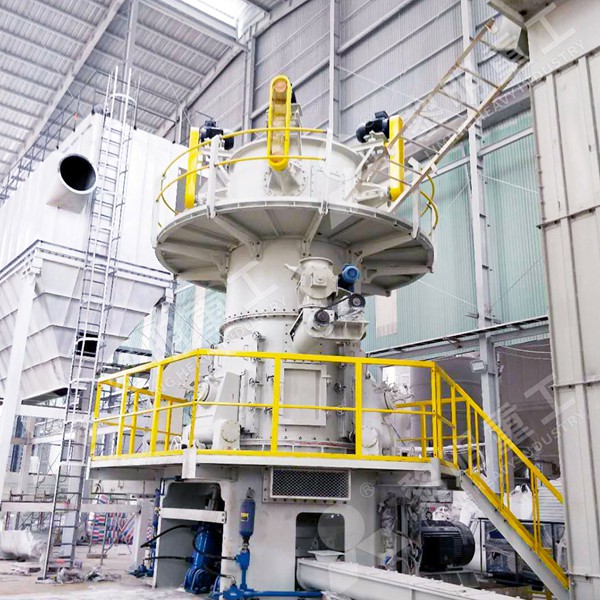
When the application calls for fine to moderately fine calcite powder with proven reliability, the Raymond Mill remains a cornerstone technology. Renowned for its stability and wide applicability, it is perfectly suited for processing non-flammable, non-explosive materials like calcite. It can produce powders with fineness between 44μm and 613μm, covering many standard requirements for filler applications in glass and ceramics. Its straightforward operation and durable construction have made it a trusted choice for decades.
The pursuit of higher efficiency and finer control leads to the MTW European Type Trapezium Mill. As an evolution of traditional pendulum mills, it incorporates patented technological advancements that enhance stability, productivity, and energy efficiency. Its closed-circuit system, featuring a high-efficiency separator and pulse dust collector, is committed to large-scale mineral powder making with minimal environmental impact. For calcite processing, this mill excels at producing uniform powders with excellent particle size distribution, a key factor in ensuring batch-to-batch consistency in sensitive ceramic formulations.
At the frontier of ultra-fine processing is the MW Micro Powder Mill. This technology is critical for applications demanding exceptionally fine calcite powders, where particle sizes can reach down to d97 ≤ 5μm (approximately 2500 mesh and finer). Such ultra-fine calcite acts as a functional filler, improving the mechanical strength, surface finish, and density of advanced ceramics and specialty glass. The MW mill, leveraging advanced grinding mechanics, achieves this superfine spectrum while maintaining low energy consumption and operating within strict environmental standards thanks to its integrated pulse precipitator.
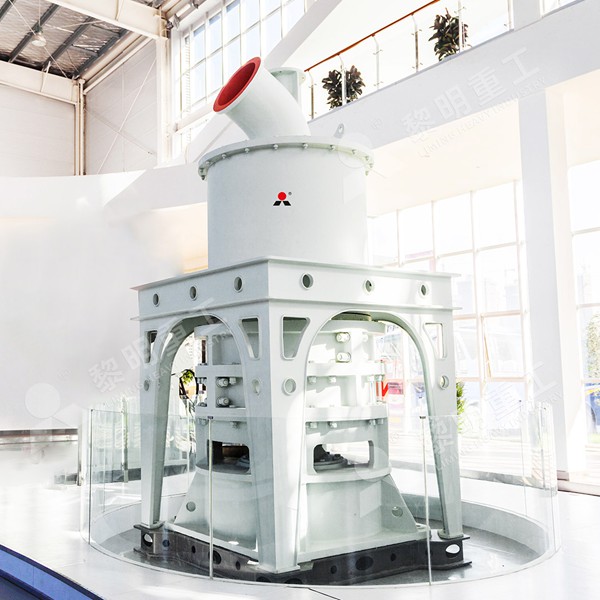
Finally, the versatile Ball Mill offers a time-tested solution for calcite grinding, especially where a certain particle shape or specific surface area is desired. Its ability to grind various materials makes it a flexible asset in plants that process multiple mineral types. In ceramic applications, ball mills are often used for wet or dry grinding of calcite alongside other raw materials like feldspar and quartz, facilitating homogeneous mixing during the size reduction process itself.
Choosing the optimal calcite mill requires a careful analysis of the desired final particle size, required capacity, moisture content of the feed material, and overall plant design. Liming Heavy Industry provides not just equipment, but comprehensive technical support to help clients in the ceramic and glass industry navigate these choices. Our modern manufacturing facilities in Zhengzhou's HI-TECH Industry Development Zone and Shangjie Industry Park, backed by a dedicated scientific research team, ensure that every mill is built to the highest standards of precision and durability. By partnering with us, manufacturers gain more than a machine; they gain a reliable foundation for producing superior raw materials that drive innovation in ceramics and glass.
Frequently Asked Questions (FAQs)
Q1: What is the primary advantage of using a vertical roller mill like the LM series for calcite processing?
A1: The primary advantage is its high efficiency and integrated functionality. It combines drying, grinding, classifying, and conveying in one unit, offering significant energy savings, a compact footprint, and excellent control over product fineness, which is ideal for large-volume processing.
Q2: Can your mills handle calcite with some inherent moisture?
A2: Yes, several of our mills are designed to handle materials with low to moderate moisture. The LM Vertical Roller Mill has integrated drying capabilities, making it particularly suitable. For other mills like the Raymond or MTW series, if the moisture is within the specified limit (typically below 6%), they can process the material effectively.
Q3: Which mill is recommended for producing ultra-fine calcite powder for advanced technical ceramics?
A3: The MW Micro Powder Mill is specifically engineered for superfine powder processing. It can reliably produce calcite powder with fineness up to d97 ≤ 5μm (3250 mesh), which is essential for enhancing the density, strength, and surface properties of high-performance technical ceramics.
Q4: How does the MTW European Type Trapezium Mill improve upon traditional grinding systems?
A4: The MTW mill incorporates technological patents in areas like the grinding roller seal, curved air duct, and internal powder conveying system. These improvements result in higher grinding efficiency, lower energy consumption per ton, more stable operation, and reduced vibration and noise compared to traditional designs.
Q5: Is the particle size distribution adjustable, and how is it controlled?
A5: Yes, the particle size distribution is highly adjustable across our mill range. It is primarily controlled by the speed of the integrated dynamic classifier or separator. By adjusting the classifier speed, operators can precisely target a specific fineness and narrow particle size distribution to meet exact application requirements.


