Published: October 26, 2023
In the competitive landscape of rubber manufacturing, the strategic incorporation of finely ground calcite as a functional filler has emerged as a critical method for enhancing compound properties and optimizing production costs. Achieving the precise particle size distribution, surface morphology, and chemical purity required for effective rubber reinforcement hinges entirely on the selection of advanced, reliable grinding technology. This article explores the pivotal role of specialized milling equipment in processing calcite for rubber applications, detailing how modern grinding solutions from industry leaders like Liming Heavy Industry enable manufacturers to produce high-performance, cost-effective compounds that meet stringent industry standards for durability, processing behavior, and final product quality.
The efficacy of calcite (calcium carbonate) as a reinforcing agent in rubber compounds is profoundly influenced by its fineness and particle characteristics. Coarse particles can act as stress concentrators, weakening the vulcanizate, while ultra-fine, uniformly dispersed particles significantly improve tensile strength, tear resistance, abrasion resistance, and extrusion profiles. Furthermore, surface-treated calcite enhances polymer-filler interaction, leading to better dynamic properties. Therefore, the grinding process is not merely about size reduction; it is a value-adding operation that directly defines the filler's performance envelope. Liming Heavy Industry, with over three decades of expertise in designing and manufacturing crushing and grinding equipment, offers a portfolio of mills engineered to meet these exacting demands.
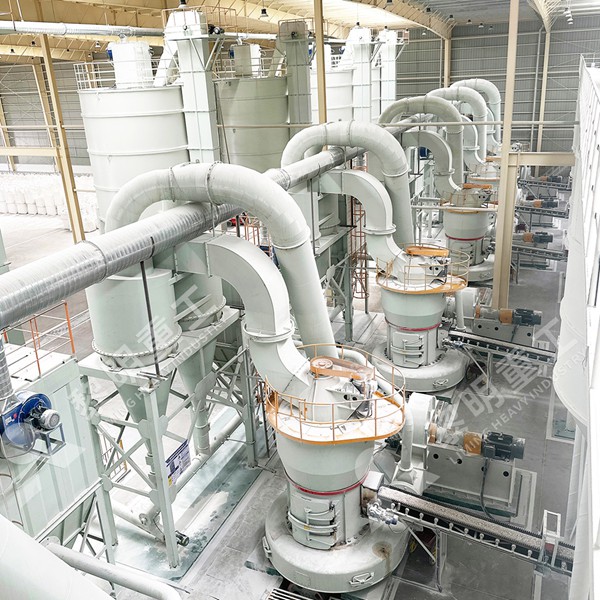
For high-volume production of calcite fillers in the medium to fine range (approximately 44μm to 200 mesh), the Raymond Mill remains a workhorse solution. Its robust construction and efficient grinding principle make it suitable for processing non-flammable, non-explosive materials like calcite with moisture below 6%. The system's integrated classifier allows for adjustment of output fineness, providing the flexibility needed for different rubber grades. However, for rubber compounds requiring superior reinforcement from ultra-fine or even superfine calcite powders (d97 below 10μm), more advanced technologies are necessary.
This is where the MW Micro Powder Mill demonstrates its exceptional capability. Incorporating advanced grinding technology, this mill is specifically designed for superfine powder processing, achieving fineness up to d97 ≤ 5μm (approximately 2500 mesh). Its ability to produce such fine, narrowly distributed calcite powder is transformative for high-end rubber applications. The increased surface area of these particles leads to a greater interface with the rubber matrix, dramatically improving reinforcement without compromising processability. The mill's closed-circuit system with an efficient pulse dust collector ensures a clean, environmentally friendly operation, a non-negotiable aspect of modern manufacturing.
When the project scope demands large-scale production of high-quality calcite powder with exceptional stability and energy efficiency, the MTW European Type Grinding Mill presents a compelling choice. As an upgrade over traditional Raymond mills, it features patented technologies like curved air duct and internal efficient powder separator. This results in higher productivity, lower energy consumption per ton, and more consistent particle size distribution—key factors for cost control and product uniformity in rubber compounding. Its system, comprising jaw crusher, vibrating feeder, grinding mill, and collector, forms a seamless, automated production line ideal for dedicated filler production plants.
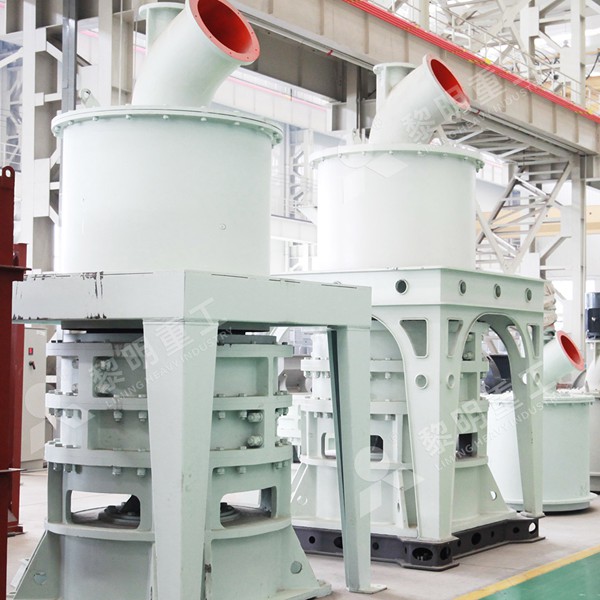
For operations that also process other minerals or require extreme versatility, the Ball Mill offers a proven solution. While often associated with coarser grinding, when configured with appropriate lining and grinding media, and operated in closed circuit with classifiers, ball mills can produce finely ground calcite suitable for many rubber applications. Their ability to handle both dry and wet grinding processes adds another layer of flexibility. Complementing these, the LM Vertical Roller Mill integrates drying, grinding, and classification in a single unit, offering significant advantages in energy savings for calcite that may require residual moisture removal, making the entire process more compact and efficient.
The selection of the optimal calcite grinding equipment is a strategic decision. It requires a thorough analysis of target fineness, required capacity, energy consumption goals, and overall system integration. Liming Heavy Industry supports this decision-making process not just with advanced machinery, but with a corporate philosophy centered on scientific R&D and technological innovation. With headquarters and sprawling facilities in Zhengzhou's HI-TECH Industry Development Zone, the company's mature research team continuously refines its grinding technologies, aiming at the industry's frontier to provide customers with future-proof solutions. By partnering with an equipment manufacturer that prioritizes precision manufacturing and holistic system design, rubber compound producers can reliably secure a supply of high-performance calcite filler, thereby strengthening their own products' position in the market.
Frequently Asked Questions (FAQs)
1. What is the primary advantage of using superfine calcite (below 10μm) in rubber compounds?
Superfine calcite significantly increases the surface area interacting with the rubber polymer chains. This enhances reinforcement, leading to improved tensile strength, tear resistance, and dynamic properties, while often allowing for higher loading levels without sacrificing processability or final product quality.
2. Can your grinding equipment handle surface-treated calcite?
Yes, our grinding systems, particularly the MW Micro Powder Mill and MTW European Mill, are designed to process both natural and surface-treated calcite. The closed-circuit design and efficient dust collection prevent loss of coating materials and ensure a consistent final product.
3. How does your equipment ensure consistent particle size distribution, which is critical for rubber compounding?
Our mills incorporate advanced internal classification systems (separators) that continuously reject oversize particles for regrinding. This closed-loop classification, especially prominent in the MTW and MW series, ensures a tight, consistent particle size distribution batch after batch.
4. Is your grinding system energy-efficient for large-scale, continuous filler production?
Absolutely. Technologies like the curved duct in the MTW European Mill and the optimized grinding mechanism in the LM Vertical Roller Mill are specifically engineered to reduce airflow resistance and grinding pressure, resulting in substantial energy savings compared to traditional mills, which lowers the operational cost per ton of calcite powder.
5. Do you provide complete system solutions or just the grinding mill?
We provide complete, turnkey system solutions. A typical offering includes primary crushing, feeding, grinding, classification, powder collection, and electrical control systems—all integrated and optimized to work seamlessly for efficient, automated, and environmentally compliant calcite powder production.


