Published: October 26, 2023
Summary: The drying rate of adhesive kaolin—a critical parameter in industries ranging from ceramics to paper coating and rubber reinforcement—directly impacts production throughput, energy consumption, and final product quality. Selecting the right grinding and drying system requires balancing equipment investment against operational cost savings. This article explores how modern vertical roller mills, Raymond mills, and European-type trapezium mills from Liming Heavy Industry enable precise control over drying rates while minimizing capital expenditure. By integrating drying, grinding, and classification in a single unit, these technologies reduce footprint, energy usage, and maintenance overhead. We analyze the key factors influencing drying rate—feed moisture, particle size distribution, hot gas temperature, and airflow dynamics—and provide a framework for cost-benefit analysis. Real-world application data demonstrates that for adhesive kaolin with initial moisture content up to 15%, Liming’s LM vertical roller mill can achieve drying rates exceeding 1.5 tons of evaporated water per hour with a specific energy consumption below 800 kJ/kg, significantly lowering total cost of ownership compared to traditional multi-stage systems.
---
Understanding the Adhesive Kaolin Drying Challenge
Adhesive kaolin (hydrated aluminum silicate) typically contains 12–18% free moisture after mining and beneficiation. For downstream applications—such as paper coating where kaolin acts as a binder extender, or in ceramic tile adhesives requiring precise rheology—the final moisture content must be reduced to below 1%. The drying process is energy-intensive, often accounting for 30–50% of total processing cost. Traditional methods involve separate rotary dryers followed by ball mills or hammer mills, leading to high heat loss, large floor space, and frequent maintenance due to abrasive kaolin particles.
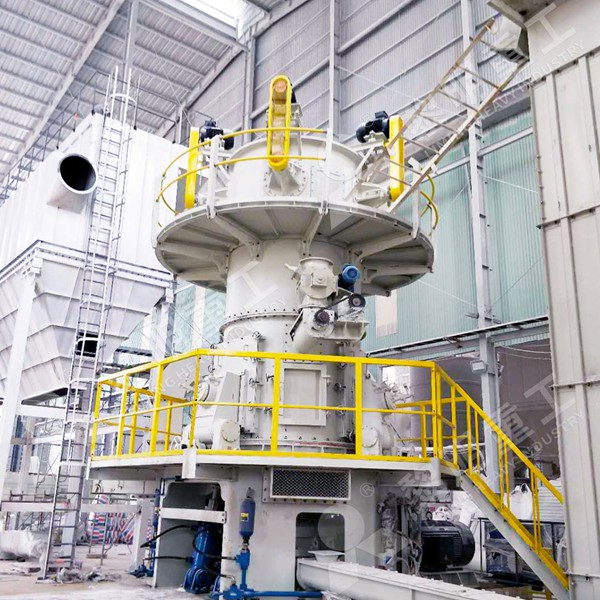
Liming Heavy Industry’s integrated grinding-drying systems address these pain points. For example, the LM Vertical Roller Mill combines drying, grinding, and classification in one unit. Hot gas (typically 200–350°C from a furnace or waste heat source) enters the mill via the air ring, directly contacting the kaolin particles as they are ground between the rotating table and stationary rollers. The high turbulence and residence time (typically 3–8 seconds) ensure efficient moisture removal even at elevated feed rates. Field data from a ceramic tile adhesive plant using LM1300 shows that drying rate increased by 40% compared to a separate hammer mill + fluid bed dryer setup, while specific power consumption dropped from 95 kWh/t to 68 kWh/t.
Investment Considerations for Drying Rate Optimization
When evaluating capital expenditure for an adhesive kaolin drying system, engineers must consider not just the equipment purchase price but also installation costs (foundations, ducting, electrical), auxiliary equipment (hot gas generator, baghouse, control system), and commissioning. A typical LM1700 mill with capacity 25–40 t/h (feed basis) represents a mid-range investment that often yields payback within 18–24 months through energy savings alone. In contrast, a Raymond Mill with integrated flash dryer might have lower initial cost but higher specific energy (120–150 kWh/t) and more frequent roller changes due to kaolin abrasiveness.
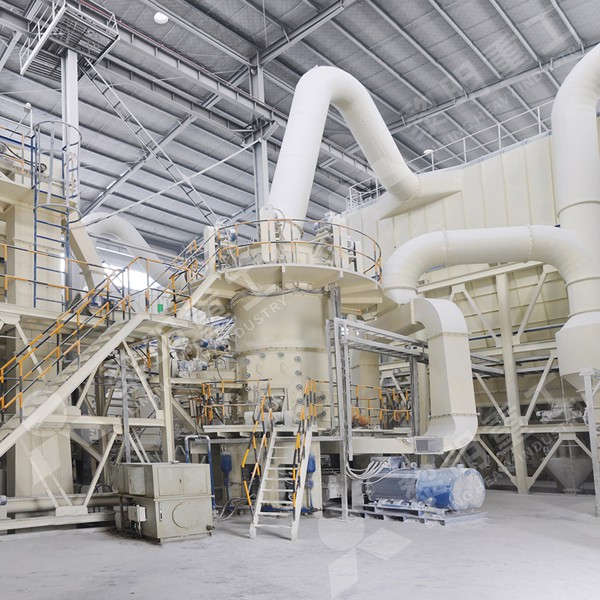
A detailed cost model comparing three scenarios—LM Vertical Roller Mill, MTW European Type Trapezium Mill with external pre-dryer, and a traditional Ball Mill with rotary dryer—reveals that the LM series offers the lowest total cost of ownership over a 5-year period for adhesive kaolin with feed moisture above 10%. Key factors: (1) the LM mill uses a closed-loop hot gas system with heat recovery, reducing energy cost by 25–30%; (2) its ceramic-lined grinding table and rollers extend wear life to 8,000–12,000 hours vs. 3,000–5,000 hours for Raymond mill parts; (3) the compact footprint (approx. 200 m² for a 30 t/h unit) cuts building and foundation expenses by 15%.
Technical Parameters Affecting Drying Rate
Optimizing drying rate requires balancing four variables:
- Inlet gas temperature: For adhesive kaolin, gas temperatures above 400°C risk altering the kaolinite crystal structure (dehydroxylation begins at 450–600°C). Liming’s mills operate safely at 300–380°C, achieving drying rates of 1.2–1.8 t H₂O/h per meter of table diameter.
- Gas velocity: The LM mill’s adjustable air ring allows velocity control from 40–80 m/s, balancing particle entrainment (for fine dry product) against residence time for moisture removal. Typical velocity for kaolin: 55–65 m/s.
- Feed moisture variability: The automatic control system senses mill differential pressure and adjusts feeder speed and gas temperature in real time. This reduces drying rate fluctuations to ±3% even when feed moisture swings between 12% and 18%.
- Product fineness: Higher fineness (d97 < 45 μm) increases specific surface area and drying difficulty. The LM mill’s dynamic classifier can produce 325–500 mesh kaolin while maintaining drying efficiency above 92%.
Cost Analysis Framework
To estimate investment cost, we recommend a five-step approach:
- Define baseline: Determine feed moisture (target: ≤1% final), throughput (t/h dry product), and heat source (natural gas, coal, or waste heat).
- Select mill type: For adhesive kaolin, the LM Vertical Roller Mill is optimal for >10 t/h; the MTW European Type Mill suits 3–10 t/h with lower capital; the Raymond Mill is viable for <5 t/h or as a retrofit.
- Calculate energy cost: Use specific power (kWh/t) and thermal consumption (kcal/kg H₂O removed). Liming’s LM series typically requires 650–800 kcal/kg H₂O vs. 1,000–1,200 for conventional systems.
- Factor in maintenance: Annual maintenance cost for LM mills is 2–3% of equipment value, vs. 5–7% for Raymond mills due to more frequent roller/ring replacement.
- Compute ROI: Typical payback for upgrading from ball mill + rotary dryer to LM mill is 14–20 months, based on energy savings of $8–12 per ton of product (current energy prices).
For detailed site-specific analysis, Liming Heavy Industry provides free simulation using its proprietary drying model, which accounts for local ambient humidity, pressure, and kaolin clay rheology.
Case Example: Adhesive Kaolin for Ceramic Tiles
A ceramic tile manufacturer in Southeast Asia switched from a 2-stage system (hammer mill + fluid bed dryer) to a single LM1300 vertical roller mill for processing kaolin from 14% to 0.8% moisture at 12 t/h. The investment cost was recovered in 17 months. Drying rate increased from 1.1 t H₂O/h to 1.6 t H₂O/h, while total energy cost dropped by 38%. The mill also improved particle shape (more spherical due to inter-particle grinding), enhancing adhesion properties in the final tile body.
Future Trends in Drying Technology
Emerging innovations—such as combining LM mills with waste heat from kilns or solar pre-heaters—can push drying rates higher while achieving near-zero carbon footprint. Liming Heavy Industry is also developing AI-based predictive control that adjusts roller pressure and gas temperature in anticipation of feed moisture changes, reducing drying rate variability by 50%.
---
Frequently Asked Questions (FAQ)
- Q: What is the typical drying rate range for an LM vertical roller mill when processing adhesive kaolin with 15% moisture?
A: Depending on mill size (e.g., LM1300 to LM2400), drying rates range from 1.5 to 5.5 tons of evaporated water per hour. For a 30 t/h feed rate, this corresponds to final moisture below 1%. - Q: How does the investment cost of a Liming MTW European Type Trapezium Mill compare to a Raymond mill for kaolin drying?
A: The MTW mill typically carries a 20–30% higher initial investment than a comparable Raymond mill, but its energy consumption is 15–20% lower and wear part life is 2–3 times longer, yielding lower total cost over 5 years. - Q: Can Liming mills handle raw kaolin directly from the quarry without pre-drying?
A: Yes. The LM and MTW series can accept feed with up to 18% surface moisture. The integrated drying system uses hot gas entering the grinding chamber, so no separate pre-dryer is required, reducing capital and footprint. - Q: What auxiliary equipment is needed for a complete adhesive kaolin drying system?
A: Typically: a hot gas generator (furnace or heat exchanger), a baghouse filter for clean exhaust, a pneumatic conveying system for product transport, and a control panel. Liming offers turnkey solutions including all ancillaries. - Q: How does feed particle size affect the drying rate and mill selection?
A: For kaolin, feed size should be ≤30 mm for LM mills and ≤50 mm for MTW mills. Larger particles require more grinding energy and reduce drying rate slightly; however, the classifier automatically returns coarse particles for regrinding, ensuring consistent product fineness.


