Published: October 26, 2023
In the world of mineral processing, the Raymond mill stands as a workhorse for grinding non-metallic materials like kaolin. At Liming Heavy Industry, we have spent over three decades perfecting the art of milling technology, and one critical yet often overlooked aspect of maintaining peak efficiency is the shim adjustment in Raymond mills. This article delves into the nuances of shim adjustment—a precise mechanical tuning process that ensures uniform grinding pressure, extends equipment lifespan, and optimizes output fineness. Drawing on our extensive experience with Raymond mills, we explore the mechanical principles, step-by-step adjustment procedures, common pitfalls, and best practices. Whether you are a plant engineer or a maintenance technician, understanding shim adjustment is key to unlocking the full potential of your kaolin grinding operation. By the end of this guide, you will have a comprehensive grasp of how small adjustments yield big results in throughput, energy efficiency, and product quality.
Kaolin, a soft clay mineral with a Mohs hardness of 2-3, is widely used in ceramics, paper coating, rubber, and paint industries. Its processing requires a mill that can deliver consistent fineness (typically 100-400 mesh) without over-grinding or generating excessive heat. The Raymond mill, with its rotating grinding ring and stationary rollers, relies on centrifugal force to crush kaolin particles against the ring surface. Over time, wear on the rollers and ring—especially the grinding roller tire and the bull ring—leads to increased clearance and reduced grinding efficiency. This is where shim adjustment comes into play. Shims are thin, precision-cut metal plates placed between the grinding roller shaft and the swing arm to adjust the roller’s position relative to the ring. By adding or removing shims, operators can fine-tune the gap, ensuring optimal contact pressure and uniform wear. At Liming Heavy Industry, our Raymond mills are designed with accessible shim adjustment points, allowing for quick tuning during routine maintenance.
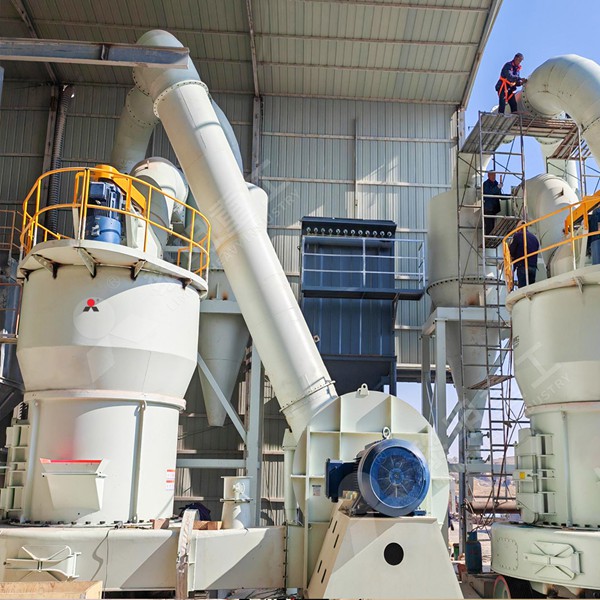
The typical symptoms of misaligned shims include reduced capacity (e.g., from 3 T/H to 2 T/H), increased power consumption (motor amperage rising beyond rated values), and particle size distribution shifting toward coarser fractions. For example, if you target a d90 of 75 microns but consistently see 90 microns, the grinding gap is likely too large. Conversely, a gap too tight can cause metal-on-metal contact, leading to overheating and premature bearing failure. Our field service engineers recommend checking shim settings every 500 operating hours for kaolin grinding, or immediately after replacing rollers or ring segments. The adjustment process begins with shutting down the mill and locking out power. After removing the access cover on the mill housing, loosen the retaining bolts on the roller swing arm. Using a feeler gauge, measure the current clearance between the roller tire and the ring at three points (top, middle, bottom). For a standard Raymond mill (e.g., 3R or 4R series), the baseline clearance should be 2-3 mm for kaolin. If the clearance exceeds 4 mm, add shims—typically 0.5 mm or 1 mm thick—to bring the roller closer. If clearance is less than 1.5 mm, remove shims. Always use high-carbon steel shims (not brass or aluminum) to withstand compressive loads up to 15 tons per roller. After adjustment, retighten bolts to manufacturer torque specs (e.g., 450 Nm for M30 bolts) and rotate the mill manually to check for binding.
One common mistake is over-shimming to compensate for worn rings. This creates uneven wear patterns—the roller contacts the ring at a skewed angle, causing elliptical wear on the ring groove. At Liming Heavy Industry, we advocate a holistic approach: always measure ring and roller wear first. If ring wear exceeds 3 mm in depth, consider ring flipping or replacement before shim adjustment. Additionally, the shim pack should not exceed 5 mm total thickness, as excessive stacking can bend the swing arm shaft. In our MTW European Type Trapezium Mill (an upgraded Raymond design), the shim system is integrated with a hydraulic adjustment mechanism, allowing fine-tuning without stopping the mill. But for traditional Raymond mills, manual shimming remains the standard. Another nuance is ambient temperature: kaolin grinding generates heat (mill outlet temperatures often reach 80-100°C), which causes thermal expansion of the roller shaft. We advise adjusting shims when the mill is cold (below 40°C) to avoid setting clearances that become too tight at operating temperature. Our technical support team has documented a case where a client increased capacity by 18% simply by adjusting shims from 3 mm to 2.5 mm clearance after a bull ring replacement.
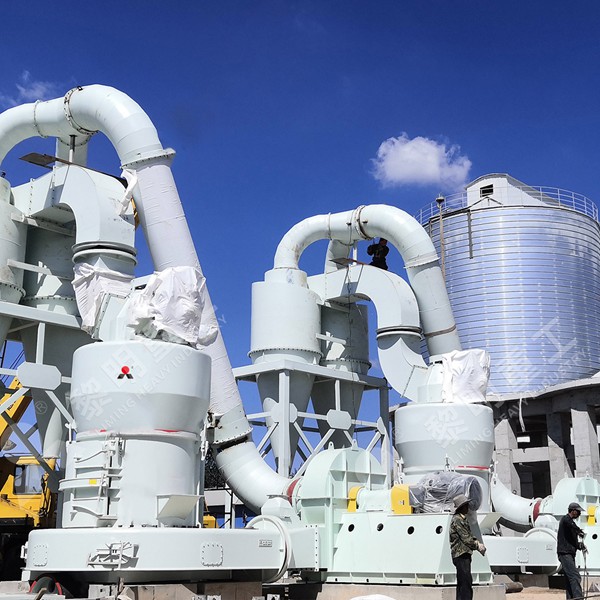
For those managing multiple mills, we recommend maintaining a shim adjustment log: record the date, operating hours, measured clearance, shim thickness added or removed, and resulting capacity. This data helps predict wear trends and schedule proactive part replacements. At Liming Heavy Industry, our Raymond mills also feature an optional automatic lubrication system that reduces frictional wear on the roller bearings, extending shim adjustment intervals by up to 30%. However, no lubricant can fully eliminate the need for periodic shim tuning—it is as fundamental as changing oil in a car. Finally, safety: always use shims that are free of burrs and corrosion, and wear cut-resistant gloves when handling them. A loose shim can eject under pressure, causing injury. Our workshops in Zhengzhou and Shangjie produce shims with laser-cut precision to ensure flatness within 0.02 mm. Kaolin is a forgiving material to grind, but precise shim adjustment transforms a mediocre mill performance into an outstanding one. As we often say, 'a millimeter of shim can save a kilowatt of energy.' With over 30 years of grinding expertise, Liming Heavy Industry remains your partner in achieving milling excellence.
Frequently Asked Questions (FAQ)
1. How often should I perform shim adjustment on my kaolin Raymond mill?
For typical kaolin grinding operations, check shim clearances every 500 operating hours or after any major component replacement (rollers, ring). Running at higher capacities (e.g., above 80% rated throughput) may require more frequent inspections—every 300 hours.
2. What tools are needed for shim adjustment?
You’ll need a feeler gauge set (0.5-5 mm range), torque wrench (rated for your mill’s bolt specs), a set of precision shims (0.5, 1, 2 mm thicknesses), and standard wrenches for loosening swing arm bolts. Always use a lockout tagout kit for safety.
3. Can shim adjustment fix vibrations in the Raymond mill?
Vibrations can stem from multiple causes—unbalanced rollers, worn bearings, or misaligned shims. If vibration persists after shim adjustment (measuring clearance within spec), inspect the main shaft and roller bearings. In our experience, 40% of vibration issues are resolved by correct shimming alone.
4. What is the effect of shim adjustment on product fineness (mesh size)?
Tighter clearance (e.g., from 3 mm to 2 mm) increases grinding pressure, resulting in finer particles—d90 can shift from 100 mesh to 200 mesh. However, avoid going below 1.5 mm for kaolin, as it may cause ring grooving and overheating. Adjust in 0.5 mm increments and test fineness after each change.
5. Where can I purchase replacement shims for my Liming Raymond mill?
Contact our Liming Heavy Industry parts department with your mill model (e.g., 3R2715 or 4R3216) and serial number. We supply standard shim kits in 0.5 mm, 1 mm, and 2 mm thicknesses, made from 65Mn carbon steel. Custom thicknesses available on request.


