Published on: October 26, 2023
Effective feed control is the cornerstone of maximizing the efficiency, product quality, and operational stability of a Raymond Mill processing kaolin. As a leading manufacturer of industrial grinding equipment with over three decades of expertise, Liming Heavy Industry understands that precise regulation of material input into the Raymond Mill directly influences fineness consistency, throughput capacity, and energy consumption. This article delves into the critical principles of feed control for kaolin milling, explores the technological advancements integrated into Liming's Raymond Mill systems, and provides practical insights for achieving optimal production outcomes. By mastering feed dynamics, operators can ensure their milling circuit operates at peak performance, delivering the high-purity, uniformly sized kaolin powder essential for ceramics, paper, paints, and advanced materials.
The fundamental challenge in kaolin processing lies in its variable physical characteristics, such as moisture content and feed size distribution. The Liming Raymond Mill, engineered for minerals under 7 Mohs hardness and 6% humidity, is exceptionally suited for this task. However, its renowned efficiency in achieving a fineness range between 44μm and 613μm is heavily dependent on a consistent and accurately metered feed stream. An uncontrolled or erratic feed rate can lead to a cascade of issues: overloading the grinding chamber reduces classification efficiency and increases particle size, while underfeeding wastes energy and accelerates wear on grinding rolls due to metal-on-metal contact. Therefore, implementing a robust feed control strategy is not an option but a necessity for modern, cost-conscious operations.
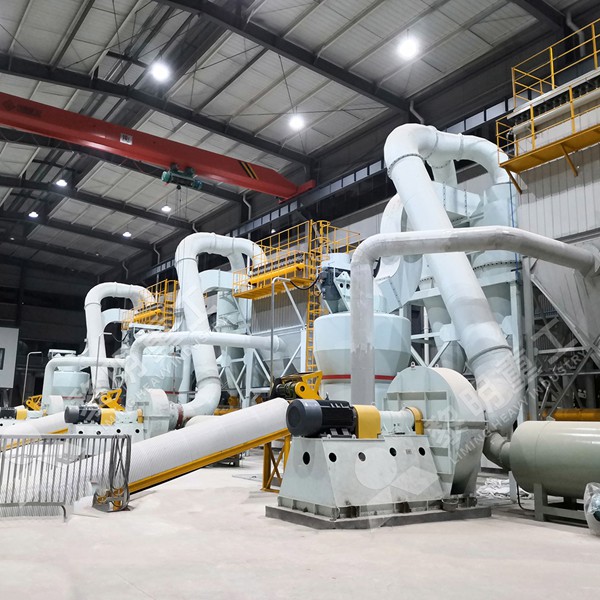
At the heart of a reliable feed control system is the integration of precision components. Liming Heavy Industry designs its Raymond Mill circuits with a synergistic approach. The process typically begins with a jaw crusher reducing large kaolin lumps to a manageable size of 15-25mm. The prepared material is then stored in a hopper, which feeds a variable-frequency or electromagnetic vibrating feeder. This feeder is the primary control element. By adjusting its vibration amplitude and frequency, operators can achieve a linear and highly controllable flow rate, ensuring a steady stream of material into the grinding mill. This consistency allows the grinding rollers and ring to maintain optimal pressure and contact with the material bed, promoting efficient pulverization.
Modern feed control extends beyond mechanical consistency into the realm of intelligent automation. Liming's system design often incorporates closed-loop control strategies. Sensors monitoring parameters like the mill's main motor current or the pneumatic pressure within the grinding zone provide real-time feedback. If the motor load increases, indicating a potential over-feed condition, the control system can automatically signal the feeder to reduce its rate. Conversely, a drop in load can trigger a slight increase in feed to maintain throughput. This dynamic adjustment stabilizes the entire milling operation, protects the equipment from stress, and ensures the finished powder's fineness remains within the tightest specifications. Such automation embodies Liming's commitment to "scientific research tackling key problems" and "technological progress," transforming the Raymond Mill from a simple grinder into an intelligent processing node.
The benefits of sophisticated feed control are multifaceted. Firstly, it directly enhances product quality. A stable feed results in uniform residence time of particles in the grinding and classifying zone, yielding a narrower particle size distribution. For kaolin used in high-gloss paper coatings or fine ceramics, this consistency is paramount. Secondly, it optimizes energy efficiency. The mill operates at its design point, avoiding the energy spikes associated with load fluctuations. Thirdly, it reduces wear and tear on consumable parts like grinding rolls and rings, lowering maintenance costs and extending service intervals. Finally, it contributes to a cleaner, safer operation by preventing dust surges that can overwhelm the integrated pulse dust collection system, which is a standard feature ensuring environmental compliance in Liming's designs.
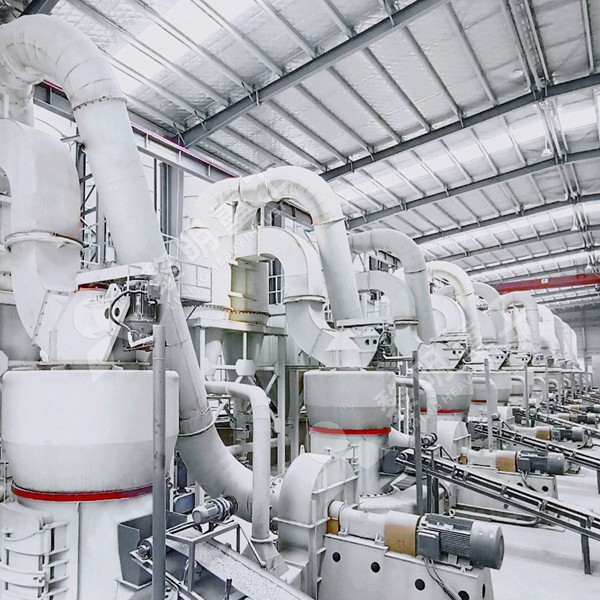
Implementing best practices for feed control also involves preparatory steps. Ensuring the incoming kaolin has a relatively consistent moisture level and is pre-crushed to within the mill's recommended input size range (15-25mm for our standard Raymond Mill) is crucial. The feed hopper should be designed with adequate capacity and geometry to prevent bridging or ratholing, which disrupts flow. Regular maintenance of the feeder and its control circuitry is essential to preserve accuracy. For operations targeting ultra-fine kaolin powders, integrating a pre-drying stage or considering Liming's MTW European Type Grinding Mill or MW Micro Powder Mill for their advanced drying and superfine grinding capabilities might be a strategic evolution, but the principle of meticulous feed control remains universally critical.
In conclusion, mastering feed control is synonymous with mastering kaolin Raymond Mill productivity. It is a critical interface between raw material preparation and the finely tuned grinding mechanics. Liming Heavy Industry, with its mature scientific research team and focus on product competitiveness, provides not just robust Raymond Mill equipment but the integrated system knowledge necessary for optimal feed management. By prioritizing precise, automated feed control, operators unlock the full potential of their milling investment, achieving superior kaolin powder quality, remarkable operational efficiency, and sustainable, long-term performance.
Frequently Asked Questions (FAQ)
- What is the primary consequence of an inconsistent feed rate in a Kaolin Raymond Mill?
An inconsistent feed rate causes grinding instability, leading to fluctuations in product fineness, increased energy consumption, and accelerated wear on grinding components due to alternating conditions of under-load and over-load. - How does the vibrating feeder contribute to feed control?
The vibrating feeder, often with variable-frequency drive, provides precise volumetric control. By adjusting vibration intensity, it delivers a smooth, continuous, and metered flow of kaolin into the mill, forming a stable material bed for efficient grinding. - Can the Liming Raymond Mill system automatically adjust the feed based on operational conditions?
Yes, advanced configurations can feature closed-loop control systems. Using feedback from sensors like motor load amps, the system can automatically regulate the feeder speed to maintain optimal grinding conditions without manual intervention. - Why is pre-crushing kaolin to a specific size (e.g., 15-25mm) important for feed control?
Uniform feed size ensures consistent behavior in the grinding chamber. Oversized lumps can cause mill vibration and feed blockage, while excessively fine feed may bypass optimal grinding, both disrupting control and final product uniformity. - Does feed control impact the environmental performance of the milling plant?
Absolutely. Stable feed control prevents pressure surges inside the mill that can lead to dust leakage. It ensures the integrated pulse dust collector operates efficiently, maintaining emissions within environmental standards and ensuring a cleaner workplace.


