Published: October 26, 2023
The efficient processing of kaolin for catalyst applications demands precision grinding, strict particle size control, and high purity. Liming Heavy Industry, with over three decades of expertise in manufacturing advanced grinding equipment, provides tailored solutions that meet these rigorous demands. Our portfolio, from high-capacity vertical mills to ultra-fine powder systems, is engineered to transform raw kaolin into a consistent, high-surface-area material ideal for catalytic substrates, ensuring optimal reactivity and performance in chemical and petrochemical processes.
Kaolin, a versatile aluminosilicate clay, is a critical raw material in the production of various catalysts, including fluid catalytic cracking (FCC) catalysts. Its transformation from a mined mineral to a functional catalyst support involves several meticulous steps: beneficiation, drying, calcination, and most critically, fine grinding and classification. The physical properties of the final kaolin powder—such as particle size distribution, specific surface area, and morphology—directly influence the catalyst's activity, selectivity, and stability. Therefore, selecting the right milling technology is not merely a production step; it is a fundamental determinant of catalytic efficacy.
Liming Heavy Industry's research and development philosophy, centered on scientific innovation and technological advancement, directly addresses these complex processing requirements. Our modern facilities in Zhengzhou's HI-TECH Industry Development Zone and Shangjie Industry Park serve as hubs for developing machinery that combines high throughput with exceptional fineness control.
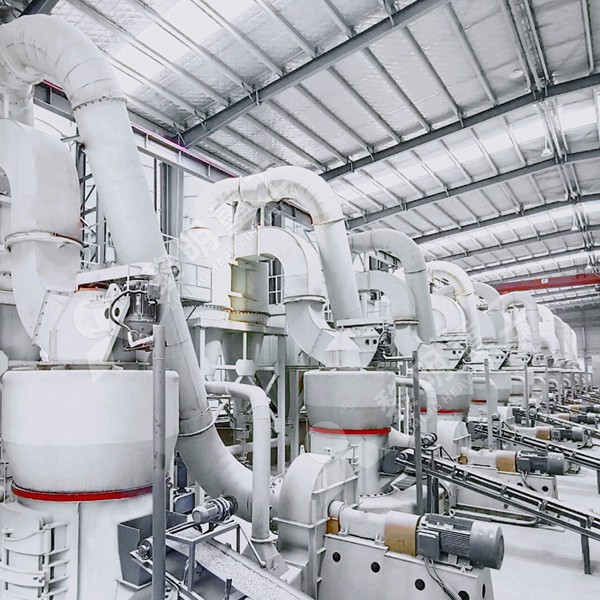
For primary and secondary grinding of kaolin to a medium fineness, our LM Vertical Roller Mill offers an integrated solution. It combines drying, grinding, powder selection, and conveying in a single unit, which is highly beneficial for kaolin that may require concurrent drying. With a capacity range of 10-400 T/H, it is suitable for large-scale catalyst production lines. Its efficient grinding mechanism minimizes over-grinding, helping to preserve the platelet structure of kaolin particles, which can be desirable for certain catalyst formulations.
When the process calls for reliable and stable grinding to a precise, consistent fineness, the classic Raymond Mill remains a cornerstone. Suitable for processing non-flammable, non-explosive materials like kaolin under 7 Mohs hardness, it can produce powders in the range of 613μm to 44μm. Its simplicity and durability make it a practical choice for many mineral processing operations, including the preparation of kaolin for catalyst precursors.
The MTW European Type Grinding Mill represents a significant evolution in trapezium mill technology. Designed for large-scale non-metallic mineral powder making, it is particularly adept at producing fine kaolin powders for demanding applications. Its patented technology enhances stability and productivity while focusing on energy efficiency. The closed-circuit system with an efficient separator and pulse dust collector ensures a clean operation and allows for tight control over the particle size, a non-negotiable requirement in catalyst manufacturing.
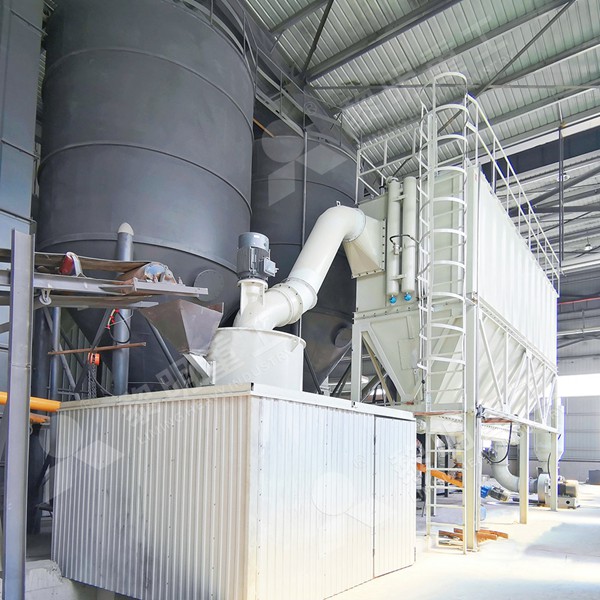
For high-end catalyst applications where ultra-fine or nano-sized kaolin particles are required, the MW Micro Powder Mill is the technology of choice. Incorporating advanced grinding technology, this mill excels in superfine powder processing, achieving fineness up to d97 ≤ 5μm (approximately 3250 mesh). This ability to produce extremely fine, high-purity kaolin powder dramatically increases the available surface area for active catalytic sites, potentially enhancing the catalyst's performance. The integrated pulse precipitator guarantees an environmentally friendly process, aligning with the green standards of modern chemical industries.
Finally, the Ball Mill, a fundamental tool in mineral processing, plays a vital role in kaolin comminution. It is a robust and versatile system capable of grinding kaolin to a fine slurry or powder. In catalyst preparation, ball mills can be used for wet grinding processes to achieve excellent particle dispersion and homogeneity before spray drying or forming. Its design allows for the processing of various feed sizes and its operation is well-understood, making it a reliable component in integrated processing lines.
In conclusion, navigating the technical requirements for catalyst-grade kaolin processing requires a partner with deep mechanical engineering knowledge and a versatile equipment range. Liming Heavy Industry provides precisely that. From the raw, beneficiated clay to the meticulously graded ultra-fine powder ready for impregnation with active metals, our grinding solutions offer the precision, reliability, and scalability that global catalyst manufacturers depend on. By leveraging our continuous innovation in crushing and grinding technology, clients can optimize their kaolin processing lines for superior catalyst quality and production efficiency.
Frequently Asked Questions (FAQs)
- What is the most important factor in choosing a mill for catalyst kaolin processing?
The key factor is the required final particle size distribution and particle morphology. For ultra-fine, high-surface-area requirements, the MW Micro Powder Mill is ideal. For high-capacity production of controlled fine powders, the MTW European Type Mill or LM Vertical Mill are excellent choices. - Can Liming equipment handle the drying of moist kaolin before or during grinding?
Yes, specifically the LM Vertical Roller Mill integrates a drying function within its grinding chamber, allowing for simultaneous drying and grinding of materials with moderate moisture content, streamlining the process. - How does your equipment ensure the purity of the kaolin powder, avoiding contamination?
Our mills are designed with wear-resistant materials in grinding zones and utilize closed-circuit systems with internal classification. This minimizes metal wear and cross-contamination. Additionally, pulse dust collectors maintain a clean production environment. - Is it possible to achieve a very narrow particle size range for specialized catalyst supports?
Absolutely. Mills like the MTW European Type Grinding Mill and the MW Micro Powder Mill are equipped with highly efficient dynamic or static classifiers that allow for precise cut-point adjustment, enabling the production of kaolin with a tight, consistent particle size distribution. - Do you provide only the mill, or a complete processing system?
Liming Heavy Industry can supply the core grinding mill as a standalone unit or provide a complete system solution. This can include auxiliary equipment such as jaw crushers, vibrating feeders, elevators, dust collectors, and electrical control systems, engineered to work seamlessly together for optimal kaolin processing.


