Published on: October 26, 2023
The production of ultra-fine kaolin powder represents a pinnacle of modern mineral processing, demanding precision engineering, advanced milling technology, and a deep understanding of material science. For industries ranging from high-quality paper coatings and ceramics to advanced polymers and composites, achieving consistent sub-micron particle sizes with high purity is paramount. This article explores the sophisticated methodologies and cutting-edge grinding equipment essential for transforming raw kaolin into premium ultra-fine powder. We will delve into the operational principles of specialized mills, the critical process parameters, and the technological innovations that enable manufacturers to meet stringent fineness and quality specifications, drawing upon the extensive expertise and equipment portfolio of Liming Heavy Industry Co., Ltd., a leader in crushing and grinding solutions.
The journey from raw kaolin clay to a refined, ultra-fine powder is a multi-stage process that begins long before milling. High-quality kaolin ore must first be beneficiated to remove impurities like quartz, feldspar, and iron oxides through processes such as hydrocycloning, magnetic separation, and leaching. This purified kaolin slurry, with controlled moisture content, is then prepared for the most critical phase: dry or wet grinding to ultra-fine dimensions. The choice of grinding technology directly dictates the final product's particle size distribution (PSD), brightness, viscosity, and abrasiveness. Traditional ball mills, while versatile, often struggle to achieve the narrow PSD and energy efficiency required for the finest grades. This has led to the dominance of more advanced, air-classification-integrated milling systems for high-end kaolin production.
At the forefront of this technology are vertical roller mills and enhanced pendulum roller mills. The LM Vertical Roller Mill is a cornerstone for large-scale production. It integrates grinding, drying, classification, and conveying into a single, compact unit. Hot air introduced into the mill simultaneously dries the feed material and transports the ground particles to an integrated high-efficiency classifier. Coarse particles are rejected and returned for further grinding, ensuring a tight control over the top particle size. This system is exceptionally efficient for producing kaolin powder in the range of 10-400 mesh, offering significant advantages in energy consumption per ton, especially when processing materials with residual moisture.
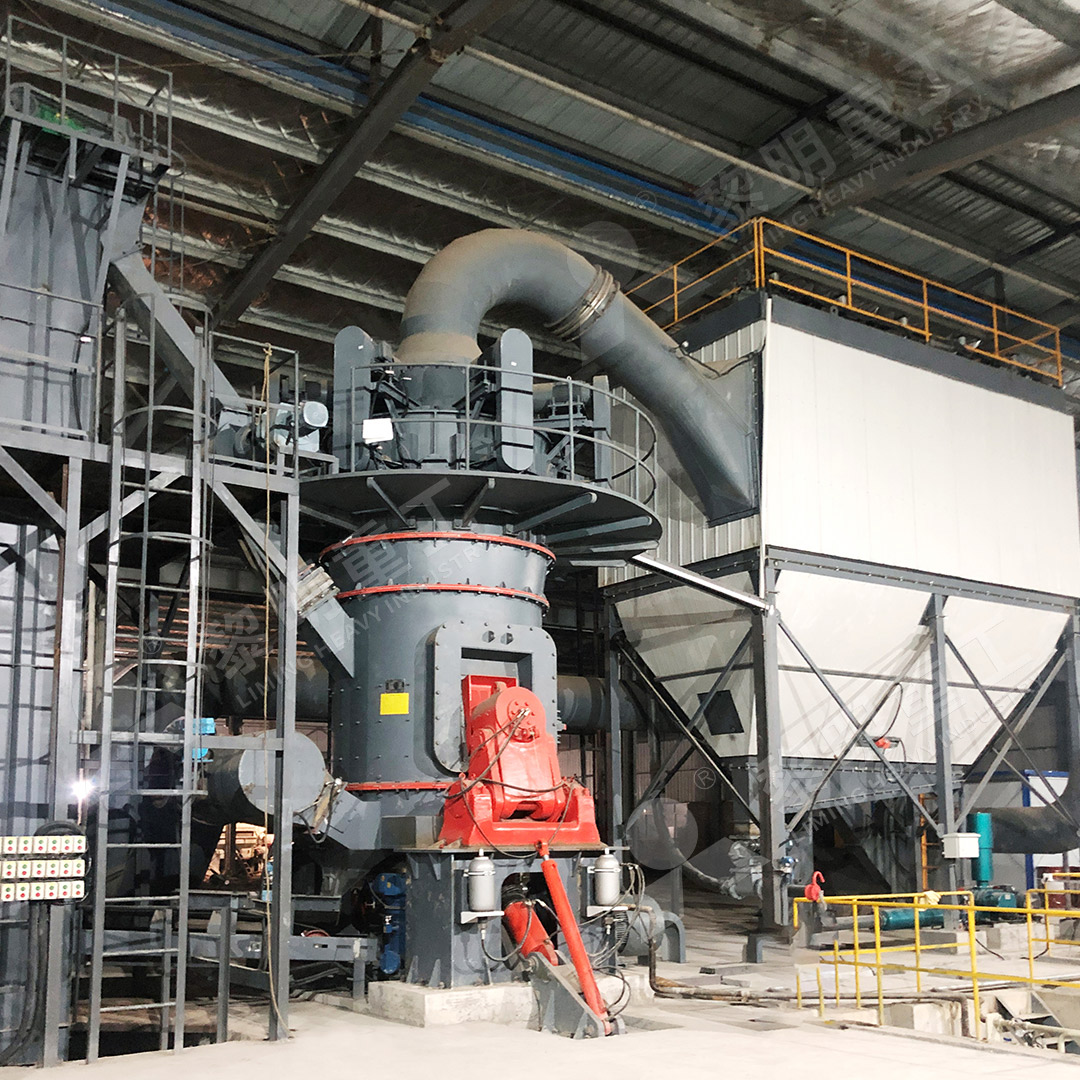
For applications demanding finer powders, extending into the 325 to 2500 mesh range (approximately 44 to 5 microns), Raymond Mill (MTW European Type) and Micro Powder Grinding Mill (MW Series) are the technologies of choice. The MTW European Type Trapezium Mill represents an evolution of the classic Raymond mill, featuring a curved shovel blade that increases mill capacity and a geared inner surface for smoother material flow. Its external grinding roller and advanced separator allow for precise fineness adjustment with lower vibration and noise. The process involves feeding crushed kaolin into the grinding chamber where rollers, suspended and rotating against a stationary ring, pulverize the material. The ground powder is carried by an air stream to the classifier; oversize particles fall back for regrinding, while the in-spec product is collected by a cyclone and bag filter.
The pursuit of truly ultra-fine and uniform kaolin powder, where the majority of particles are below 10 microns (d97 ≤ 10μm) or even 5 microns (d97 ≤ 5μm), necessitates the MW Micro Powder Mill. This technology incorporates principles of medium-speed micro-grinding, often leveraging advanced design features inspired by global best practices. Its working principle involves a main shaft driving multiple grinding rollers via a reducer. The rollers rotate against a stationary ring raceway, applying pressure to the material bed. A critical component is the integrated dynamic classifier, which operates at very high speeds to separate particles based on size with extreme precision. This closed-circuit system, coupled with high-efficiency pulse dust collection, ensures nearly 100% product collection, minimal loss, and an environmentally clean operation. It is the definitive solution for producing high-value, functional fillers and coatings where particle surface area and reactivity are key performance indicators.
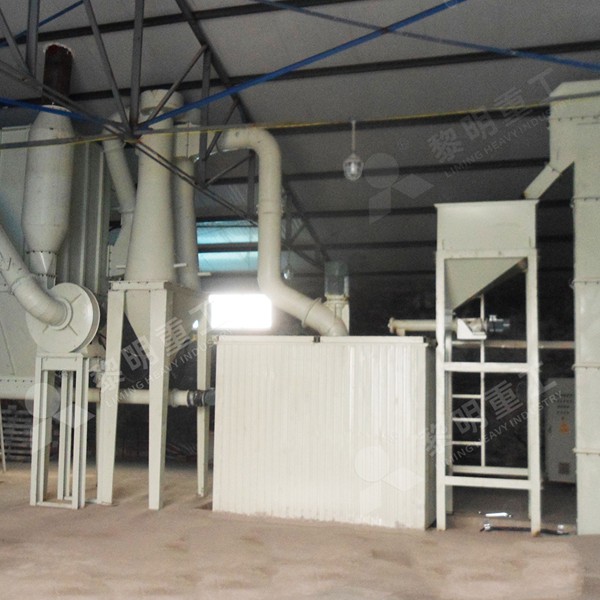
Process optimization extends beyond equipment selection. Key parameters such as feed rate, grinding pressure (in roller mills), classifier speed, air volume, and temperature must be meticulously calibrated. The hardness and moisture content of the input kaolin are primary variables. A well-tuned system not only maximizes yield at the target fineness but also optimizes energy efficiency—a major operational cost factor. Furthermore, modern mills from technologically committed manufacturers are designed with maintenance and operator safety in mind. Centralized lubrication systems, easy-wear part access, and automated control systems that monitor mill load and pressure contribute to stable, continuous operation and reduced downtime.
In conclusion, the production of ultra-fine kaolin powder is a sophisticated engineering endeavor successfully realized through the application of specialized grinding machinery. From the high-capacity, integrated drying and grinding of the LM Vertical Mill to the precision fine-grinding of the MTW European Mill and the cutting-edge superfine processing capability of the MW Micro Powder Mill, a comprehensive technological pathway exists to serve every grade requirement. As a pioneer in grinding equipment for over three decades, Liming Heavy Industry embodies the research-driven innovation necessary to advance this field, providing robust, efficient, and scalable solutions that empower producers to unlock the full potential of kaolin across modern industries.
Frequently Asked Questions (FAQs)
Q1: What is the primary difference between dry and wet processing for ultra-fine kaolin?
A1: Dry processing is typically more cost-effective for direct milling to final powder, utilizing integrated drying in mills like the LM Vertical Roller Mill. Wet processing (blunging, centrifuging) is often used for high-level beneficiation to remove impurities before the slurry is dried and then dry-milled, or occasionally wet-milled and spray-dried, to achieve maximum brightness and purity.
Q2: How is particle size distribution (PSD) controlled during the milling process?
A2: PSD is primarily controlled by the integrated dynamic classifier or separator within the mill system (e.g., in MTW or MW mills). By adjusting the speed of the classifier rotor, operators can precisely determine the cut point: faster speeds allow only finer particles to pass, resulting in a finer product, and vice versa.
Q3: Can the same mill produce different grades of kaolin powder?
A3: Yes, modern mills like the MTW European Type Grinding Mill and MW Micro Powder Mill are designed for adjustable fineness. By changing classifier settings, grinding pressure, and feed rate, a single mill can produce a range of products from coarse fillers (e.g., 200 mesh) to ultra-fine coatings (e.g., 2500 mesh), though optimal efficiency is usually within a defined range.
Q4: What are the key maintenance points for these high-precision grinding mills?
A4: Key maintenance focuses on wear parts: grinding rollers and rings, shovel blades, and classifier blades. Regular inspection and scheduled replacement based on operating hours and material abrasiveness are crucial. Additionally, ensuring proper lubrication of gearboxes and bearings, and checking the integrity of the sealing system to prevent leaks, are essential for long-term reliability.
Q5: How important is system automation in ultra-fine kaolin production?
A5: Automation is critical for consistency, quality, and safety. Automated control systems continuously monitor and adjust parameters like mill feed, grinding pressure, temperature, and classifier speed. This maintains stable operation, ensures the product consistently meets spec, optimizes energy use, and reduces the risk of human error or equipment overload.


