Published on: October 26, 2023
In the evolving landscape of industrial mineral processing, the demand for efficient, precise, and reliable grinding technology is paramount. Liming Heavy Industry Co., Ltd., a leader in crushing and grinding equipment manufacturing since 1987, addresses this need with its advanced, upgraded version of the Raymond Mill, specifically engineered for superior limestone processing. This mill represents a significant technological leap, integrating decades of research, precision manufacturing, and innovation to deliver enhanced productivity, finer particle control, improved energy efficiency, and robust operational stability. It is designed to meet the rigorous demands of modern applications such as power plant desulfurization, heavy calcium carbonate production, and non-metallic mineral powder making, solidifying its position as a cornerstone solution for industries seeking to optimize their powder preparation processes.
Building upon the proven legacy of the traditional Raymond mill, this upgraded iteration is more than a simple improvement; it is a re-engineering of core principles. The design philosophy centers on overcoming historical limitations in fineness range, output capacity, and energy consumption. By incorporating advanced grinding mechanics, intelligent material classification systems, and streamlined material flow paths, the mill achieves a remarkable balance between high throughput and exceptional product quality. The result is a machine that not only processes limestone with unparalleled efficiency but also adapts seamlessly to the production of various non-flammable, non-explosive materials with Mohs hardness under 7 and humidity below 6%.
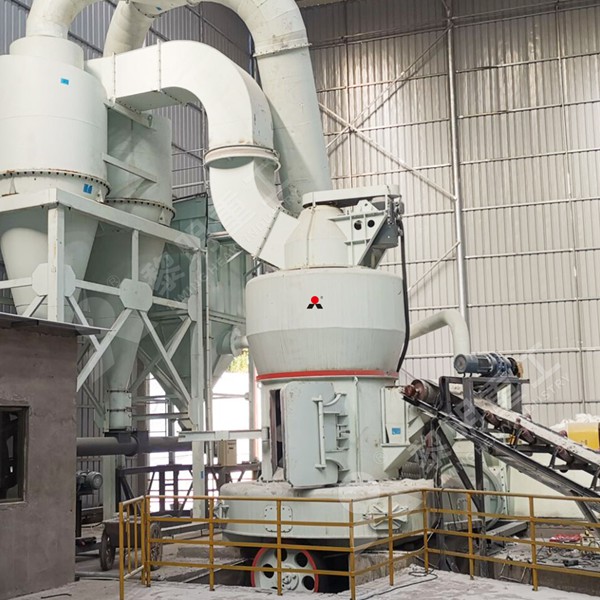
The heart of the upgraded Raymond Mill's performance lies in its refined working principle and system integration. The process begins with raw limestone, crushed to a optimal feed size (typically 30-50mm), being uniformly and continuously fed into the grinding chamber via a vibrating feeder. Inside, the revolutionary grinding roller assembly applies precise pressure against a rotating grinding ring, pulverizing the material through a combination of compression and shear forces. A critical upgrade is the high-efficiency, forced-flow turbine classifier integrated into the upper section of the mill. This classifier instantaneously separates fine particles from coarse ones with extreme accuracy. Finely ground powder is carried upward by the airflow to the powder collector, while oversized particles are rejected back to the grinding zone for further milling, ensuring a consistent and narrow particle size distribution.
This closed-circuit grinding and classifying system is a hallmark of efficiency. The entire airflow is recycled by a high-pressure centrifugal blower, creating a negative pressure environment that eliminates dust leakage and minimizes energy loss. Coupled with a high-capacity pulse jet bag filter dust collector, the system operates in an environmentally friendly manner, meeting stringent international emission standards. The automation level is significantly enhanced. An advanced electric control cabinet allows for centralized monitoring and control of the entire production line—from feeding and grinding to classifying and collecting—enabling single-button start-up, real-time parameter adjustment, and fault diagnosis, which drastically reduces labor intensity and operational complexity.
For limestone processing, the performance metrics are compelling. The upgraded Raymond Mill offers a substantially wider adjustable fineness range, capable of producing powders from 44μm (325 mesh) down to a remarkably fine 613μm, catering to diverse application specifications. Its capacity sees a notable increase, handling throughputs that meet the scale requirements of large industrial projects. Most importantly, these gains are achieved alongside a significant reduction in specific energy consumption per ton of product, thanks to optimized grinding dynamics and reduced system resistance. The wear parts, such as grinding rollers and rings, are manufactured from high-chromium alloy or other advanced wear-resistant materials through proprietary processes, dramatically extending service life and reducing maintenance frequency and cost.
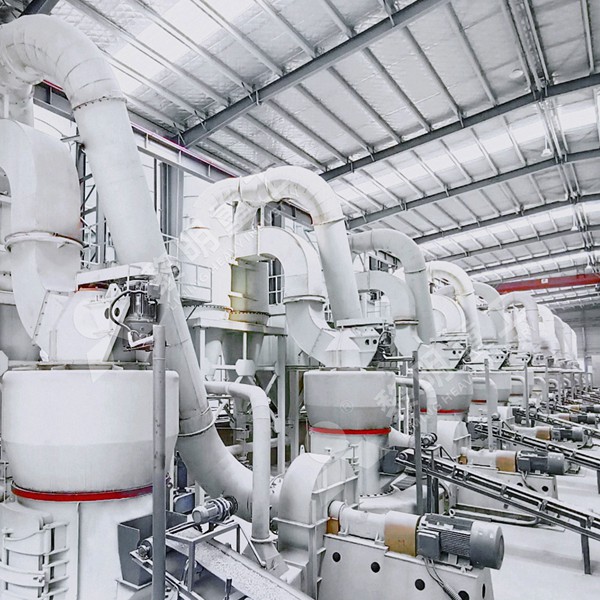
Liming Heavy Industry's commitment to innovation is the driving force behind this product. With headquarters and sprawling production facilities in Zhengzhou's HI-TECH Industry Development Zone, the company operates a mature scientific research team dedicated to tackling key technological challenges. The development of this upgraded Raymond Mill is a direct outcome of this "production, learning, and research" ethos, aiming squarely at the technological frontier of the grinding industry. It embodies the company's core strategy of enhancing product competitiveness through relentless scientific research and development.
The applications for this advanced mill are vast and critical. In power plants, it is the ideal equipment for producing high-quality limestone powder for flue gas desulfurization (FGD). In the construction materials and chemical industries, it provides the consistent fine powder necessary for manufacturing paints, plastics, rubber, and paper. For the production of heavy calcium carbonate, it offers the precise particle size control essential for product value. Its reliability, efficiency, and environmental compliance make it a future-proof investment for any operation focused on sustainable and profitable mineral powder production.
In conclusion, the Upgraded Version Limestone Raymond Mill from Liming Heavy Industry stands as a testament to engineered progress. It successfully bridges the gap between traditional reliability and modern performance demands. By delivering higher yield, superior product quality, lower operational costs, and a greener footprint, it provides a comprehensive solution that empowers industries to advance their capabilities in powder processing. It is not merely a piece of equipment but a strategic asset for growth in a competitive global market.
Frequently Asked Questions (FAQ)
- What is the primary advantage of this upgraded Raymond Mill over previous models for limestone grinding?
The primary advantages include a significantly broader and finer adjustable particle size range, increased throughput capacity, markedly improved energy efficiency per ton of product, and enhanced system automation for more stable and user-friendly operation. - How does the mill ensure consistent product fineness?
Consistency is achieved through an integrated high-precision forced turbine classifier. It provides instantaneous separation of particles, continuously returning oversize material for regrinding within the closed-loop system, guaranteeing a uniform final product. - What measures are in place for environmental protection?
The mill operates as a fully enclosed, negative-pressure system. All process air is internally circulated, and any residual dust is captured by a high-efficiency pulse jet bag filter dust collector, ensuring emissions comply with strict environmental standards. - Can this mill process materials other than limestone?
Yes. It is suitable for a wide variety of non-flammable, non-explosive materials with a Mohs hardness below 7 and moisture content less than 6%, including gypsum, talc, calcite, marble, barite, and activated clay, among others. - What is the key to the mill's durability and low maintenance?
Durability stems from the use of premium wear-resistant materials for critical components like grinding rollers and rings. Their extended lifespan, combined with the system's robust design and stable operation, minimizes downtime and maintenance costs.


