Published on: October 26, 2023
The paper making industry relies heavily on high-quality calcium carbonate, primarily sourced from limestone, as a key filler and coating pigment to enhance paper brightness, opacity, smoothness, and printability. Efficiently grinding limestone to precise fineness is a critical production step. LIMING HEAVY INDUSTRY CO., LTD., with over three decades of expertise in manufacturing crushing and grinding equipment, offers advanced Raymond Mill and MTW European Type Grinding Mill solutions specifically engineered to meet the stringent demands of the paper sector. These mills deliver consistent, fine powder with optimal particle size distribution, operational reliability, and energy efficiency, supporting paper manufacturers in producing superior quality products while maintaining sustainable and cost-effective operations.
Founded in 1987, LIMING HEAVY INDUSTRY has grown into a leader in domestic and overseas machinery manufacturing. Headquartered in the HI-TECH Industry Development Zone of Zhengzhou, with extensive manufacturing facilities, the company adheres to modern scientific management and precision manufacturing. Its core strategy revolves around scientific research and development, focusing on product competitiveness and technological innovation. This commitment ensures that its grinding equipment, including the Raymond Mill series, incorporates the latest advancements to serve industries like paper making effectively.
In paper production, limestone (calcium carbonate) must be ground to a fine, uniform powder. The ideal filler grade typically requires a fineness between 200 mesh (74μm) and 325 mesh (44μm), while coating pigments may demand even finer particles. LIMING's Raymond Mill is exceptionally suited for this task. It is designed to process non-flammable, non-explosive materials with Mohs hardness under 7 and humidity less than 6%, perfectly matching limestone characteristics. The mill can achieve an output fineness between 44μm (325 mesh) and 613μm, allowing paper mills to precisely adjust the product to their specific recipe requirements.
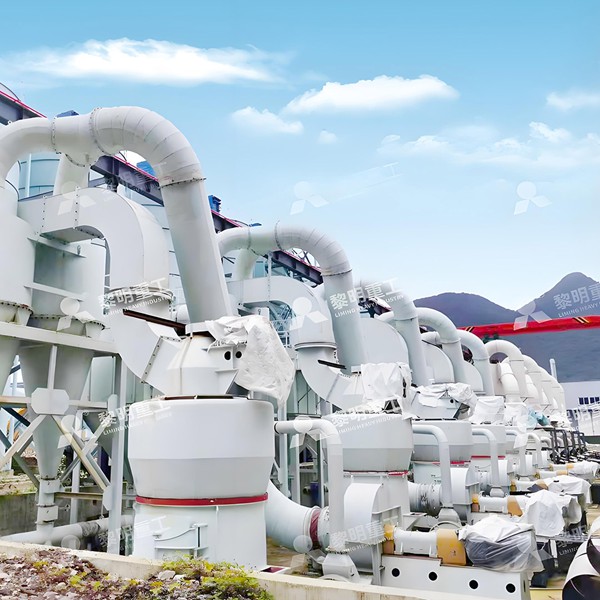
The operational principle of the Raymond Mill ensures efficiency and consistency. The system, comprising the mill, separator, blower, crusher, feeder, and dust collector, forms a closed-circuit grinding loop. Crushed limestone is fed into the grinding chamber where rollers rotate against a stationary ring, crushing the material. The ground powder is carried by an air stream to a classifier. Oversized particles are rejected and returned for regrinding, while qualified fine powder passes through and is collected via a cyclone or bag filter. This closed-loop system with integrated pulse dust collection ensures high powder recovery, minimal waste, and compliance with environmental standards—a crucial consideration for modern paper mills.
For larger-scale operations or where the latest European technology is preferred, LIMING offers the MTW European Type Trapezium Mill. This mill represents an upgrade over traditional Raymond mills, featuring patented technology that enhances stability, productivity, and energy efficiency. It is particularly committed to large-scale non-metallic mineral powder making, making it an excellent choice for major paper plants. Its capacity range of 3-55 TPH can handle significant throughput. The grinding process in the MTW mill is similarly precise, with a sophisticated separator ensuring accurate particle size cuts. Its design emphasizes environmental protection and energy saving, aligning with the paper industry's growing sustainability goals.
Beyond the grinding unit itself, LIMING provides comprehensive system support. The working principle detailed for the MTW mill highlights an integrated approach: from jaw crusher preparation and variable-frequency belt feeding to grinding, separation, and clean powder collection. This turnkey philosophy ensures all components work in harmony, maximizing system uptime and product quality. The company's mature scientific research team continuously innovates, aiming at the industry's technological frontier to improve the overall performance and automation level of these grinding lines.
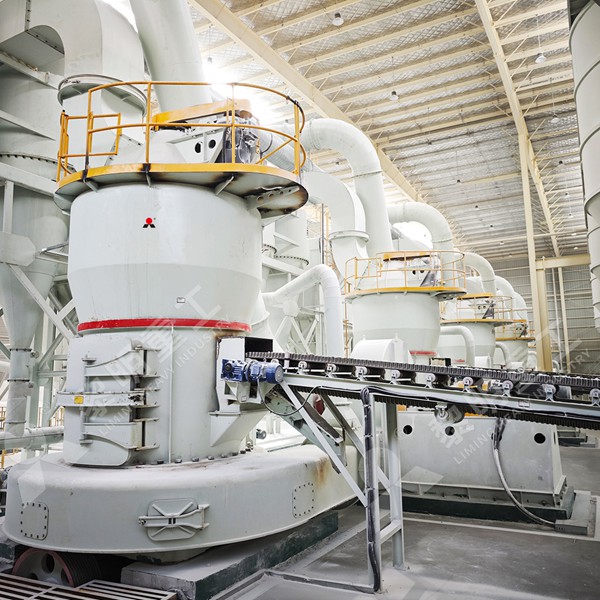
The advantages of using LIMING's grinding solutions for paper mill limestone are multifaceted. First, the consistent fineness and narrow particle size distribution improve paper sheet formation and surface properties. Second, the mills' robust construction and reliable operation reduce maintenance downtime. Third, the efficient grinding mechanism and closed system design lower specific energy consumption per ton of product. Finally, the integrated dust collection system creates a cleaner workshop environment and prevents product loss. For paper manufacturers, this translates to enhanced final product quality, reduced operational costs, and a smaller environmental footprint.
In conclusion, the choice of grinding equipment is pivotal for the economics and quality output of a paper mill's filler and coating preparation plant. LIMING HEAVY INDUSTRY CO., LTD., with its deep-rooted expertise and continuous innovation, provides reliable and advanced Raymond Mill and MTW European Mill solutions. These machines are engineered to deliver precisely the limestone powder quality that the paper industry requires, backed by integrated system design and a commitment to performance and sustainability. By partnering with a seasoned manufacturer like LIMING, paper producers can secure a critical link in their supply chain, ensuring their raw material processing is efficient, consistent, and future-ready.
Frequently Asked Questions (FAQs)
- What is the typical fineness range achievable for limestone powder using your Raymond Mill in paper applications?
Our Raymond Mill can produce limestone powder with a fineness between 44μm (325 mesh) and 613μm, which is fully adjustable. For standard paper filler grades, the common range of 200-325 mesh (74-44μm) is easily and consistently achieved. - How does your mill system handle moisture in the limestone feedstock?
The grinding system integrates a drying function. The Raymond Mill is suitable for materials with less than 6% humidity. The hot air from the blower or an independent hot air source can dry the material simultaneously during grinding, ensuring smooth operation and preventing clogging. - What are the key maintenance aspects of the Raymond Mill in continuous operation?
Key maintenance focuses on the grinding rollers and ring, which are wear parts. Their service life depends on material abrasiveness. Regular lubrication of transmission parts and inspection of the classifier blades and wearing liners are recommended. Our mills are designed for easy access to major components to simplify maintenance. - Can your grinding system be automated for consistent product quality?
Yes. Our systems can be equipped with automatic electric control systems that monitor and regulate feeding rate, grinding pressure, and classifier speed. This automation helps maintain stable operation and consistent product fineness with minimal manual intervention. - How does the MTW European Type Mill differ from the traditional Raymond Mill for limestone grinding?
The MTW Mill incorporates more advanced technology, including a curved shovel blade for better feeding, a more efficient internal airflow channel, and an improved powder separator. It generally offers higher productivity, lower energy consumption per ton, and often finer potential fineness, making it suitable for larger, more modern paper production facilities.


