Published: October 26, 2023
For rubber product manufacturers seeking to enhance material performance and cost-efficiency, the integration of high-quality limestone powder as a functional filler is a well-established practice. The key to unlocking its full potential lies in the precision grinding technology used to process it. LIMING HEAVY INDUSTRY's Raymond Mill, engineered with decades of industrial machinery expertise, stands as an optimal solution for producing the consistent, fine-grade limestone powder essential for modern rubber compounding. This article explores the technical synergy between advanced milling equipment and the demanding specifications of the rubber industry, detailing how the right grinding technology directly influences filler properties, dispersion, and ultimately, the quality of the final rubber product.
Since its establishment in 1987, LIMING HEAVY INDUSTRY CO., LTD. has dedicated itself to the research, manufacturing, and sales of large and medium-sized crushing and grinding equipment. Operating from its modern facilities in Zhengzhou's HI-TECH Industry Development Zone and Shangjie Industry Park, the company has built a reputation on a foundation of scientific management, precision manufacturing, and continuous innovation. This commitment to technological advancement ensures that each piece of equipment, including the Raymond Mill, is designed to meet the rigorous demands of global industries, focusing on reliability, productivity, and environmental sustainability.
The role of limestone powder (primarily calcium carbonate) in rubber products cannot be overstated. It acts as a reinforcing agent, a volume extender, and a processing aid. It improves tensile strength, tear resistance, and dimensional stability while often reducing material costs. However, the efficacy of limestone powder is heavily dependent on its particle size distribution, morphology, and surface area. Agglomerates or inconsistent particle sizes can lead to poor dispersion within the rubber matrix, creating weak points and compromising the product's integrity. This is where the precision of the grinding process becomes critical.
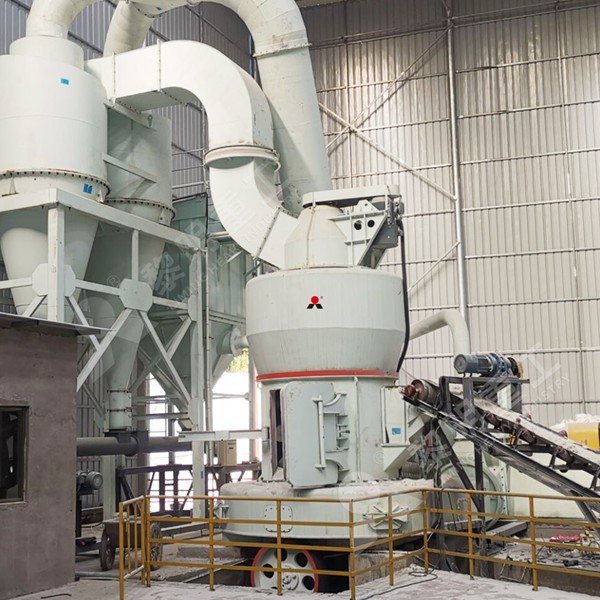
LIMING's Raymond Mill is specifically engineered to address these precise requirements. It is suitable for processing non-flammable, non-explosive materials with a Mohs hardness under 7 and humidity less than 6%, making it ideal for grinding natural limestone. The mill operates on a principle where materials are ground between rollers and a grinding ring. The ground powder is carried by an air stream to a classifier, where oversized particles are separated and returned for further grinding, while the fine product is collected. This closed-circuit system allows for precise control over fineness, with output adjustable in the range of 613μm to 44μm (approximately 30 to 400 mesh). For rubber applications, a fineness typically between 200 to 800 mesh is often targeted to achieve an optimal balance of reinforcement and dispersion.
For rubber product manufacturers, the benefits of utilizing a dedicated Raymond Mill for limestone processing are multifaceted. Firstly, the consistent fineness ensures uniform filler distribution, leading to homogeneous compound properties and predictable performance in extrusion, calendering, and molding processes. Secondly, the dry grinding process maintains the chemical purity of the limestone, preventing contamination that could affect rubber cure kinetics or final properties. The system's integrated drying capability is also crucial, as controlling moisture content is essential for both the grinding efficiency and the subsequent mixing with hygroscopic rubber polymers.
Beyond the core Raymond Mill, LIMING's engineering philosophy of "scientific research tackling key problems" is evident in its broader portfolio, such as the MTW European Type Grinding Mill and the MW Micro Powder Mill. While the standard Raymond Mill is perfectly suited for most rubber-grade limestone powder, these advanced models offer solutions for even finer or higher-volume requirements. The MTW Mill, with its patented technology, provides higher productivity and energy efficiency for large-scale operations, whereas the MW Micro Powder Mill can achieve superfine powders down to 5μm (d97), suitable for specialized high-performance rubber compounds where ultrafine fillers are required for enhanced reinforcement.
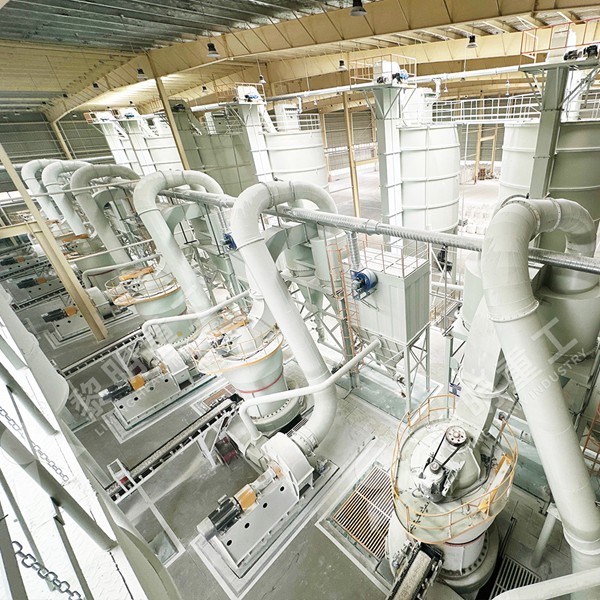
The working environment is also a key consideration. Modern Raymond Mills from LIMING are designed with integrated pulse dust collection systems, ensuring that the powder handling process complies with stringent environmental and workplace safety standards. This closed, negative-pressure operation minimizes dust emission, protecting both operators and the surrounding environment—a vital aspect for any responsible manufacturing facility.
In conclusion, the production of high-quality limestone powder for the rubber industry is a specialized task that demands robust, precise, and reliable grinding technology. LIMING HEAVY INDUSTRY's Raymond Mill, backed by over three decades of engineering excellence and a steadfast commitment to innovation, provides a proven and efficient solution. By enabling control over critical powder characteristics, it empowers rubber product manufacturers to optimize their formulations, improve product quality, and maintain a competitive edge in a demanding market.
Frequently Asked Questions (FAQs)
1. What is the typical fineness range of limestone powder for rubber products, and can your Raymond Mill achieve it?
For most rubber applications, such as tires, hoses, and seals, limestone powder (calcium carbonate) is typically used in the range of 200 to 800 mesh (approximately 74 to 15 microns). Our Raymond Mill is specifically designed to produce powder within a range of 44 to 613 microns (approx. 30 to 400 mesh), making it perfectly capable of meeting the standard requirements. For ultrafine applications below 800 mesh, our MW Micro Powder Mill would be the recommended solution.
2. How does the moisture content of limestone affect the grinding process in your mill?
Our Raymond Mill is suitable for materials with humidity less than 6%. Excessive moisture can cause material adhesion inside the grinding chamber and clog the classifier, reducing efficiency and output fineness. The mill system can integrate drying functions, using hot air from an external source to dry and grind simultaneously, ensuring optimal processing conditions for slightly damp feedstock.
3. Is the system environmentally friendly regarding dust control?
Yes. The standard configuration of our Raymond Mill grinding line includes a high-efficiency pulse jet bag filter or cyclone powder collector with a secondary bag filter. This creates a closed-circuit, negative-pressure air flow system that effectively contains and collects over 99.9% of the process dust, ensuring emissions are well within national environmental protection standards and providing a clean workshop environment.
4. What is the main difference between your Raymond Mill and your MTW European Type Grinding Mill for this application?
While both are excellent for limestone, the MTW European Type Grinding Mill represents a technological evolution. It features a curved shovel blade for better feeding, a more advanced internal blade classifier for precision, and an overall design that often results in higher capacity, lower energy consumption per ton, and longer wear-part life for large-scale, continuous production plants.
5. Can the same mill be used to grind other mineral fillers for rubber, such as talc or kaolin?
Absolutely. Our Raymond Mill is versatile and suitable for processing various non-flammable, non-explosive mineral materials with a Mohs hardness below 7. This includes common rubber fillers like talc, kaolin (clay), and barite. The grinding principle remains the same, though parameters like roller pressure and classifier speed may be adjusted to achieve the desired fineness and output for different material characteristics.


