Published: October 26, 2023
In the demanding world of mineral processing, achieving consistent and precise particle size distribution is paramount for product quality and operational efficiency. Recognizing this critical need, Liming Heavy Industry introduces a groundbreaking advancement in fine grinding technology: the Calcite-optimized Raymond Mill integrated with real-time particle size monitoring. This innovative system represents a significant leap forward from traditional grinding methods, combining the proven, robust mechanics of the Raymond mill with state-of-the-art digital oversight. By enabling continuous, in-process analysis of the output fineness, this solution empowers operators in the non-metallic minerals sector—particularly in calcium carbonate (calcite) processing—to maintain unparalleled control over their product specifications, reduce waste, optimize energy consumption, and ensure batch-to-batch consistency. This article delves into the technical integration, operational benefits, and the transformative impact this intelligent grinding system brings to modern production lines.
For over three decades, Liming Heavy Industry Co., Ltd. has been at the forefront of crushing and grinding equipment manufacturing. Founded in 1987, the company has grown into a leader in domestic and overseas machinery markets by adhering to principles of precision manufacturing, continuous innovation, and a strong R&D focus. With headquarters in the HI-TECH Industry Development Zone of Zhengzhou and extensive manufacturing facilities, Liming's expertise is built on a foundation of solving real-world industrial challenges. The development of the enhanced Raymond Mill with monitoring capabilities is a direct result of this philosophy—aiming at the technological frontier to provide tangible improvements in customer operations.
The core of this system remains the reliable Raymond Mill, a workhorse in industries ranging from metallurgy and building materials to chemicals and mining. Specifically engineered for processing non-flammable, non-explosive materials with Mohs hardness below 7 and humidity less than 6%, it is exceptionally suited for calcite. The traditional mill operates on the principle of grinding materials between rollers and a grinding ring, where the ground powder is carried by an air stream to a classifier. Particles meeting the fineness requirement pass through, while oversized particles fall back for regrinding, ensuring a closed-circuit, efficient process capable of achieving a fineness range between 44μm and 613μm.
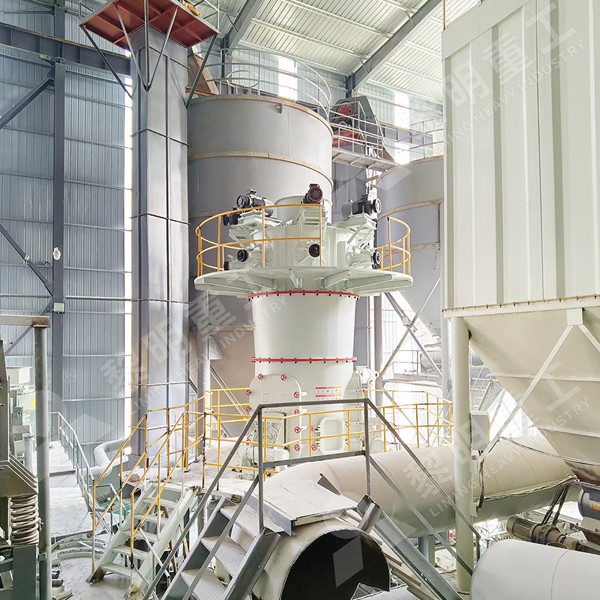
The revolutionary enhancement lies in the seamless integration of a real-time particle size analyzer and monitoring dashboard. This system continuously samples the product stream exiting the classifier, employing technologies such as laser diffraction or dynamic image analysis to provide instantaneous feedback on the particle size distribution (PSD). The data is displayed on an intuitive Human-Machine Interface (HMI) in the control room, showing key metrics like D50, D97, and full distribution curves. More than just a monitoring tool, this system can be linked to the mill's operational parameters—such as the classifier speed, feeder rate, and grinding pressure—enabling the potential for automated feedback loops to maintain the target fineness despite variations in feed material.
The benefits of this integration are profound for calcite producers. First and foremost, it ensures product quality consistency. Variations in raw calcite feedstock can subtly affect the grinding dynamics. With real-time monitoring, deviations from the target PSD are detected immediately, allowing for corrective action before an entire batch is out of specification, thereby drastically reducing product giveaway and customer rejections. Secondly, it drives operational efficiency. Operators are no longer reliant on intermittent, time-consuming offline lab tests, which introduce delays. The mill can be run at its optimal point, preventing over-grinding—a significant and unnecessary energy cost—and maximizing throughput. Finally, it contributes to predictive maintenance. Trends in the energy required to achieve a certain fineness or changes in the PSD shape can signal wear on grinding rolls or classifier blades, allowing for planned maintenance instead of unexpected downtime.
This intelligent Raymond Mill system aligns perfectly with Liming Heavy Industry's commitment to "scientific research tackling key problems" and "technological progress." It embodies the shift from standalone machinery to integrated, smart process solutions. For a calcite processing plant, this means transitioning from a reactive to a proactive operation. The ability to document and trace the PSD for every hour of production also adds a valuable layer of quality assurance and data for process optimization.
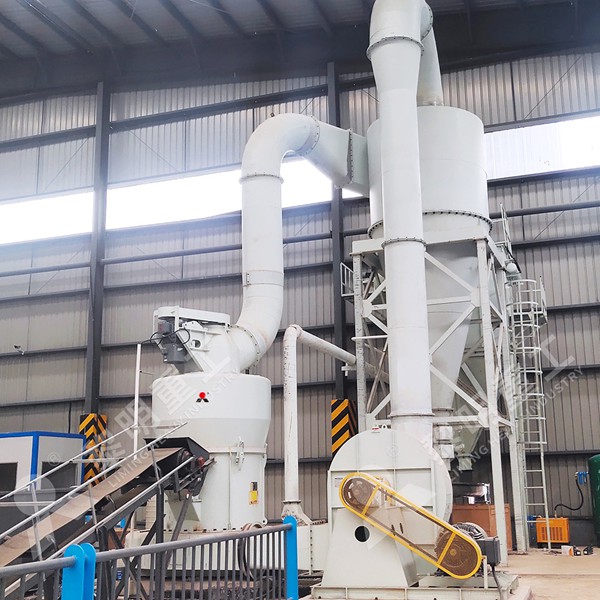
In conclusion, the Calcite Raymond Mill with real-time particle size monitoring from Liming Heavy Industry is more than an upgrade; it is a redefinition of control in fine powder production. By marrying robust, time-tested grinding mechanics with digital intelligence, it offers producers of calcium carbonate and similar non-metallic minerals a powerful tool to enhance quality, efficiency, and profitability in an increasingly competitive market. This innovation underscores Liming's role not just as an equipment manufacturer, but as a partner in advancing the technological capabilities of the global mineral processing industry.
Frequently Asked Questions (FAQ)
Q1: How does the real-time monitoring system handle the high-dust environment of a grinding mill?
A1: The system is engineered for industrial durability. The sampling interface uses a proprietary, self-cleaning, isokinetic extraction probe designed to handle pneumatic powder streams. The analyzer itself is housed in a protective enclosure with positive air pressure or purging systems to prevent dust ingress, ensuring reliable operation in harsh plant conditions.
Q2: Can this system be retrofitted to existing Raymond mills, or is it only for new machines?
A2: Yes, Liming Heavy Industry offers a retrofit package for many existing Raymond mill models. Our engineering team conducts a feasibility study to design a custom integration plan that includes the sampler installation, analyzer mounting, and control system upgrade with minimal disruption to your ongoing production.
Q3: What is the typical calibration and maintenance requirement for the particle size analyzer?
A3: The system is designed for low maintenance. Initial calibration is performed using standard reference materials. Routine validation checks are recommended weekly or monthly, depending on application criticality. The optical windows and sampling lines require periodic cleaning, a process often facilitated by automated cleaning cycles built into the system.
Q4: Does the monitoring system only work for calcite, or can it be used for other materials?
A4: While optimized and marketed for calcite applications, the monitoring system is highly versatile. It can be configured and calibrated for any dry, powdered material processed through the mill, including gypsum, talc, kaolin, slag, and pulverized coal, making it a valuable asset for multi-product facilities.
Q5: How does this intelligent system impact the overall energy consumption of the grinding process?
A5: It significantly improves energy efficiency. By preventing over-grinding—a major source of energy waste—and allowing the mill to operate consistently at its peak efficiency point, users typically report measurable reductions in specific energy consumption (kWh/ton). The data also helps identify optimal feed rates and classifier settings for the lowest energy use per target fineness.


