Published: October 26, 2023
LIMING HEAVY INDUSTRY's Calcite Raymond Mill represents a pinnacle of grinding technology, integrating advanced German engineering into its core grinding rollers and rings. This mill is specifically engineered for the efficient and precise processing of calcite and other non-metallic minerals, offering superior fineness control, operational stability, and energy efficiency. By leveraging decades of manufacturing expertise and a commitment to R&D, this equipment delivers reliable performance for industries ranging from construction materials to chemical processing, ensuring high-quality powder output with minimal environmental impact.
At the heart of this advanced Raymond Mill lies its grinding assembly. The rollers and rings are manufactured using proprietary German-inspired technology, focusing on material science and precision machining. This results in components with exceptional wear resistance and longevity, even under continuous high-load operation grinding abrasive materials like calcite. The geometry of the grinding surface is optimized to create an efficient grinding zone, ensuring maximum contact and consistent particle size reduction. This technological focus directly translates to reduced downtime for part replacement and more stable product quality over extended periods.
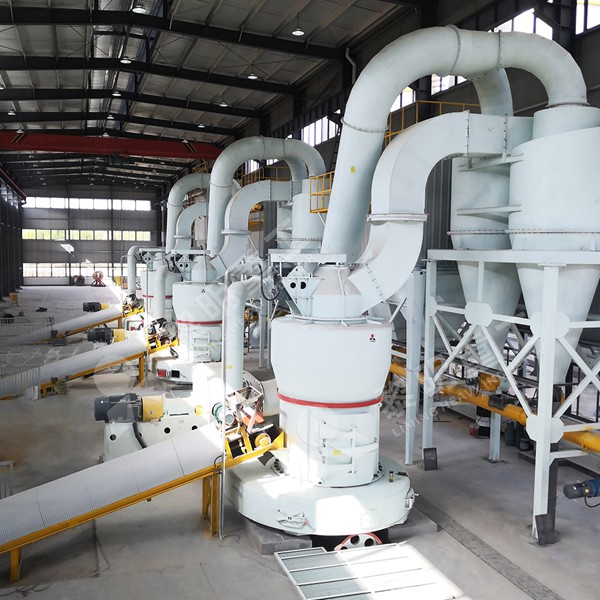
The operational principle of the mill is a masterpiece of mechanical efficiency. Material is fed into the grinding chamber where it is pulverized between the rotating rollers and the stationary ring. The centrifugal force keeps the rollers pressed against the ring, creating the grinding action. The ground material is then carried by the air flow generated by an integrated blower to the classifier. Here, a critical separation occurs: particles meeting the target fineness proceed to the collection system, while coarser particles are rejected back to the grinding chamber for further milling. This closed-circuit system is key to achieving the precise fineness range, typically between 44μm and 613μm, which is crucial for calcite applications in plastics, paints, and coatings.
Beyond the core grinding mechanism, the mill is designed as a complete, intelligent system. It integrates drying, grinding, powder selection, and conveying into a single, compact unit. For calcite, which may contain some moisture, the integrated drying capability using hot air from a furnace is invaluable. The automatic electric control system allows for precise adjustment of parameters like feed rate, grinding pressure, and classifier speed, enabling operators to dial in the exact product specifications required. This level of automation ensures repeatable results and reduces the potential for human error.
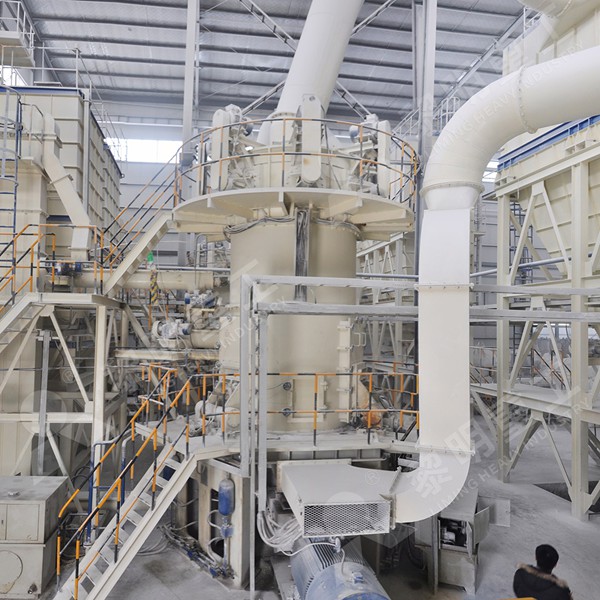
Environmental responsibility is a cornerstone of the design. The entire milling process is enclosed, and the system is equipped with a high-efficiency pulse dust collector. This ensures that dust emissions are kept far below stringent national and international environmental standards, creating a cleaner and safer workplace. Furthermore, the efficiency of the grinding process itself, a direct result of the advanced roller and ring design and optimized airflow, leads to significant energy savings compared to traditional milling methods. This makes the mill not only a tool for quality production but also a contributor to sustainable manufacturing practices.
LIMING HEAVY INDUSTRY backs this technology with its robust corporate foundation. With over three decades of experience in manufacturing crushing and grinding equipment, and a vast manufacturing base spanning its Hi-Tech Development Zone and Shangjie Industry Park facilities, the company embodies a culture of "precision manufacturing, pioneering and innovation." Its dedicated scientific research team continuously focuses on technological frontiers, ensuring that products like the Calcite Raymond Mill remain at the cutting edge of performance and reliability.
In application, this mill is exceptionally versatile for calcite processing. It is suitable for producing ground calcium carbonate (GCC) of various fineness grades used as a functional filler. Its stability and control make it ideal for meeting the strict specifications required by high-end industries. Whether the end-use is in paper, sealants, adhesives, or pharmaceuticals, the consistency of the powder produced is paramount, and this mill is engineered to deliver just that.
Frequently Asked Questions (FAQ)
- What is the primary advantage of the German-technology grinding rollers and rings in this mill?
The primary advantage is dramatically increased wear life and grinding consistency. The advanced material composition and precision engineering reduce the frequency of replacement parts, lower maintenance costs, and ensure the output fineness remains stable over longer operational periods. - Can this Raymond Mill handle moist calcite feedstock?
Yes. The mill system integrates a drying function. By introducing controlled hot air into the grinding chamber, it can effectively handle calcite with a certain moisture content, simultaneously drying and grinding the material in one pass. - How is the fineness of the final calcite powder controlled?
Fineness is precisely controlled by the speed of the integrated classifier or separator. Adjusting the classifier speed changes the centrifugal force acting on the powder particles, allowing only particles of a specific size to pass through to the collection system. Coarser particles are recycled for further grinding. - What capacity range does this Calcite Raymond Mill cover?
Based on the Raymond Mill specifications, this series of mills is designed for capacities ranging from approximately 1.2 to 4.5 tons per hour, depending on the feed size, material hardness, and desired product fineness. - How does the system ensure environmentally friendly operation?
The system is a closed-circuit design equipped with a high-efficiency pulse-jet dust collector. This captures over 99.9% of airborne particles, ensuring emissions are clean and compliant with environmental regulations, making the entire production process green and sustainable.


