Published: October 26, 2023
Liming Heavy Industry Co., Ltd. stands as a global leader in the design and manufacturing of large and medium-sized crushing and grinding equipment. With a foundation built in 1987 on principles of scientific research, precision manufacturing, and continuous innovation, the company delivers a comprehensive portfolio of milling machinery engineered for performance, reliability, and environmental sustainability. This article provides a detailed technical analysis of Liming's core grinding mill series, examining their specifications, operational principles, and application-specific performance to guide industry professionals in selecting the optimal solution for their material processing needs.
At the heart of Liming's product philosophy is a commitment to integrating advanced technology with robust engineering. The company's extensive R&D efforts, supported by a mature scientific team, are focused on enhancing product competitiveness and pushing the technological frontiers of the industry. This is evident across their production facilities, including the 80,000 m² headquarters in Zhengzhou's HI-TECH Industry Development Zone. The result is a range of equipment that addresses the complex demands of modern industries such as cement, power generation, metallurgy, chemicals, and non-metallic mineral processing.
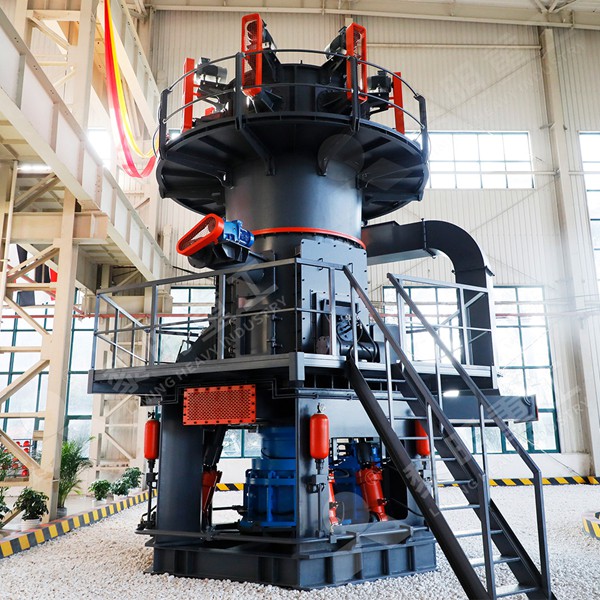
A flagship product, the LM Vertical Roller Mill, exemplifies this integrated approach. It combines drying, grinding, powder selection, and conveying into a single, automated system. With an input size range of 30-55mm and a capacity spanning from 10 to 400 T/H, it is a powerhouse for large-scale operations. Its new milling device and automatic electric control system ensure high efficiency, particularly in non-metallic minerals, coal, and slag grinding. The vertical design contributes to a smaller footprint and lower energy consumption compared to traditional ball mills, making it a cornerstone for projects where space and operational costs are critical factors.
For fine and superfine grinding applications, Liming offers several specialized mills. The classic Raymond Mill remains a versatile workhorse, capable of processing non-flammable, non-explosive materials with Mohs hardness below 7 and humidity under 6%. It produces a fineness between 613μm and 44μm, suitable for processing calcium carbonate, gypsum, and for power plant desulfurization. Its capacity ranges from 1.2 to 4.5 T/H. Building upon this legacy, the MTW European Type Grinding Mill represents a significant technological upgrade. Featuring patented technology, it offers enhanced stability, higher productivity, and superior energy efficiency. Operating as a complete closed-circuit system with components like a jaw crusher, vibrating feeder, and pulse dust collector, it is engineered for large-scale, environmentally compliant powder production in the 3-55 TPH range, with an input size of 30-50mm.
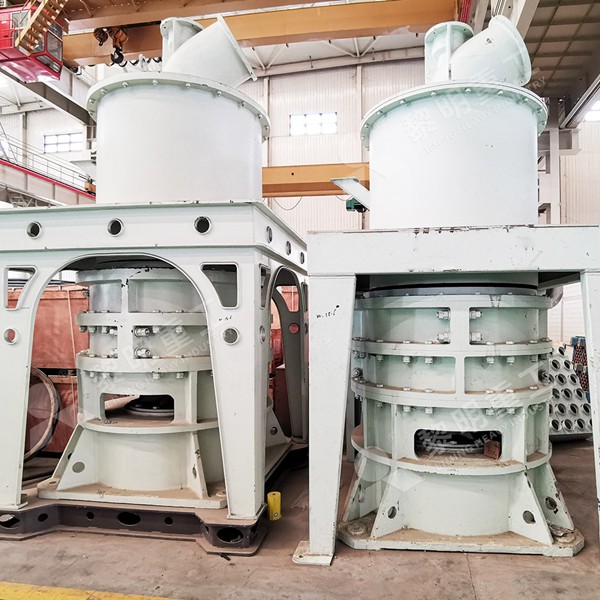
Pushing the boundaries of fineness, the MW Micro Powder Mill incorporates advanced Swedish grinding technology to achieve remarkable superfine results. It can produce powder with a fineness up to d97 ≤ 5μm, adjustable between 325 to 3250 mesh. Its working principle involves a reducer-driven main shaft that rotates turnplates, causing dozens of rollers to grind material against a ring raceway under centrifugal force. With a capacity of 0.5-25 T/H, it is the ideal choice for applications requiring ultra-fine powders, such as high-grade calcium carbonate, while its integrated pulse precipitator ensures green production.
The Ball Mill remains a fundamental and highly reliable grinding plant for a wide array of materials. As a key equipment for milling after crushing, it can grind various ores and is widely used in beneficiation, construction, and the chemical industry. Its horizontal rotating design, transmitted by an outer gear, uses steel balls within a lined chamber to impact and grind materials via centrifugal force. With a capacity range of 0.65-50 T/H and handling input sizes up to 25mm, it is a versatile solution for cement, coal, and metallurgical operations where proven, robust technology is paramount.
In summary, Liming Heavy Industry's grinding mill portfolio is characterized by a clear segmentation of technology to match specific performance criteria—from the high-capacity, integrated LM Vertical Roller Mill to the superfine precision of the MW Micro Powder Mill. Each product is backed by decades of engineering expertise and a corporate ethos dedicated to technological progress and sustainable manufacturing practices.
Frequently Asked Questions (FAQs)
1. What is the primary advantage of the LM Vertical Roller Mill over traditional horizontal mills?
The LM Vertical Roller Mill's primary advantages are its integrated system design—combining drying, grinding, classification, and conveying—and its vertical structure. This leads to a significantly smaller footprint, lower energy consumption per ton of processed material, and easier maintenance due to its more accessible grinding parts.
2. Can the Raymond Mill handle moist materials?
The standard Raymond Mill is designed for materials with a humidity of less than 6%. For materials with higher moisture content, integrated drying systems (often available as an accessory or in modified configurations) would be required to ensure optimal grinding efficiency and prevent clogging.
3. How does the MTW European Type Grinding Mill achieve better energy efficiency?
The MTW mill incorporates several patented technological improvements, including a curved air duct, internal efficient powder separator, and wear-resistant grinding rollers and ring. These design enhancements optimize airflow, reduce recirculation of finished product, and minimize grinding resistance, collectively leading to lower power consumption.
4. What industries are best suited for the MW Micro Powder Mill?
The MW Micro Powder Mill is specifically engineered for industries requiring ultra-fine, high-purity powders. Key applications include advanced ceramics, high-grade paint and coatings, pharmaceuticals (excipients), specialty chemicals, and premium fillers for plastics and composites where particle size distribution is critical.
5. Is the Ball Mill suitable for continuous operation in a cement production line?
Yes, the Ball Mill is exceptionally well-suited for continuous operation in cement and similar large-scale mineral processing lines. Its robust construction, simple operational principle, and ability to handle large feed sizes make it a reliable workhorse for 24/7 production environments, often operating in closed circuit with classifiers.


