Published: October 26, 2023
For African calcite mining operations seeking robust, high-yield grinding solutions, Liming Heavy Industry's advanced Raymond Mill and MTW European Type Grinding Mill offer unparalleled reliability and efficiency. Engineered specifically for processing non-metallic minerals like calcite under demanding conditions, these mills combine heavy-duty construction with intelligent design to deliver consistent fine powder output between 44μm and 613μm, ensuring optimal productivity for large-scale mining ventures while adhering to stringent environmental and operational standards.
Africa's vast calcite deposits present both immense opportunity and significant processing challenges. The continent's mining operations require equipment that can withstand variable feed materials, intermittent power supply, and remote operational environments while maintaining precise particle size control for market-ready products. Liming Heavy Industry, with over three decades of specialization in manufacturing medium and large-scale crushing and grinding equipment, has developed Raymond Mill technology specifically adapted to these demanding conditions. Our mills are not merely exported to Africa; they are engineered for Africa—considering the unique mineral characteristics, infrastructure limitations, and production scale requirements of the continent's growing mining sector.
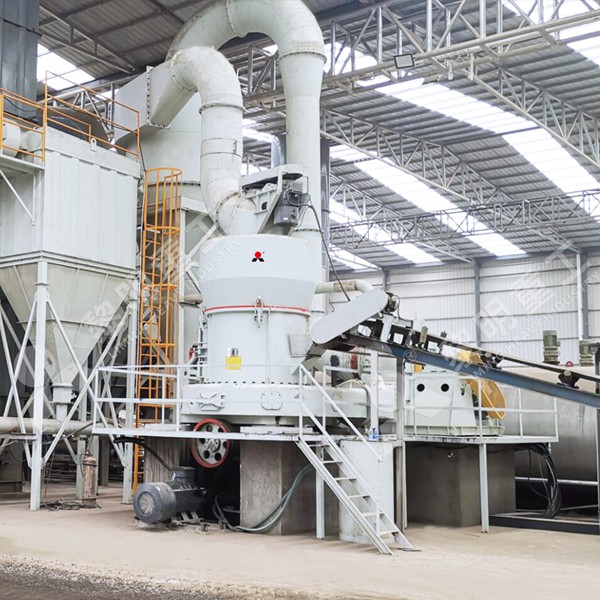
The core advantage of our Raymond Mill for calcite processing lies in its simplified yet rugged system design. Unlike more complex grinding systems that require extensive auxiliary equipment and specialized maintenance, our mill integrates drying, grinding, powder selection, and conveying into a single, coherent unit. This integration proves particularly valuable in remote African mining locations where technical support may be limited and operational simplicity translates directly to reduced downtime. The mill processes materials with hardness under 7 Mohs and humidity less than 6%—parameters perfectly suited to most African calcite deposits—transforming raw mineral into precisely graded powder with throughput capacities ranging from 1.2 to 4.5 tons per hour depending on configuration.
For operations requiring higher throughput or more advanced technological features, our MTW European Type Trapezium Mill represents the next evolution in calcite grinding technology. As the upgraded successor to traditional Raymond mills, this system incorporates patented technological improvements that directly address challenges common in African mining contexts. The closed-circuit grinding system with pulse dust collector ensures minimal environmental impact—a critical consideration for sustainable mining development—while maintaining productivity levels from 3 to 55 tons per hour. The system's ability to handle input sizes up to 50mm reduces the need for extensive pre-crushing stages, streamlining the entire processing workflow from quarry to powder.
What truly distinguishes our grinding solutions is their design philosophy: precision manufacturing married to operational resilience. Every component, from the grinding rings and rollers manufactured from high-chrome alloys to withstand abrasive calcite, to the centralized electric control system that enables single-operator monitoring, is engineered for longevity in challenging conditions. Our research and development team, operating from our 80,000 square meter headquarters in Zhengzhou's HI-TECH Industry Development Zone, continuously refines these designs based on field data from operating sites worldwide, including specific feedback from African installations. This commitment to 'scientific research tackling key problems' ensures our technology evolves in direct response to real-world operational challenges.
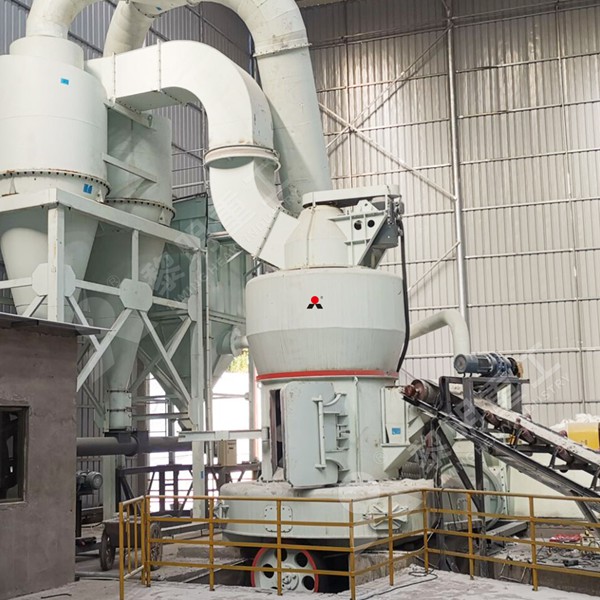
The working principle of our grinding systems ensures optimal calcite processing efficiency. Material is fed uniformly into the grinding chamber where it is ground between rotating rollers and a stationary ring. The ground material is then carried by air flow to the classifier, where oversized particles are separated and returned for regrinding while correctly sized powder proceeds to collection. This closed-circuit system maximizes energy efficiency—a crucial factor in regions with high power costs—and produces remarkably consistent product quality. For calcite destined for industrial applications like plastics, paints, or construction materials, this consistency in particle size distribution directly correlates to product performance and market value.
Beyond the machinery itself, Liming Heavy Industry provides comprehensive support tailored to African operations. From initial site assessment and system configuration to operator training and maintenance planning, our approach recognizes that successful implementation requires more than equipment delivery. We understand that African calcite mining operations vary significantly in scale, infrastructure, and technical expertise, and our solutions are correspondingly flexible. Whether configuring a standalone Raymond Mill for a mid-sized operation or designing a complete grinding circuit with MTW European Mill as the centerpiece for a large-scale mining venture, our technical team applies three decades of global experience to create optimized solutions.
As African nations increasingly focus on value-added mineral processing rather than raw material export, efficient grinding technology becomes a strategic asset. Liming Heavy Industry's Raymond Mill and related grinding systems enable mining operations to transform locally sourced calcite into high-value powder products, supporting industrial development and economic diversification. Our commitment to 'technological progress and technological improvement' ensures that our equipment remains at the forefront of grinding technology, helping African calcite producers compete effectively in global markets while maximizing the economic benefits retained within their communities and countries.
Frequently Asked Questions
1. What makes your Raymond Mill suitable for remote African mining sites with limited infrastructure?
Our mills are designed for operational simplicity and reliability, with integrated systems that reduce auxiliary equipment needs. They feature robust construction for harsh environments and can be configured with optional power solutions to accommodate unstable grid supply.
2. How does the particle size range of 44μm to 613μm meet various market requirements for calcite powder?
This adjustable range covers most industrial applications: finer powders (44-150μm) for premium paints, plastics, and pharmaceuticals, and coarser grades (150-613μm) for construction materials, animal feed, and agricultural applications, allowing producers to target multiple markets.
3. What maintenance requirements should African operators anticipate for continuous calcite grinding operations?
Key maintenance focuses on wear parts like grinding rollers and rings, with service intervals depending on calcite abrasiveness. Our design allows for accessible inspection and replacement, and we provide comprehensive documentation and training to establish effective maintenance protocols.
4. Can your grinding systems handle variations in moisture content often found in African calcite deposits?
Yes, our mills integrate drying capabilities and can process materials with up to 6% humidity without pre-drying. For higher moisture content, we can recommend and supply appropriate pre-drying equipment to integrate with the grinding system.
5. How does your technology ensure environmental compliance for calcite processing operations?
Our closed-circuit systems with pulse dust collectors minimize particulate emissions, meeting international environmental standards. The efficient design reduces energy consumption per ton of product, lowering the carbon footprint of calcite processing operations.


