Published: October 26, 2023
Calcite, a cornerstone mineral in numerous industries from plastics and paints to construction and pharmaceuticals, demands precise and efficient milling solutions to achieve its full commercial potential. Standard grinding equipment often falls short when faced with specific requirements for particle size distribution, whiteness preservation, throughput, or energy efficiency. This article explores how LIMING HEAVY INDUSTRY leverages its decades of engineering expertise to provide fully customized Raymond mill designs, transforming generic calcite processing into a finely tuned, high-performance operation. By integrating advanced grinding principles, intelligent control systems, and tailored system configurations, we deliver solutions that optimize calcite value for each unique application.
Founded in 1987, LIMING HEAVY INDUSTRY has built its reputation on the research, manufacturing, and sales of large and medium-sized crushing and grinding equipment. With a sprawling manufacturing base and a steadfast commitment to scientific management and technological innovation, the company has positioned itself at the forefront of the machinery manufacturing industry. Our philosophy centers on "scientific research tackling key problems," driving us to develop solutions that directly enhance product competitiveness and address the specific technological frontiers of our clients' industries.
The conventional Raymond mill, a workhorse for mineral grinding, offers a solid foundation. It is suitable for processing non-flammable, non-explosive materials like calcite with Mohs hardness under 7 and humidity below 6%, producing fineness between 44μm and 613μm. However, "specific calcite requirements" often push beyond these standard parameters. A paint manufacturer may require an ultra-narrow particle distribution centered at 10μm (d97) for optimal opacity and gloss, while a paper filler producer might prioritize maximum brightness by minimizing iron contamination and heat generation during grinding. A compound masterbatch producer could need exceptionally high throughput of a 400-mesh product. A one-size-fits-all mill cannot optimally satisfy all these divergent needs.
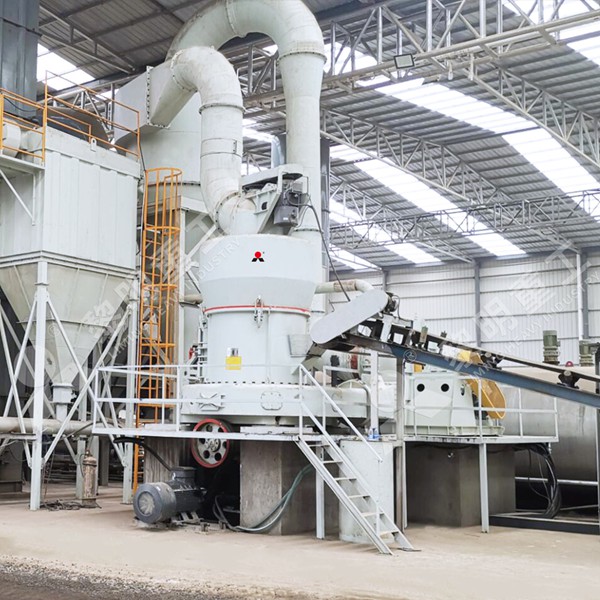
This is where LIMING's customized design approach becomes critical. Our process begins with a deep analysis of the client's raw calcite characteristics—initial size, moisture content, impurity profile—and the exact specifications of the desired end product. We then engineer modifications to our core Raymond mill and MTW European Type Grinding Mill platforms. For instance, to achieve superfine calcite powder below 10μm while maintaining output, we might integrate design concepts from our MW Micro Powder Mill, such as optimizing the curvature of the grinding ring and roller, enhancing the classifier's precision and rotational speed, or incorporating a secondary classification system. For preserving whiteness, we specify wear-resistant ceramic or special alloy linings for critical contact parts to prevent metallic contamination and design an efficient, closed-circuit cooling system to manage process temperature.
The grinding system's heart is only one part of the equation. A truly customized solution encompasses the entire production line. We design integrated systems that may include pre-crushing stages with jaw crushers, precise feeding with variable-frequency vibrating feeders, efficient grinding, intelligent powder classification, and environmentally sound collection via pulse jet bag filters. The electrical control system is programmed for specific operational logic, allowing for automated adjustment of feed rate, grinding pressure, and classifier speed to maintain consistent product quality despite variations in feed material.
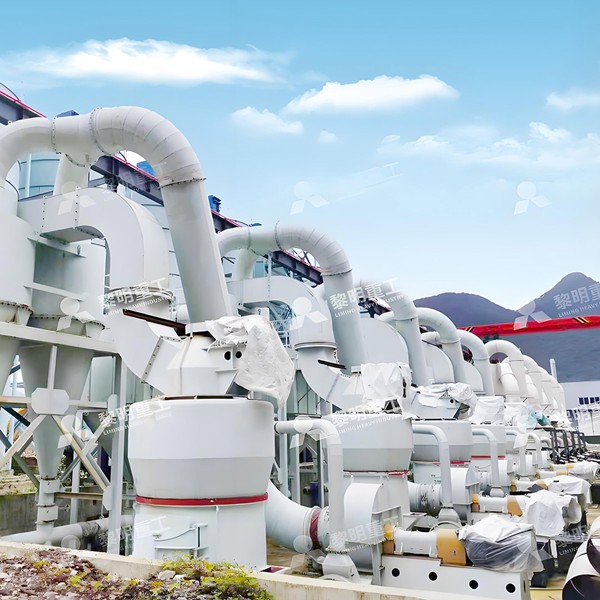
Our MTW European Type Trapezium Mill, with its patented technology, often serves as an excellent base for such custom projects. Its stable performance, high productivity, and inherent focus on energy saving and environmental protection align perfectly with modern calcite processing demands. We can modify its grinding roller sealing structure, upgrade the blade design of the centrifugal classifier, or integrate advanced PLC controls that monitor power consumption per ton of product, providing operators with real-time data to optimize efficiency. The goal is a seamless, closed-circuit system where every component, from crusher to dust collector, works in perfect harmony for the specific calcite product.
In conclusion, navigating the complex landscape of calcite processing requires more than off-the-shelf machinery. It demands a partner with profound engineering capabilities and a client-centric approach to design. LIMING HEAVY INDUSTRY combines its robust portfolio of grinding technologies—from Raymond and MTW mills to MW Micro Powder systems—with a dedicated research and development ethos to create bespoke milling solutions. By tailoring the grinding mechanism, system configuration, and control philosophy, we empower producers to unlock new levels of quality, efficiency, and profitability from their calcite resources, ensuring their final product precisely meets the stringent demands of their respective markets.
Frequently Asked Questions (FAQs)
1. What is the primary advantage of a customized Raymond mill over a standard model for calcite?
The primary advantage is optimized performance for your exact product specifications. Customization can significantly improve target fineness accuracy, increase throughput for a specific mesh size, enhance product whiteness by reducing contamination, and lower energy consumption per ton of output, leading to a better return on investment.
2. Can your customized design handle calcite with moisture content slightly above the typical 6% limit?
Yes, our engineering team can integrate drying functions into the system design. By adjusting the air flow temperature and volume from the blower or even incorporating a pre-dryer in the feed system, we can effectively process calcite with higher initial moisture, ensuring stable grinding conditions and final product quality.
3. How does your design ensure consistent particle size distribution in the final calcite powder?
Consistency is achieved through a combination of a precision-engineered grinding curve, a high-efficiency dynamic classifier with adjustable rotor speed, and a sophisticated automated control system. The system continuously monitors key parameters and makes micro-adjustments to feed rate and classifier speed to maintain the target particle size distribution despite minor fluctuations in feed material.
4. What measures are taken in the design to protect the environment?
Our customized systems are designed as negative-pressure, closed-circuit loops. They are equipped with high-efficiency pulse jet bag filter dust collectors that capture over 99.9% of airborne particles, ensuring emissions comply with strict environmental standards. The design also focuses on energy efficiency, reducing the overall carbon footprint of the grinding operation.
5. What is the typical process from inquiry to commissioning for a customized calcite mill?
The process involves: 1) Detailed consultation to understand your material and product requirements. 2) Laboratory testing and process simulation if needed. 3) Proposal of a customized system design and layout. 4) Manufacturing of the equipment at our facilities. 5) Supervision of installation and commissioning at your site. 6) Provision of operational training and after-sales support.


