Published: October 26, 2023
For European importers and processors of industrial minerals, navigating the complex regulatory landscape while maintaining production efficiency is a paramount challenge. This article provides a comprehensive technical analysis of calcite powder grinding solutions engineered for compliance with EU REACH regulations, focusing on advanced Raymond Mill technology from LIMING HEAVY INDUSTRY. We will explore the specific design philosophies, material science, and system integrations that ensure the final calcite powder not only meets stringent fineness and whiteness specifications but also adheres to the highest European standards for environmental safety and operational sustainability.
LIMING HEAVY INDUSTRY CO., LTD., with over three decades of expertise in manufacturing crushing and grinding equipment, has positioned its R&D at the technological frontier of the industry. Our commitment to "scientific research tackling key problems" is directly applied to developing milling systems suitable for the global market, particularly the regulation-intensive European Union. The core challenge for calcite processing lies in achieving consistent ultra-fine powders (typically within the 44μm to 613μm range) without introducing contaminants and while managing energy consumption and dust emissions effectively.
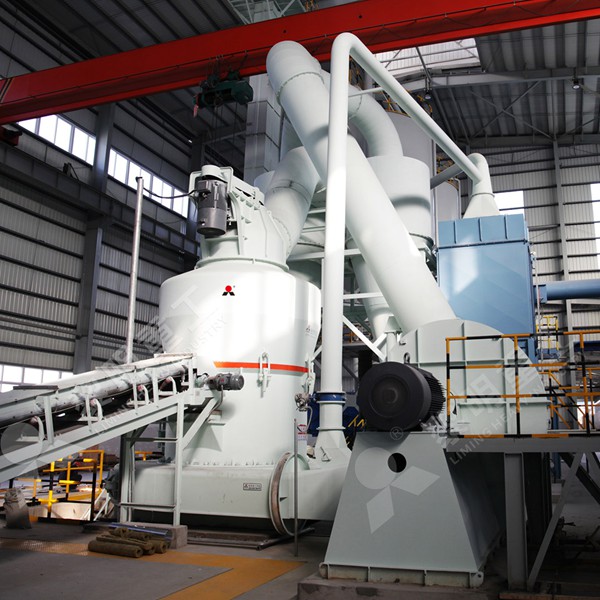
Our Raymond Mill, specifically configured for calcite, operates on a principle of grinding through rollers and rings. The system is a masterpiece of closed-loop engineering. Bulk calcite is first reduced by a crusher and then fed uniformly into the grinding chamber. Here, the material is ground between the rotating rollers and the stationary ring. The critical aspect for REACH compliance begins with the material of these wear parts. We utilize specially formulated, high-chromium, or ceramic alloys that are highly resistant to abrasion. This minimizes metallic wear debris, ensuring the final calcite powder maintains its chemical purity and is free from unintended substance migration—a key REACH concern.
The ground powder is carried upward by an air flow generated by an industrial blower. This air-powder mixture enters an integral high-efficiency separator. Particles meeting the target fineness pass through, while coarser particles are rejected back to the grinding zone for further processing. This internal classification ensures a narrow particle size distribution, crucial for consistent performance in downstream applications like plastics, paints, and adhesives in the EU market.
Perhaps the most significant feature for export to Europe is the integrated environmental control system. The entire grinding circuit is under negative pressure, preventing dust leakage. The air stream is continuously cleaned by a high-efficiency pulse jet baghouse dust collector before being recirculated. This collector, equipped with filter bags made from REACH-compliant materials, captures over 99.9% of particulate matter, ensuring emissions are far below EU limits. The system design inherently controls noise and promotes energy efficiency, aligning with the EU's broader ecological directives.
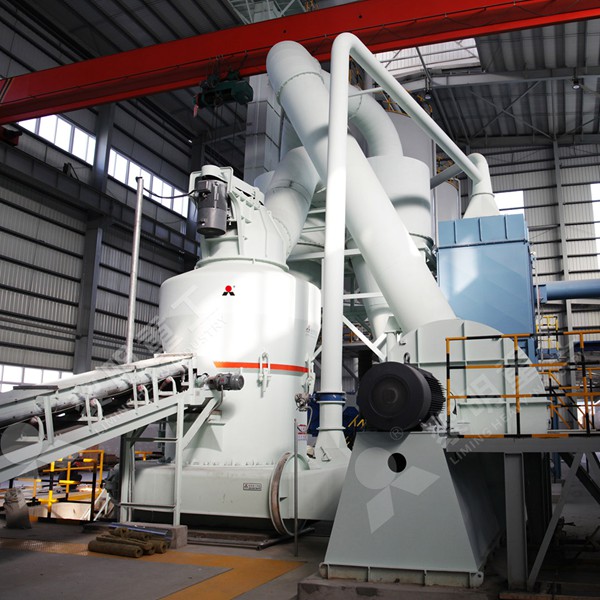
Beyond the base Raymond Mill, our technological portfolio offers pathways for higher-value calcite products. For applications demanding superfine powders (d97 ≤ 5μm), our MW Micro Powder Mill, which incorporates advanced European grinding technology, is an ideal solution. It operates on a similar principle of grinding with rollers but is engineered for higher rotational speeds and more precise classification, capable of producing powders up to 3250 mesh. This mill also features a completely sealed structure and a pulse dust removal system, maintaining the same commitment to REACH compliance and clean production.
For large-scale production lines, the MTW European Type Trapezium Mill represents the next generation. It improves upon traditional Raymond Mill designs with patented technologies like curved air duct and inner oil lubrication, enhancing stability, productivity, and energy savings. Its capacity range of 3-55 TPH makes it suitable for major calcite processing plants supplying the European construction and chemical industries. The system's design, from the jaw crusher feeder to the final powder collector, is conceived as a single, harmonious unit where contamination risk is engineered out.
Quality assurance for the EU market is embedded in our manufacturing process at our 80,000 m² Hi-TECH Industry Development Zone facility. Precision manufacturing and a modern management system govern production. Each mill destined for export undergoes rigorous testing and commissioning to verify performance metrics—capacity, fineness, energy consumption, and system airtightness—before shipment. We provide comprehensive technical documentation, including material certifications for key components and system performance data, to support our clients in their own regulatory due diligence.
In conclusion, exporting calcite powder to the European Union requires more than just a grinding mill; it requires a compliant powder processing ecosystem. LIMING HEAVY INDUSTRY's Raymond Mill and associated grinding technologies are engineered with this holistic view. By integrating purity-preserving grinding mechanics, intelligent classification, and stringent environmental controls into a reliable system, we deliver solutions that empower producers to meet both the quality demands of their customers and the regulatory mandates of the EU market with confidence and efficiency.
Frequently Asked Questions (FAQ)
- What specific mill components are critical for REACH compliance when grinding calcite?
The grinding rollers and rings, separator blades, and filter elements in the dust collector are most critical. They must be constructed from materials that do not release substances of very high concern (SVHC) into the powder. We use specially selected, wear-resistant alloys and fabrics with full material traceability. - How does the closed-loop system prevent contamination of the calcite powder?
The system operates under negative pressure, with all process air recirculated through a high-efficiency filter. This prevents ambient contaminants from entering and ensures any internal wear particles (minimal by design) are captured by the filter before the air returns to the grinding chamber, safeguarding powder purity. - Can your mills achieve the very fine particle sizes required for high-value applications like masterbatch?
Yes. While our standard Raymond Mill produces powder in the 44μm-613μm range, our MW Micro Powder Mill is specifically designed for superfine grinding, capable of producing calcite powder with a top cut (d97) as fine as 5 microns (3250 mesh), suitable for the most demanding applications. - What kind of technical support and documentation do you provide for EU market entry?
We provide detailed machinery specifications, material safety data sheets for key components, energy efficiency reports, and emission test data. We also offer remote commissioning support and operational training to ensure the system is run optimally to maintain compliance. - How do you ensure energy efficiency, which is a major concern for EU-based production?
Our mills incorporate several energy-saving features: optimized grinding chamber geometry for efficient particle fracture, high-efficiency classifiers that reduce over-grinding, variable-frequency drives on fans and feeders, and recirculating air systems that minimize thermal energy loss. The MTW European Mill, in particular, is designed with energy conservation as a core principle.


