Published: October 26, 2023
This article explores the advanced integration of Raymond Mill systems, specifically those engineered by LIMING HEAVY INDUSTRY, for the efficient production and surface treatment of high-quality calcite powder. We will delve into the technical synergy between robust grinding machinery and modern powder coating processes, highlighting how this integrated approach enhances product fineness, purity, and functional properties for demanding industrial applications. The discussion underscores the importance of system design, from raw material feeding to final collection, in achieving optimal coating uniformity and performance in the treated calcite powder.
For decades, the processing of non-metallic minerals like calcite has been a cornerstone of modern industry. The journey from raw limestone to a functional, value-added powder involves precise size reduction and often, subsequent surface modification. At LIMING HEAVY INDUSTRY, our expertise lies not just in manufacturing individual grinding units, but in conceptualizing and delivering integrated systems. A prime example is the seamless coupling of our Raymond Mill technology with specialized calcite powder coating treatment lines. This integration transforms a simple grinding operation into a sophisticated value-addition process.
The foundation of this system is the reliable Raymond Mill. Engineered for minerals grinding, it is exceptionally suited for processing non-flammable, non-explosive materials like calcite with Mohs hardness under 7. The mill operates on the principle of grinding ring and rollers, where the material is ground and then classified by an integrated separator. For calcite, this results in a consistent fineness range between 44μm and 613μm, providing the ideal base powder for subsequent coating. The system's ability to handle materials with less than 6% humidity is crucial, as moisture control is a prerequisite for effective dry powder surface treatment.
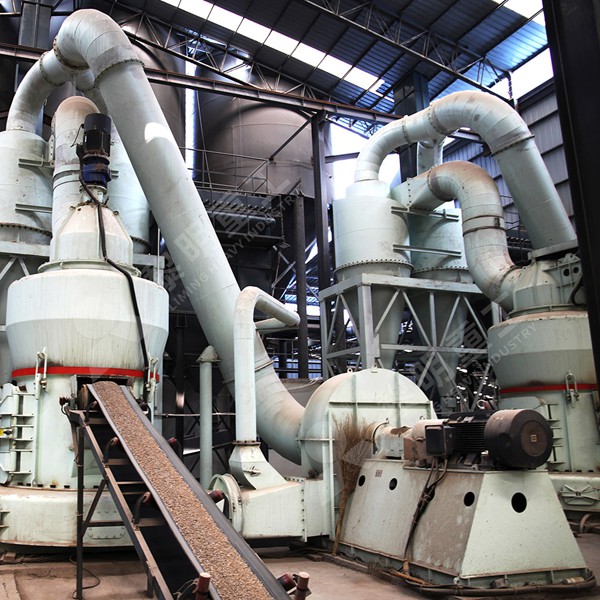
However, raw ground calcite, while useful, often requires surface modification to improve its compatibility with polymers, enhance dispersion, or increase weather resistance in end-products like plastics, paints, and sealants. This is where the coating treatment stage becomes critical. In an integrated LIMING system, the freshly ground, temperature-controlled calcite powder is pneumatically conveyed directly to a continuous surface modification unit. Here, coating agents—typically stearic acid or titanate coupling agents—are precisely metered, atomized, and brought into intimate contact with the calcite particles. The mechanical and thermal energy from the grinding process can be strategically utilized to optimize the coating reaction efficiency.
The success of this integration hinges on total system harmony. It's not merely connecting a grinder to a coater. Our approach involves a holistic design that includes the jaw crusher for primary size reduction, the variable-frequency vibrating feeder for consistent mill input, the Raymond Mill itself, the high-efficiency cyclone and baghouse dust collection system, the precision coating reactor, and finally, the finished product silo. Each component, from the electric control cabinets to the air blowers and piping, is selected and configured for synchronized operation. The closed-loop air system, a feature of our grinding units, is particularly beneficial for maintaining a clean, controlled environment essential for quality coating.
For applications demanding even finer or more specialized calcite powders, LIMING HEAVY INDUSTRY offers complementary technologies that can be integrated into a broader processing circuit. The MTW European Type Trapezium Mill, with its advanced grinding curve and patented technology, offers higher productivity and energy efficiency for large-scale powder making. For superfine coating-grade calcite reaching d97 ≤ 5μm, the MW Micro Powder Mill, which incorporates advanced Swedish grinding technology, is an excellent choice. Its ability to produce powders between 325 to 3250 mesh provides the ultimate raw material for high-end surface treatment processes.
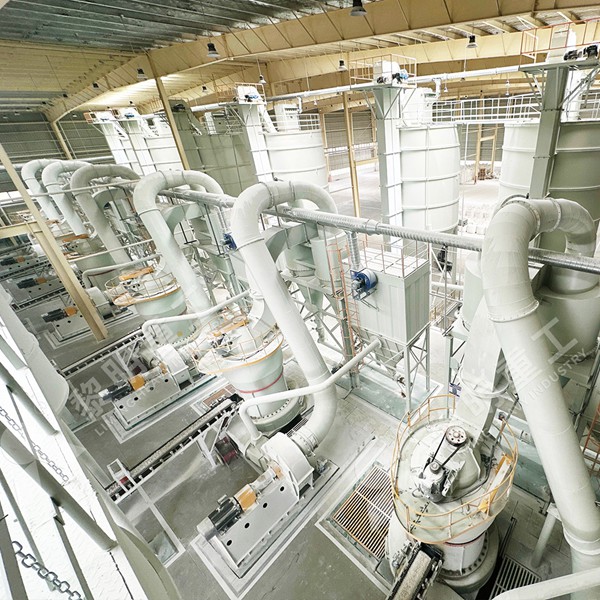
Ultimately, the integration of a Raymond Mill system with calcite powder coating treatment embodies LIMING HEAVY INDUSTRY's philosophy of "scientific research tackling key problems" and "technological progress." By viewing the process as a unified system rather than isolated steps, we deliver solutions that maximize output, ensure consistent product quality, and meet stringent environmental standards through effective dust collection. This integrated approach empowers producers to transform a common mineral into a high-performance, engineered material ready for the most challenging industrial applications.
Frequently Asked Questions (FAQ)
- What is the primary advantage of integrating the coating process directly with the Raymond Mill?
Direct integration allows for the processing of calcite powder while it is still in a thermally active and dry state, improving coating agent adhesion and uniformity. It eliminates intermediate handling, reducing contamination risk and operational costs. - Can your Raymond Mill system handle other minerals besides calcite for similar coating treatment?
Yes, the system is highly versatile. It is suitable for surface treatment of various non-metallic minerals processed by our mills, including gypsum, talc, and limestone, provided the material properties fall within the mill's operational parameters. - How does the system ensure consistent fineness of calcite before it enters the coating unit?
The integrated high-efficiency separator within the Raymond Mill continuously classifies particles. Only material meeting the target fineness proceeds to the collection system and onward to the coater, while oversize material is recirculated for further grinding. - What environmental considerations are addressed in this integrated system?
The system is designed as a closed-loop or negative-pressure operation equipped with pulse-jet baghouse dust collectors. This contains all fine particles, ensuring the workshop remains clean and emissions comply with environmental protection standards. - Is the system automation capable for consistent coating quality?
Absolutely. The system can be equipped with automated electric control systems that regulate feed rate, grinding parameters, coating agent dosage, and temperature, ensuring a stable and repeatable process with minimal manual intervention.


