Published: October 26, 2023
For producers seeking a reliable, high-purity solution for food-grade calcite powder, a dedicated Raymond mill system engineered with stringent hygiene standards, closed-circuit design, and precise fineness control is paramount. Liming Heavy Industry Co., Ltd. leverages over three decades of grinding expertise to offer integrated milling systems specifically configured to meet the rigorous demands of food and pharmaceutical applications. This article explores the critical design considerations, operational principles, and technological advancements of a food-grade certified calcite powder production line, highlighting how modern Raymond mill derivatives ensure product purity, consistency, and compliance.
Calcite powder, a naturally occurring form of calcium carbonate, is a vital additive in numerous food products, acting as a calcium fortifier, acidity regulator, and anti-caking agent. Its application in the food industry necessitates the highest standards of purity and hygiene. Traditional grinding equipment often falls short, risking metallic contamination from wear parts or inadequate isolation from environmental pollutants. A purpose-built Raymond mill system addresses these challenges head-on. At Liming Heavy Industry, our approach integrates the proven mechanical principles of pendulum grinding with a holistic system design focused on contamination prevention. The core grinding unit, such as our advanced MTW European Type Grinding Mill, forms the heart of this system. Its design minimizes metal-to-metal contact in critical zones, and key components interacting with the product can be lined with food-grade stainless steel or specialized ceramic coatings upon request.
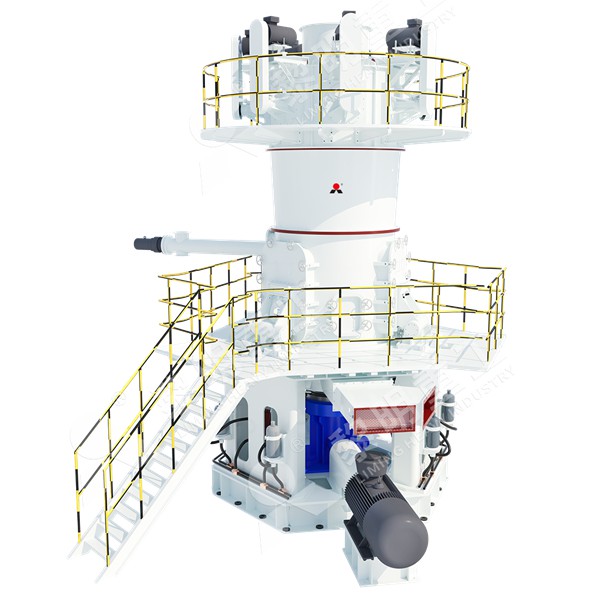
The working principle of a food-grade calcite system is a closed-loop, dry process that prioritizes containment. Large lumps of high-purity calcite are first reduced by a crusher with food-contact-rated surfaces. The material is then fed via an enclosed vibrating feeder into the grinding chamber. Here, rollers exert pressure on a rotating grinding ring, pulverizing the calcite. The crucial separation occurs in the integrated high-precision classifier. An internal air stream, drawn by an induced draft fan, carries the fine particles upward. Particles meeting the target fineness (typically adjustable between 44μm to 400 mesh and finer for specialized grades) pass through the classifier turbine. Oversized particles are rejected back to the grinding bed for further size reduction. This internal circulation ensures consistent particle size distribution (PSD), a key quality parameter for food applications where texture and reactivity are critical.
System integrity is non-negotiable. The entire pneumatic circuit is sealed and under negative pressure, preventing powder leakage into the environment. A high-efficiency pulse jet baghouse dust collector, featuring food-grade filter media, cleans the exhaust air before it is recirculated back into the system. This not only maintains a clean workspace but, more importantly, prevents external contaminants from entering the product stream. For ultra-fine requirements, our MW Micro Powder Mill, incorporating advanced Swedish milling technology, can achieve fineness up to d97 ≤ 5μm (2500 mesh), ideal for specialized dietary supplements. Its grinding mechanism, utilizing multiple rollers on a raceway, achieves superfine results with low heat generation, preserving the chemical properties of calcite.
Liming Heavy Industry's commitment to "scientific research tackling key problems" translates directly into features that benefit food-grade production. Our systems can be equipped with automated control panels that monitor and adjust parameters like feed rate, grinding pressure, and classifier speed in real-time. This ensures stable operation and reproducible product quality from batch to batch. Furthermore, the design emphasizes ease of cleaning and maintenance. Strategic access points and a logical layout simplify inspection and sanitation procedures, reducing downtime between production runs for different food-grade minerals. The choice of system—whether a robust Raymond mill for high-capacity production of coarse to medium fines or an MTW/ MW series mill for finer, high-value powder—depends on the specific capacity (from 1 to over 50 tons per hour) and fineness requirements of the producer.
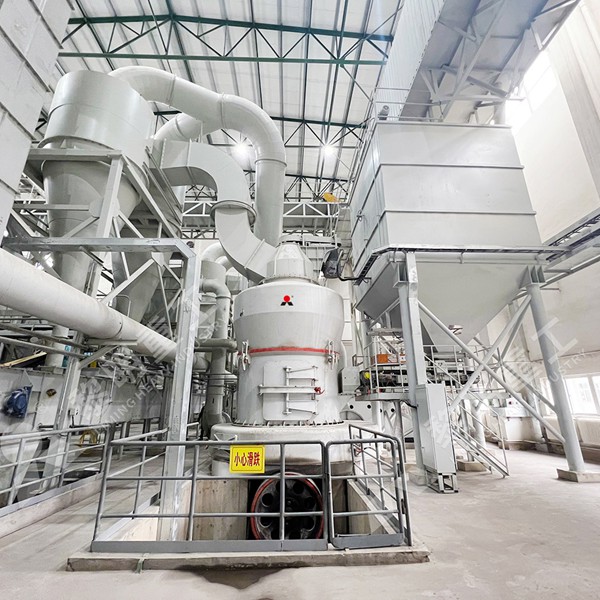
Ultimately, investing in a dedicated food-grade calcite powder system is an investment in product safety, market access, and brand reputation. By partnering with an experienced manufacturer like Liming Heavy Industry, producers gain more than just machinery; they gain a integrated solution based on deep process understanding. From our 80,000 m² R&D and production facilities in Zhengzhou, we engineer systems that align with modern food safety management paradigms, helping clients navigate the complexities of food additive production with confidence and technical superiority.
Frequently Asked Questions (FAQ)
1. What makes a Raymond mill system "food-grade certified"?
A food-grade certified system incorporates design features to prevent contamination: use of food-contact compatible materials (e.g., stainless steel, ceramic liners) in product zones, a fully enclosed and negatively pressurized grinding/pneumatic circuit, high-efficiency filtration with appropriate filter media, and smooth, accessible surfaces for easy cleaning and sanitation. Certification often involves material audits and design reviews against relevant standards.
2. What fineness range can be achieved for food-grade calcite with your systems?
Our systems are capable of producing calcite powder across a wide spectrum. Standard Raymond mill systems can reliably achieve fineness between 44μm (325 mesh) and 613μm. Our advanced MTW European Mill and MW Micro Powder Mill can produce finer powders, with the MW series capable of reaching a superfine d97 ≤ 5μm (approx. 2500 mesh), adjustable to meet specific product specifications.
3. How is metallic contamination from wear parts prevented during grinding?
We address this through material selection and design. Critical wear parts like grinding rolls and rings can be furnished with high-chromium alloy steels with extreme wear resistance, or with specialized ceramic composites. Furthermore, the grinding principle minimizes direct metal-to-metal contact, and magnetic separators can be installed in the feeding circuit to catch any potential ferrous particles.
4. Is the system a dry process? How is moisture and environmental contamination controlled?
Yes, our standard systems are based on dry grinding. Moisture control is achieved by using a hot air generator (optional) to dry the feed material if necessary, ensuring input humidity is low. Environmental contamination is controlled by the fully closed-loop pneumatic system and the high-efficiency pulse dust collector, which ensures all process air is filtered before being recirculated or vented, maintaining hygiene and product purity.
5. Can the system be automated, and what key parameters are controlled?
Absolutely. Our systems can be equipped with comprehensive PLC-based automation. Key controlled parameters include the feed rate via variable-speed feeders, grinding pressure on the rollers, classifier rotor speed (which directly controls final fineness), and system temperature. Automation ensures consistent product quality, optimizes energy consumption, and provides detailed operational data for traceability.


