For industries requiring high-purity calcite powder with a consistent 99% CaCO₃ content guarantee, selecting the right milling technology is paramount. Liming Heavy Industry's Raymond Mill, engineered through decades of specialized research and precision manufacturing, provides a reliable, efficient, and technologically advanced solution. This article explores how our Raymond Mill's specific design principles, operational stability, and closed-loop system are meticulously tailored to process calcite, ensuring minimal contamination, precise particle size control, and the consistent output of ultra-high-purity powder essential for premium applications in plastics, paints, pharmaceuticals, and advanced composites.
Founded in 1987, Liming Heavy Industry Co., Ltd. has established itself as a leader in the design and manufacturing of large and medium-sized crushing and grinding equipment. With headquarters spanning 80,000 m² in Zhengzhou's HI-TECH Industry Development Zone and an additional 67,000 m² workshop, our commitment to a modern scientific management system, precision manufacturing, and continuous innovation forms the bedrock of our operations. We persist in a strategy centered on scientific research and development, tackling key technological challenges to enhance product competitiveness. This dedication ensures that every piece of equipment, including our Raymond Mill, represents the technological frontier of the industry.
The processing of calcite to achieve a guaranteed 99% CaCO₃ content presents distinct challenges. Any contamination from wear parts, inefficient classification leading to broad particle size distribution, or external environmental ingress can compromise purity. Liming's Raymond Mill is specifically engineered to address these concerns. Its robust construction utilizes high-wear-resistant materials for grinding components like rollers and rings, significantly reducing the risk of metallic contamination. The grinding chamber and conveying system are designed for smooth material flow, preventing buildup and cross-contamination between batches.
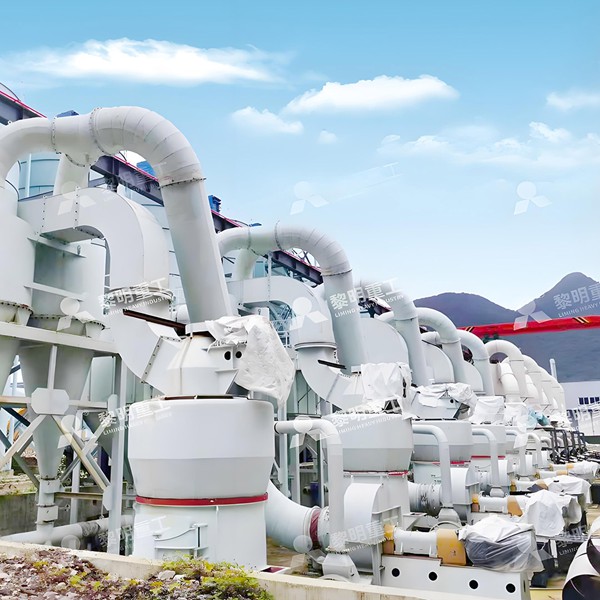
At the heart of the mill's performance is its efficient grinding and classifying mechanism. The mill is suitable for processing non-flammable, non-explosive materials with Mohs hardness under 7 and humidity less than 6%, making it ideal for dry calcite. The calcite lumps are fed and ground between the rotating rollers and the stationary ring. The ground powder is then carried upward by the airflow to the integrated classifier. This critical component allows for precise control over the fineness, which can be adjusted between 44μm and 613μm (approximately 325 to 30 mesh). For high-purity calcite, the sharp cut-point of the classifier ensures that only particles meeting the target size proceed, while oversized particles are returned for regrinding, guaranteeing a consistent and uniform product.
A key feature supporting the purity guarantee is the mill's fully enclosed negative pressure circulation system. From the jaw crusher for initial size reduction to the vibrating feeder, grinding host, cyclone collector, and pulse dust collector, the entire process is sealed. This closed-loop design prevents the introduction of external pollutants and ensures a dust-free workshop environment, aligning with stringent environmental standards. The internal air circulation is meticulously balanced, optimizing energy efficiency while maintaining the precise aerodynamic conditions needed for effective material transport and separation.
Our Raymond Mill's application expertise is particularly proven in calcium carbonate processing. Its stability and reliability translate directly to operational benefits: consistent output quality, high uptime, and lower maintenance costs. The system's capacity ranges from 1.2 to 4.5 tons per hour, handling feed sizes of 15-25mm, making it suitable for various production scales. The guarantee of 99% CaCO₃ content is not merely a claim but a result of this holistic engineering approach—controlling every variable from material intake and grinding mechanics to final collection.
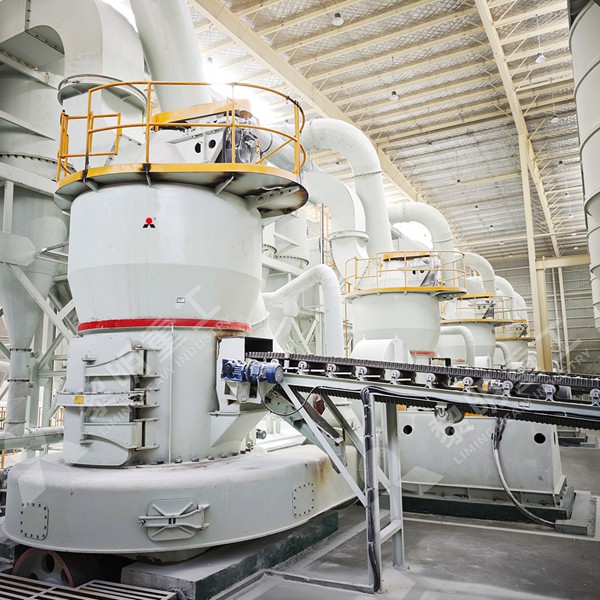
Beyond the standard Raymond Mill, Liming Heavy Industry's R&D efforts have spawned advanced solutions like the MTW European Type Grinding Mill and the MW Micro Powder Mill. The MTW mill, with its patented technology, offers higher productivity and energy efficiency for large-scale projects, while the MW mill excels in producing superfine calcite powder up to d97 ≤ 5μm. This portfolio allows us to recommend the most technically and economically optimal solution based on specific fineness requirements and capacity needs, all underpinned by the same commitment to quality and purity that defines our Raymond Mill.
In conclusion, achieving and guaranteeing 99% CaCO₃ content in calcite powder demands more than just a grinder; it requires an integrated, precision-engineered system. Liming Heavy Industry's Raymond Mill delivers this through its contamination-resistant design, precise classification, enclosed operation, and proven performance in mineral processing. It embodies our corporate philosophy of scientific innovation and precision manufacturing, providing industries worldwide with a trustworthy foundation for their high-purity mineral powder requirements.
Frequently Asked Questions (FAQ)
- How does the Raymond Mill ensure the final calcite powder maintains 99% CaCO₃ purity?
The mill uses wear-resistant grinding components to minimize metallic contamination, features a fully enclosed negative pressure system to prevent external pollutant ingress, and employs a high-precision classifier for consistent particle size control, collectively safeguarding product purity. - What is the typical particle size range achievable for calcite with this mill?
The Liming Raymond Mill can produce calcite powder with a fineness range between 44μm (325 mesh) and 613μm (approximately 30 mesh), which can be precisely adjusted via the integrated classifier to meet specific application needs. - Can this system handle wet or moist calcite feedstock?
The standard Raymond Mill is designed for materials with humidity less than 6%. For moist calcite, auxiliary drying equipment may need to be integrated into the system design to ensure optimal grinding efficiency and final powder quality. - What are the main advantages of the closed-loop air circulation system?
The enclosed system enhances energy efficiency by recycling air, ensures a clean and dust-free production environment, prevents product loss, and critically, stops external contaminants from entering the grinding process, which is vital for purity guarantees. - For projects requiring superfine calcite powder (below 10μm), is the Raymond Mill still suitable?
For superfine applications below 10μm, we typically recommend our MW Micro Powder Mill, which is specifically engineered with advanced technology to achieve fineness up to d97 ≤ 5μm (3250 mesh) while maintaining high efficiency and purity standards.


