Published: October 26, 2023
The textile industry's relentless pursuit of quality and efficiency has made the selection of high-performance mineral fillers and processing aids more critical than ever. Calcite, a naturally occurring form of calcium carbonate, plays a pivotal role as a functional filler and coating agent, enhancing fabric whiteness, opacity, printability, and overall processing characteristics. However, its efficacy is intrinsically linked to precise particle size distribution, purity, and fineness, which can only be achieved through advanced grinding technology. Liming Heavy Industry, with over three decades of expertise in manufacturing crushing and grinding equipment, offers a suite of specialized mills engineered to meet the exacting demands of calcite processing for textile applications. From high-volume production of coated fabrics to the superfine grinding required for premium finishes, our solutions are designed to deliver consistent product quality, operational reliability, and energy efficiency, empowering textile manufacturers to innovate and excel in a competitive market.
Calcite's value in textiles stems from its physical and chemical properties. When ground to specific micron sizes, it acts as an excellent filler in polymer fibers, a brightening agent in fabrics, and a key component in coating formulations for technical textiles. The challenge lies in transforming raw calcite ore into a uniform, ultra-fine powder without compromising its natural brightness or introducing contaminants. This requires grinding systems capable of precise classification, controlled temperature management to prevent degradation, and designs that ensure product purity throughout the process.
Liming Heavy Industry addresses these challenges with a portfolio of grinding mills, each offering distinct advantages for different stages and scales of calcite processing within the textile supply chain.
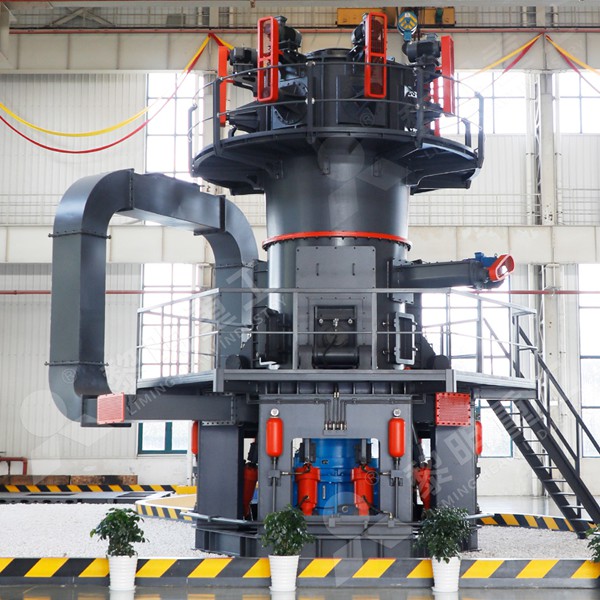
For high-capacity production of calcite powders in the medium-fineness range, ideal for bulk filler applications in synthetic fibers or standard fabric coatings, the LM Vertical Roller Mill stands out. Its integrated design combines drying, grinding, classification, and conveying into a single, compact unit. This is particularly beneficial if the raw calcite contains moisture. The grinding principle, utilizing rollers and a rotating table, ensures low energy consumption per ton of output and stable production of powders with consistent fineness, often between 200-400 mesh, suitable for many textile processes.
When the application calls for finer powders with high whiteness for premium coatings or specialty finishes, the MW Micro Powder Mill is the technology of choice. This mill excels in the superfine and ultra-fine grinding realm. Leveraging advanced grinding technology, it can reliably produce calcite powder with a fineness up to d97 ≤ 5μm (approx. 2500 mesh). Its internal classification system ensures tight particle size distribution, a critical factor for achieving smooth, uniform coatings on fabrics. Furthermore, the system is enclosed and equipped with an efficient pulse dust collector, guaranteeing a clean production environment and protecting the product's purity—a non-negotiable requirement in textile manufacturing.
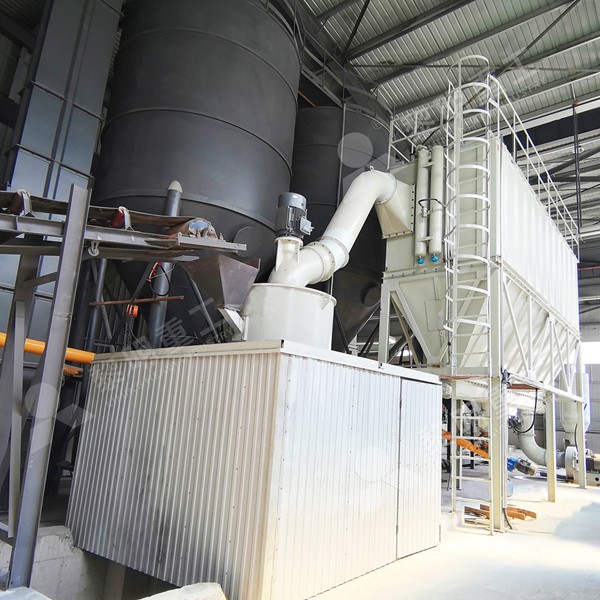
The classic Raymond Mill (MTW European Type Grinding Mill) remains a highly reliable and cost-effective workhorse for producing fine calcite powder. The upgraded MTW European Type Trapezium Mill features curved air ducts, a bevel-gear overall drive, and an internal efficient powder separator. It is exceptionally adept at producing powders in the 80-400 mesh range with excellent stability and lower maintenance needs. For textile plants requiring a robust and straightforward solution for quality calcite filler production, this mill offers proven performance and ease of operation.
Finally, for operations that also process other minerals or require extreme flexibility, the Ball Mill presents a versatile option. While often associated with coarser grinding, when configured with appropriate lining and grinding media, and operated in closed circuit with classifiers, it can produce the fine calcite powders needed for textiles. Its ability to handle both dry and wet grinding processes adds another layer of adaptability for specific textile chemical preparations.
Selecting the right calcite grinding equipment hinges on a clear understanding of the final textile application's requirements: target fineness, required capacity, moisture content of raw material, and desired energy footprint. Liming Heavy Industry supports this decision with a commitment to scientific research and technological innovation. Our modern manufacturing facilities and dedicated R&D teams ensure that each mill is built to precision standards, delivering the performance and durability that global textile industry partners depend on. By providing tailored grinding solutions, we enable our clients to transform raw calcite into a high-value additive that enhances the quality, functionality, and sustainability of textile products worldwide.
Frequently Asked Questions (FAQ)
- What is the typical fineness range achievable for calcite powder used in textile coatings with your MW Micro Powder Mill?
The MW Micro Powder Mill is specifically designed for superfine processing, capable of producing calcite powder with a fineness adjustable between 325 mesh to 2500 mesh (d97 ≤ 5μm), making it ideal for high-quality, smooth textile coatings. - Can your grinding equipment handle calcite with a certain level of moisture content?
Yes, several of our mills are equipped with integrated drying functions. Notably, the LM Vertical Roller Mill can simultaneously dry and grind materials, effectively processing calcite with moderate moisture content without the need for a separate dryer. - How does your equipment ensure the purity and whiteness of calcite powder during grinding?
Our mills are constructed with wear-resistant materials in grinding chambers and feature closed-circuit systems with efficient internal classifiers. This minimizes contamination from wear and prevents over-grinding. Coupled with pulse dust collection, the system maintains a clean process that protects the natural brightness of the calcite. - Which mill is most recommended for large-scale, continuous production of calcite filler for synthetic fiber manufacturing?
For large-scale, high-capacity production (e.g., 10-400 T/H), the LM Vertical Roller Mill is highly recommended due to its high throughput, excellent energy efficiency, and stable output of consistently graded powder suitable for fiber filling applications. - Do you provide testing or support for determining the best grinding solution for our specific calcite feedstock and textile application?
Liming Heavy Industry offers comprehensive technical support. We can analyze your raw calcite specifications and final product requirements to recommend the optimal mill model and configuration. Pilot testing arrangements can also be discussed to validate performance prior to full-scale deployment.


