Published: October 26, 2023
In the demanding field of optical material production, achieving the precise particle size distribution, high purity, and consistent crystal structure required for optical-grade calcite is a significant technical challenge. Liming Heavy Industry's advanced Raymond Mill technology offers a specialized solution, engineered to meet the stringent requirements of processing calcite crystals for lenses, prisms, polarizers, and other high-value optical components. By integrating precision grinding, efficient classification, and contamination-minimized design, our milling systems enable manufacturers to produce calcite powder with the exceptional fineness, uniformity, and chemical integrity essential for superior light transmission and optical performance.
Optical-grade calcite, or Iceland spar, is prized for its perfect cleavage, high birefringence, and transparency across a broad spectral range. Any processing equipment must preserve these intrinsic properties, avoiding the introduction of impurities, excessive heat that could cause lattice deformation, or uncontrolled particle fracturing that degrades optical clarity. The conventional Raymond Mill, a workhorse in mineral processing, undergoes a paradigm shift when configured for this application. At Liming Heavy Industry, our engineering philosophy centers on adapting proven principles to frontier applications. Our dedicated R&D team, operating from our 80,000 m² Hi-TECH Industry Development Zone headquarters, has re-engineered the classic Raymond Mill system with a focus on the unique rheology and fragility of high-purity calcite crystals.
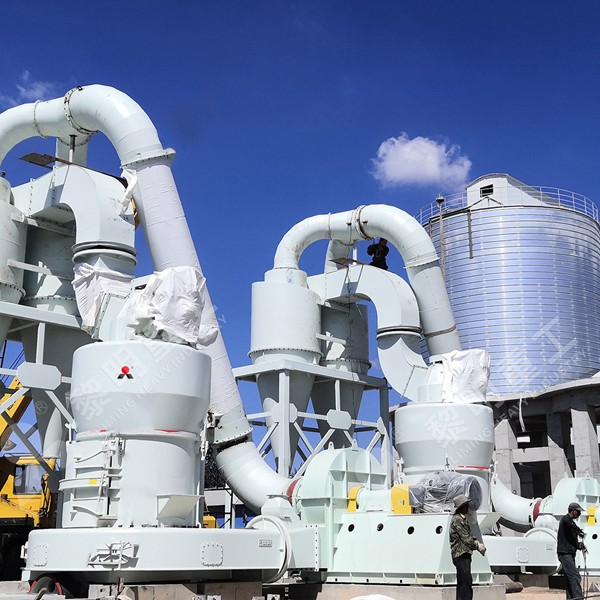
The core of our solution lies in the grinding chamber dynamics. The system employs a configuration of grinding rollers and a grinding ring designed to apply controlled compressive force rather than impact shock. This shearing action is critical for cleaving calcite along its natural rhombohedral planes, promoting the production of particles with uniform shape and minimal subsurface damage—a key factor for subsequent polishing in optical fabrication. The grinding pressure is precisely adjustable, allowing operators to target specific fineness ranges, typically from 44μm down to 613μm (approx. 325 to 30 mesh), with tight tolerance bands. Furthermore, the system's airflow design is optimized for calcite's specific gravity. The integrated high-efficiency classifier ensures that only particles meeting the target size proceed to collection, while oversize material is instantly returned for regrinding, creating a closed-loop system that guarantees consistency.
Contamination is the nemesis of optical materials. Our mills address this through a multi-pronged approach. Critical wear parts in contact with the material, such as the grinding rolls and ring, can be lined with specialized ceramics or hardened alloys that are both highly wear-resistant and non-shedding. The system's architecture minimizes dead zones where material can accumulate and degrade. Perhaps most importantly, the entire grinding and conveying process is powered by an induced draft fan, creating a negative pressure environment. This not only enhances efficiency but also acts as a barrier, preventing external ambient contaminants from entering the milling circuit. The final product is collected via a high-efficiency pulse-jet bag filter or a cyclone separator, both constructed from food-grade or high-purity compatible materials.
Thermal management is another cornerstone of our design. Excessive heat can alter the surface properties of calcite and induce unwanted chemical reactions. Our Raymond Mill for optical calcite incorporates an intelligent air-flow and cooling system. The large volume of air circulating through the mill acts as a coolant, carrying away the minimal heat generated during the gentle grinding process. This ensures the product temperature remains low, preserving the crystal's optical characteristics. This feature, combined with the system's ability to handle materials with less than 6% humidity, makes it exceptionally reliable for maintaining product stability.
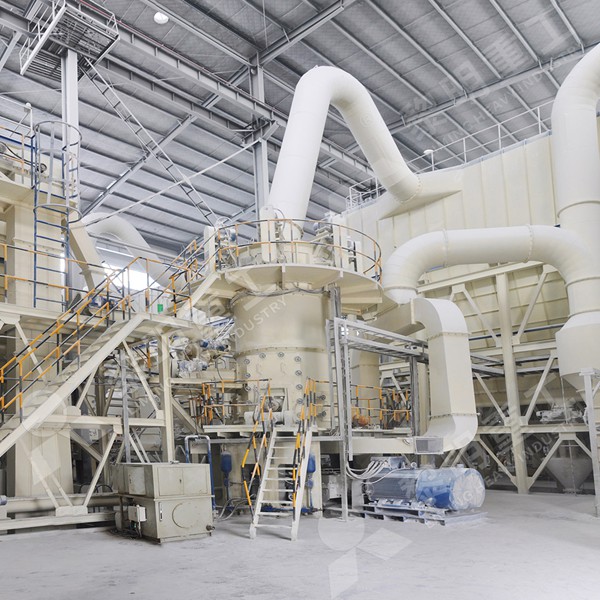
Beyond the mill itself, Liming Heavy Industry provides a holistic processing line. This can include jaw crushers for primary size reduction of raw calcite blocks, vibrating feeders with variable frequency drives for precise metering into the mill, and automated packaging systems. All components are integrated under a centralized electric control cabinet, allowing for simple operation, real-time monitoring of key parameters like pressure and temperature, and quick adjustment to produce different grade specifications. The system's modularity also allows for scalability, supporting production capacities that align with both pilot-scale research and full-scale industrial manufacturing.
For over three decades, our commitment to "scientific research tackling key problems and technological progress" has driven us to push the boundaries of grinding technology. Processing optical-grade materials represents the pinnacle of this pursuit, where mechanical engineering meets materials science. Our Raymond Mill, refined through this lens, is more than just a grinder; it is a precision instrument for liberating the latent optical potential within every calcite crystal. It stands as a testament to our mission of developing and innovating, aiming at the technological frontier of the industry to provide our partners in the optics field with a reliable, efficient, and contamination-free foundation for their high-precision products.
Frequently Asked Questions (FAQ)
- What is the typical particle size range achievable for optical calcite with your Raymond Mill?
Our Raymond Mill is engineered to produce calcite powder in a fineness range between 44μm (325 mesh) and 613μm (approximately 30 mesh). The integrated high-precision classifier allows for tight control over the top cut and particle size distribution, which is critical for optical applications. - How does your system prevent metallic contamination during the grinding process?
We employ multiple strategies: using ceramic or specially hardened alloy liners for wear parts, designing a smooth material flow path without obstructions, and maintaining a negative pressure system to prevent ingress of external contaminants. These measures collectively ensure the high chemical purity of the output. - Can the mill handle the heat-sensitive nature of calcite to preserve its optical properties?
Yes. The mill utilizes a large volume of circulating air which acts as a coolant during grinding. This design effectively dissipates minimal process heat, ensuring the calcite powder remains at a low temperature, thereby preventing any thermal degradation of its crystal structure and optical characteristics. - Is the system suitable for both small-scale R&D and large-volume production?
Absolutely. Our Raymond Mills are available in configurations supporting a range of capacities. Their operational flexibility and scalability make them ideal for pilot plants developing new optical compounds as well as for full-scale production lines requiring consistent, high-volume output. - What kind of ancillary equipment do you recommend for a complete optical calcite processing line?
A complete line typically includes a primary jaw crusher for initial size reduction, a vibrating feeder for controlled input, the Raymond Mill with its classifier and blower, a high-efficiency pulse dust collector (like a bag filter) for product recovery, and an automated packaging system. We provide integrated design and support for all these components.


