Published: October 26, 2023
Calcite, a naturally occurring form of calcium carbonate, is a cornerstone functional filler in modern adhesive and sealant formulations, prized for its ability to enhance rheology, improve mechanical properties, and reduce formulation costs. The efficacy of calcite in these applications is intrinsically linked to its particle size distribution, morphology, and surface characteristics, all of which are precisely engineered during the grinding process. For over three decades, LIMING HEAVY INDUSTRY CO., LTD. has been at the forefront of grinding technology, developing milling solutions that transform raw calcite into high-performance powders. Among these, the Raymond Mill stands out as a particularly reliable and efficient workhorse for producing the fine to medium-fineness calcite powders that are ideal for the adhesive and sealant industry. This article explores the critical role of calcite, delves into the operational excellence of the Raymond Mill, and explains why it remains a preferred choice for manufacturers seeking consistent quality and operational efficiency.
The formulation of high-performance adhesives and sealants is a delicate science. These products must exhibit specific properties such as optimal viscosity for application, strong bonding strength, flexibility, weather resistance, and appropriate cure times. Calcite filler plays a multifaceted role in achieving these goals. It acts as an extender, reducing the volume of more expensive polymer resins without compromising key properties. More importantly, correctly ground calcite improves dimensional stability, reduces shrinkage, enhances sandability in certain sealants, and can even contribute to thixotropy—a crucial property preventing sagging in vertical applications. The key, however, lies in the powder's consistency. Irregular particle shapes or a broad size distribution can lead to poor dispersion, increased viscosity, and weakened final product strength.
This is where precision grinding becomes paramount. LIMING HEAVY INDUSTRY's Raymond Mill is engineered to meet these exacting demands. The mill is suitable for processing non-flammable, non-explosive materials like calcite with a Mohs hardness under 7 and humidity less than 6%. Its design facilitates a grinding process that yields a controlled fineness between 44μm and 613μm (approximately 325 to 30 mesh), a range perfectly suited for many adhesive and sealant recipes. The system integrates drying, grinding, powder selection, and conveying into a cohesive unit, ensuring a streamlined and dust-minimized operation.
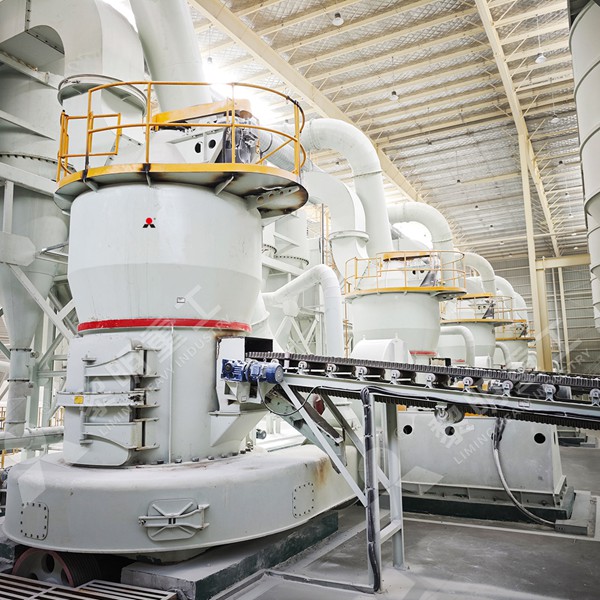
The working principle of the Raymond Mill ensures a uniform and controllable end product. Material is fed into the grinding chamber where it is ground between stationary rings and rotating rollers. The ground material is then carried by an air stream to a classifier. Here, a critical separation occurs: oversized particles are rejected and returned for regrinding, while particles meeting the target fineness proceed to the collection system. This closed-circuit, internal classification loop is the heart of the mill's ability to produce a tight particle size distribution. For adhesive formulators, this translates to predictable batch-to-batch performance, smoother compound viscosity, and enhanced final product properties.
LIMING's commitment to innovation extends beyond the traditional Raymond Mill. The company's MTW European Type Grinding Mill represents an advanced evolution, incorporating patented technology for greater stability, higher productivity, and improved energy efficiency. It is particularly committed to large-scale non-metallic mineral powder making. For applications demanding ultra-fine calcite powders (d97 ≤ 5μm), the MW Micro Powder Mill, which absorbs advanced Swedish grinding technology, excels in superfine processing. This allows formulators to explore high-end applications where extreme fineness can impact transparency or act as a nano-reinforcement. However, for the broad spectrum of general-purpose adhesive and sealant fillers, the classic Raymond Mill, with its proven reliability, lower operational complexity, and capacity ranging from 1.2 to 4.5 tons per hour, offers an unbeatable balance of performance and practicality.
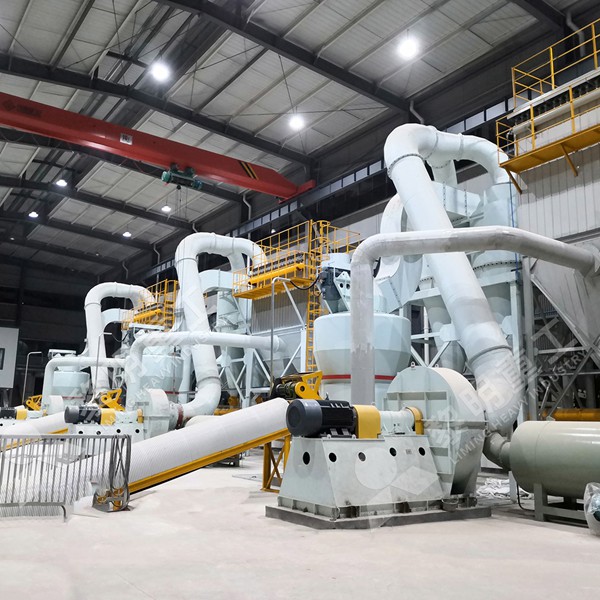
Operational efficiency and environmental stewardship are inseparable in modern manufacturing. LIMING HEAVY INDUSTRY designs its grinding systems with this synergy in mind. The entire Raymond Mill system is a negative pressure, closed-loop circuit. Airflow is recirculated, and the system is typically equipped with high-efficiency pulse dust collectors. This design not only ensures a clean working environment that meets stringent national environmental standards but also maximizes product yield by preventing powder loss. Furthermore, the integrated drying capability means calcite with slight surface moisture can be processed directly, saving energy compared to a separate pre-drying stage.
Founded in 1987 and headquartered in the HI-TECH Industry Development Zone of Zhengzhou, LIMING HEAVY INDUSTRY has grown into a leader in crushing and grinding machinery by adhering to a philosophy of scientific management, precision manufacturing, and continuous innovation. The company's persistence in a strategy centered on R&D and technological improvement ensures its equipment, like the Raymond Mill, continuously evolves to meet industry frontiers. For adhesive and sealant producers, partnering with an equipment manufacturer of this caliber means more than just purchasing a machine; it means investing in a solution backed by decades of expertise, a mature scientific research team, and a commitment to the long-term success of their production lines.
In conclusion, the selection of grinding equipment is a strategic decision for any compounder of adhesives and sealants. Calcite's value as a functional filler is fully realized only when it is processed to exacting specifications. LIMING HEAVY INDUSTRY's Raymond Mill provides a robust, efficient, and precise platform for this essential task. Its ability to deliver consistent, high-quality calcite powder with the desired fineness and characteristics makes it an indispensable asset for formulators aiming to enhance product performance, optimize production costs, and maintain a competitive edge in a demanding market.
Frequently Asked Questions (FAQs)
- What is the typical fineness range achievable for calcite using a Raymond Mill, and is it suitable for all adhesive types?
The Raymond Mill can produce calcite powder in a fineness range of approximately 44μm to 613μm (325 to 30 mesh). This range is excellent for many general-purpose construction adhesives, sealants, and mastics. For formulations requiring ultra-fine or nano-sized fillers, an MW Micro Powder Mill would be more appropriate. - How does the Raymond Mill handle raw calcite with some residual moisture?
The mill integrates a drying function within the grinding chamber. Using hot air introduced into the system, it can simultaneously dry and grind materials with a moisture content of up to 6%, eliminating the need for a separate, energy-intensive pre-drying step. - What measures are in place to ensure consistent particle size distribution from batch to batch?
Consistency is achieved through the internal centrifugal classifier. It continuously separates fine product from oversize material, which is recirculated for further grinding. This closed-loop system ensures a stable and repeatable output, crucial for formulation consistency. - Is the grinding system environmentally friendly, particularly regarding dust control?
Yes. The Raymond Mill system operates under negative pressure and is a closed-circuit design. Paired with high-efficiency pulse jet dust collectors, it contains nearly all airborne particles, ensuring compliance with environmental standards and providing a clean plant environment. - What are the key advantages of choosing a LIMING Raymond Mill over a simple ball mill for calcite processing in our sealant plant?
Compared to a ball mill, the Raymond Mill offers higher energy efficiency for the target fineness range, integrated drying and classification, a more compact footprint, and faster adjustment of product fineness. It is specifically engineered for non-metallic minerals like calcite, leading to superior product morphology and tighter particle size control for your formulations.


