Published on: October 26, 2023
Effective control of the separator in a Raymond mill is paramount for achieving the desired fineness and particle size distribution in kaolin processing. This guide delves into the critical principles and practical adjustments for the separator system in Liming Heavy Industry's Raymond Mill, specifically for kaolin applications. We will explore how precise separator settings directly impact product quality, system efficiency, and operational stability, providing actionable insights for mill operators and process engineers to maximize performance and ensure consistent output of high-value kaolin powder.
At the heart of Liming Heavy Industry's Raymond Mill system lies an efficient air classification mechanism. The separator, often a dynamic or static type integrated into the mill's upper section, performs the crucial task of sorting ground particles. Coarse particles are rejected and returned to the grinding zone for further size reduction, while sufficiently fine particles are carried by the air stream to the product collector. For kaolin—a soft, plate-like clay mineral—this separation process must be finely tuned. The target fineness for kaolin typically ranges from 44μm (325 mesh) for filler applications down to superfine levels below 10μm for high-performance paper coating or specialty ceramics. The separator settings are the primary control lever to hit these specific targets.
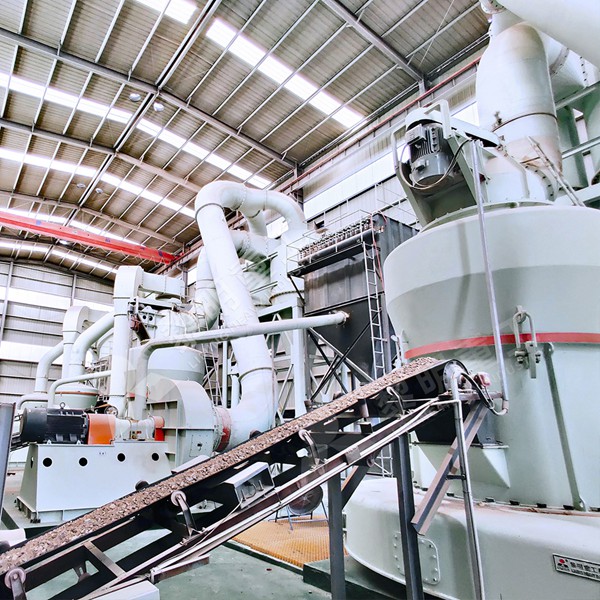
The key adjustable parameters involve the separator's rotational components. In models equipped with a dynamic classifier, the speed of the classifying rotor is the most influential variable. Increasing the rotor speed increases the centrifugal force acting on the particles, allowing only finer particles to pass through. Consequently, a higher speed yields a finer product. Conversely, lowering the speed results in a coarser product as larger particles can escape the classification zone. For kaolin, which grinds relatively easily, operators often run at moderate to high rotor speeds to achieve the common fine powder specifications. It is essential to adjust this speed incrementally while monitoring the product's fineness via sieve analysis or laser particle size measurement to establish a reliable correlation for your specific material feed.
Airflow volume and velocity, controlled by the system's induced draft fan, work in tandem with separator settings. The Raymond Mill operates on a closed-circuit air system. A consistent and stable airflow is necessary to transport the ground kaolin to the separator and then to the cyclone. If airflow is too high, it can carry coarse particles into the product, degrading fineness. If too low, it may cause poor material circulation, reduce throughput, and risk mill choking. The optimal setting balances sufficient transport capacity with effective classification inside the separator. Operators should ensure the fan damper or variable frequency drive (VFD) settings are calibrated to maintain the system's designed negative pressure, which is a good indicator of balanced airflow.
Feed rate and material characteristics are often overlooked but critical factors. The Raymond Mill's capacity for processing kaolin is specified, but consistently feeding material within the optimal range (1.2-4.5 T/H for our standard models) is vital. A sudden surge in feed can overload the separator, causing "short-circuiting" where coarse particles bypass proper classification. Kaolin moisture content should also be strictly controlled below 6% as per mill specifications. Damp feed can lead to agglomeration, plugging the grinding ring and rollers, and misleading separator performance as aggregates may be carried over or rejected incorrectly. Liming Heavy Industry's design integrates a drying function when connected to a hot air source, which is highly recommended for kaolin with inherent or surface moisture.
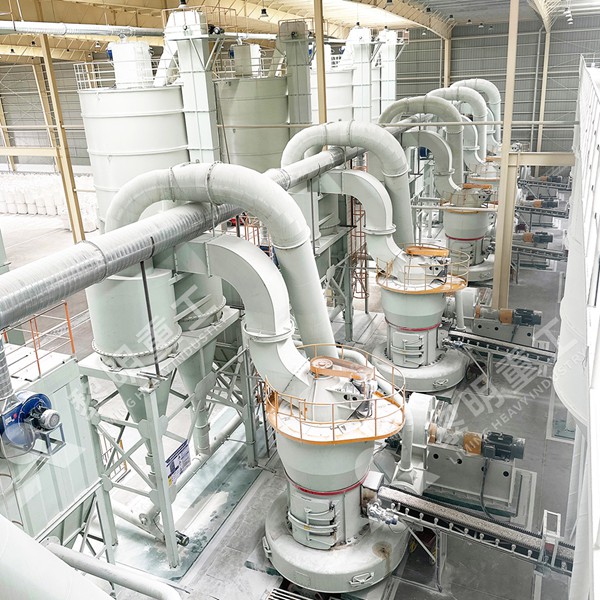
Systematic tuning involves a step-by-step approach. Start with the mill running under normal load with representative kaolin feed. First, stabilize the feed rate and airflow. Then, make incremental adjustments to the separator speed (e.g., 5-10 RPM changes). Allow the system to stabilize for at least 20-30 minutes after each change before sampling the product. Analyze the samples to track the change in particle size distribution. The goal is to find the setting that produces the highest yield within the target fineness range. It's also crucial to monitor the mill's main motor current and grinding pressure. An optimal separator setting will result in stable amperage and smooth operation, indicating efficient recirculation of coarse material without overloading the grinding assembly.
Common challenges include inconsistent fineness and high residue on coarse screens. If fineness fluctuates, check for variations in feed size (ensure crusher output is consistent), moisture, or airflow instability. If the product is consistently too coarse even at high separator speeds, inspect the classifier blades for wear or damage and check for air leakage in the system. For persistent high residue, verify that the separator's rejector blades or labyrinth seals are intact and properly aligned to ensure coarse material is effectively returned to the grinding zone. Liming Heavy Industry's robust construction and accessible design facilitate easy inspection and maintenance of these internal components, minimizing downtime.
In conclusion, mastering the separator settings of your Liming Raymond Mill is a blend of understanding mechanical principles and developing a feel for the specific behavior of your kaolin feedstock. By methodically controlling rotor speed, airflow, and feed conditions, operators can unlock the full potential of the mill, producing kaolin powder that meets exacting market specifications with high efficiency and reliability. This precision directly contributes to the value-added processing of kaolin, supporting its use in diverse industries from paper and paints to advanced ceramics and polymers.
Frequently Asked Questions (FAQs)
- What is the primary function of the separator in a Raymond Mill for kaolin grinding?
The separator acts as an internal classifier, determining the final product fineness. It uses centrifugal force and airflow to separate fine particles (which exit as product) from coarse particles (which are returned to the grinding zone for further milling). - How does adjusting the classifier rotor speed affect kaolin powder fineness?
Increasing the rotor speed increases centrifugal force, allowing only finer particles to pass, resulting in a finer product. Decreasing the speed permits coarser particles to pass, yielding a coarser product. - Can the separator settings compensate for variations in kaolin feed moisture?
Separator settings primarily control particle size based on mass and aerodynamic properties, not moisture. High moisture causes agglomeration and clogging. The integrated drying function of the mill should be used to control moisture, while separator settings are optimized for dry material. - What are the signs of an incorrectly set or malfunctioning separator?
Key signs include unstable product fineness, excessive vibration or noise from the separator assembly, a sudden change in mill power consumption, or abnormal pressure drops across the system. - How often should separator settings be checked or recalibrated?
Settings should be verified whenever there is a significant change in kaolin source or target fineness. Under consistent operation, a routine check every 2-3 months is recommended, along with inspection of classifier blades for wear during scheduled maintenance.


