Published on: October 26, 2023
Selecting the optimal grinding mill is a critical decision that directly impacts production efficiency, product quality, and operational costs. For over three decades, Liming Heavy Industry has been at the forefront of designing and manufacturing advanced grinding equipment, including a comprehensive range of Raymond mills and their technological successors. This consultation guide provides a professional analysis of key mill types—specifically the traditional Raymond Mill, the upgraded MTW European Type Grinding Mill, and the specialized MW Micro Powder Mill—to assist in matching your specific material characteristics, required fineness, and capacity needs with the most suitable technology. We will delve into working principles, application scopes, and selection criteria to empower your investment decision.
Founded in 1987, Liming Heavy Industry Co., Ltd. has evolved into a leader in the crushing and grinding machinery sector. Our commitment to scientific research, precision manufacturing, and technological innovation is embedded in our modern facilities spanning over 147,000 square meters. This dedication ensures that each mill, from the classic Raymond design to the latest European-type and micro-grinding systems, is engineered for performance, reliability, and sustainability.
The classic Raymond Mill remains a robust and widely adopted solution for medium-fine grinding. It is engineered to process non-flammable, non-explosive materials with a Mohs hardness below 7 and humidity under 6%. Its output fineness typically ranges from 44μm to 613μm, making it suitable for applications like calcium carbonate processing, gypsum powder production, and pulverized coal preparation. With capacities up to 4.5 tons per hour, it represents a reliable workhorse for many mineral processing operations.
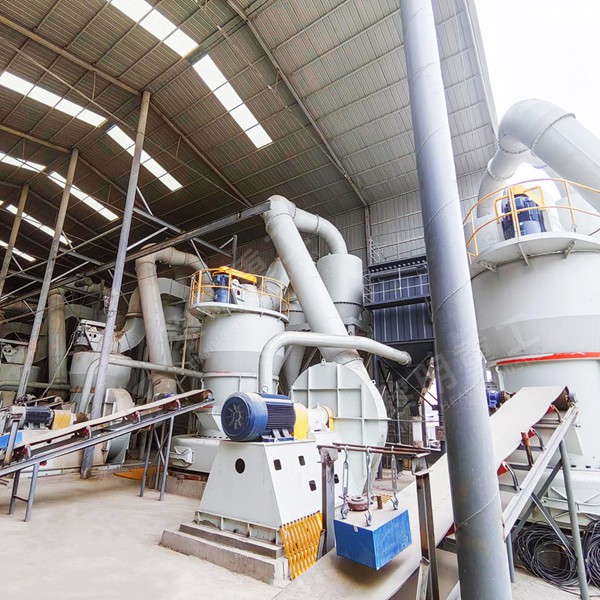
For operations requiring higher capacity, superior energy efficiency, and more advanced technological features, the MTW European Type Trapezium Mill stands as the logical upgrade. This mill inherits the core principles of the Raymond mill but incorporates patented advancements. It forms a complete, closed-circuit grinding system with integrated crushing, feeding, grinding, powder selection, and conveying. The system includes a pulse dust collector, ensuring environmentally compliant operation. Its capacity range is significantly broader, from 3 to 55 tons per hour, and it excels in large-scale projects such as power plant desulfurization (limestone grinding) and high-volume production of non-metallic mineral powders.
When the application demands ultra-fine powder, the MW Micro Powder Mill is the specialized tool of choice. Incorporating advanced grinding technology, it achieves a remarkable fineness up to d97 ≤ 5μm (approximately 3250 mesh). Its design is particularly adept at processing materials into superfine powders for high-value industries. Similar to the Raymond mill in its application scope (e.g., calcium carbonate, gypsum), the MW series pushes the boundaries of fineness and is equipped with efficient pulse precipitators for green production.
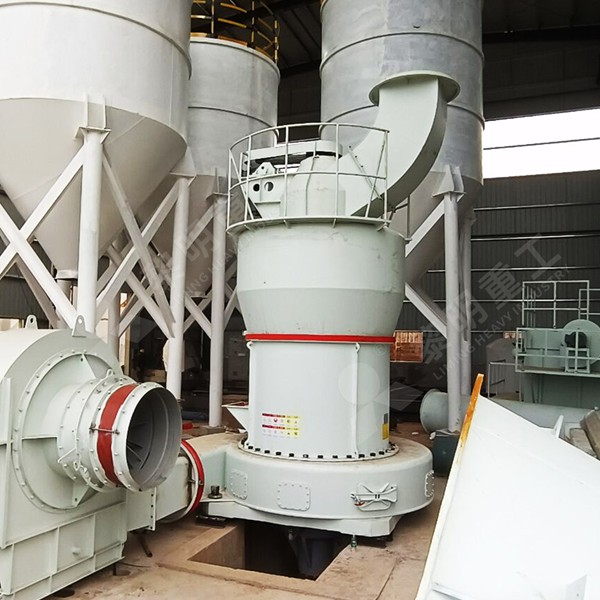
Selection Criteria Summary:
1. Required Fineness: For 44-613μm, consider Raymond Mill. For similar range with higher capacity/tech, choose MTW Mill. For 5-45μm (325-3250 mesh), MW Micro Powder Mill is essential.
2. Production Capacity: Evaluate hourly throughput needs against each model's range (Raymond: up to 4.5T/H; MTW: 3-55T/H; MW: 0.5-25T/H).
3. Material Properties: Hardness (below Mohs 7 for these mills), humidity, and abrasiveness are crucial. All discussed mills handle non-explosive, non-flammable materials.
4. System Complexity & Footprint: The traditional Raymond mill offers simplicity. The MTW system is a comprehensive, automated plant ideal for large-scale, continuous operation. The MW mill is a specialized system for ultra-fine goals.
5. Environmental Standards: The MTW and MW mills are designed with integrated, high-efficiency pulse dust collection systems as standard, addressing modern environmental regulations directly.
Liming Heavy Industry's philosophy of continuous improvement means that even our classic Raymond mill benefits from decades of refinement, while our MTW and MW series represent the cutting edge in grinding technology. By carefully analyzing your project's specific parameters against the strengths of each mill type, you can make a confident selection that ensures long-term productivity and return on investment.
Frequently Asked Questions (FAQs)
Q1: What is the primary functional difference between a Raymond Mill and an MTW European Type Mill?
A1: While both utilize a roller-and-ring grinding principle, the MTW Mill is a technologically advanced evolution. It offers higher capacity, greater energy efficiency, a fully integrated closed-circuit system with automatic control, and often achieves a more consistent product fineness, making it suitable for larger, more modern industrial plants.
Q2: Can the MW Micro Powder Mill handle the same materials as a traditional Raymond Mill?
A2: Yes, it can process similar non-explosive, sub-Mohs 7 hardness materials like calcium carbonate and gypsum. However, its core strength is grinding these materials to a much finer particle size (superfine powder), which may not be necessary or cost-effective for applications requiring only medium fineness.
Q3: How important is material humidity in the selection process?
A3: It is critical. The standard designs of these mills are intended for materials with moisture content typically below 6%. For materials with higher humidity, integrated drying systems or pre-drying equipment may be required, which can influence the overall system design and model recommendation.
Q4: What does a "closed-circuit grinding system" mean, as mentioned for the MTW Mill?
A4: A closed-circuit system means the ground material is continuously classified by an internal separator. Oversize particles are recycled back to the grinding chamber for further milling, while only particles meeting the target fineness are collected as final product. This enhances grinding efficiency and ensures tight control over product size distribution.
Q5: Are these mills suitable for metallic ore grinding?
A5: The mills described here (Raymond, MTW, MW) are primarily engineered for non-metallic minerals and medium-hardness materials. For harder metallic ores, other grinding equipment like ball mills, which can handle a wider range of hardness and are built with more wear-resistant liners, are generally more appropriate.


