Published: October 26, 2023
In the demanding world of industrial mineral processing, achieving consistent, high-quality limestone powder requires machinery built for reliability and precision. For over three decades, LIMING HEAVY INDUSTRY CO., LTD. has been at the forefront of grinding technology, developing robust solutions that stand the test of time. Our Raymond Mill series, particularly engineered for materials like limestone, exemplifies this commitment through its stable performance, operational simplicity, and adaptability. This article delves into the core features, working principles, and application advantages of our limestone-optimized Raymond grinding mills, highlighting why they remain a cornerstone for industries ranging from construction to environmental desulfurization.
Since its establishment in 1987, LIMING HEAVY INDUSTRY has grown into a leader in the manufacture of large and medium-sized crushing and grinding equipment. With headquarters in the HI-TECH Industry Development Zone of Zhengzhou and a sprawling manufacturing footprint, the company operates on a philosophy of precision manufacturing, continuous innovation, and scientific management. This foundation is crucial for producing equipment like the Raymond Mill, where stability is not an optional feature but a fundamental requirement for continuous production lines.
The Raymond Mill, a classic yet continually refined design, is exceptionally suited for processing non-explosive, non-flammable materials with Mohs hardness under 7 and humidity below 6%, making limestone an ideal feedstock. Its strength lies in a mechanically stable grinding structure that minimizes vibration and wear, ensuring consistent output over extended operational periods. The mill's ability to produce a fineness range between 44μm and 613μm allows it to meet diverse specifications for powdered limestone used in products like paints, plastics, rubber, and as a filler material.
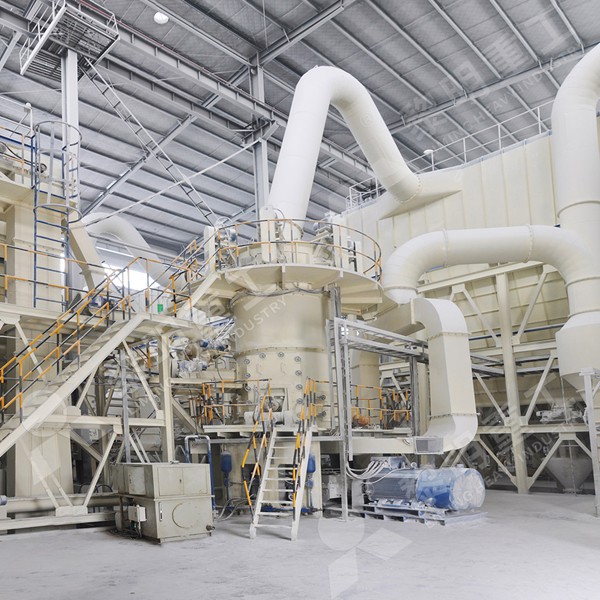
Operational stability is further enhanced by the mill's intelligent system design. The grinding process integrates drying, grinding, powder selection, and conveying into a cohesive, closed-loop system. This not only improves efficiency but also significantly reduces dust emissions, aligning with modern environmental standards. For power plant flue gas desulfurization—a major application—this reliability is paramount. A steady supply of precisely ground limestone powder is critical for the efficient chemical reaction that removes sulfur oxides, and our Raymond Mill is engineered to deliver just that, shift after shift.
Beyond the traditional Raymond Mill, our technological evolution is embodied in the MTW European Type Grinding Mill. This advanced system builds upon the proven Raymond mill principle with patented innovations that enhance stability and productivity for large-scale limestone powder making. Its curved air duct and internal powder concentrator optimize airflow and classification efficiency, leading to more uniform particle size distribution and higher yield. The use of bevel gear overall transmission, as opposed to traditional edge drives, results in smoother operation, lower noise, and higher mechanical efficiency, contributing to unparalleled long-term operational steadiness.
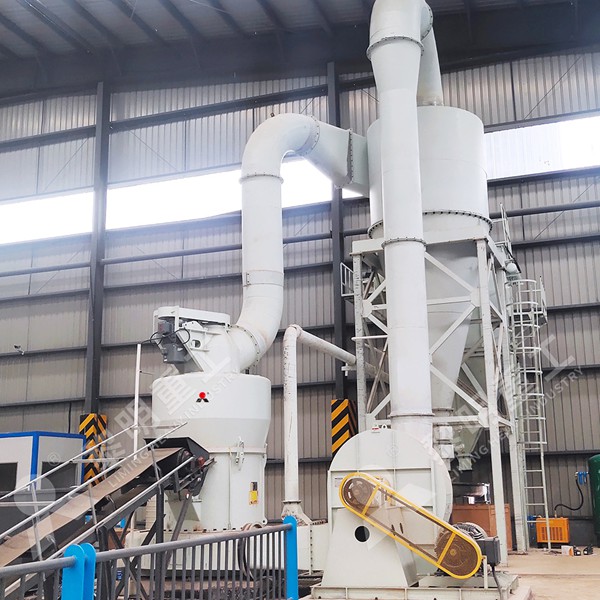
The working principle of these mills guarantees their stable performance. Material is fed uniformly into the grinding chamber where it is ground between rollers and a stationary ring. The ground material is then carried by an air stream to a high-efficiency classifier. Oversized particles are rejected and returned for regrinding, while in-spec powder is collected as the final product. This continuous, self-circulating system, supported by reliable components like jaw crushers for pre-sizing and pulse dust collectors, creates a robust production circuit with minimal downtime. LIMING's commitment to R&D ensures that every component, from the grinding roller material to the bearing design, is selected and engineered for maximum durability and consistent performance under the abrasive conditions of limestone processing.
In conclusion, the pursuit of stable performance in limestone grinding is a multifaceted engineering challenge. It requires robust mechanical design, intelligent system integration, and a deep understanding of material science. LIMING HEAVY INDUSTRY's Raymond and MTW European Type Grinding Mills meet this challenge head-on, offering the industry reliable, efficient, and environmentally sound solutions. For operations where consistency in product quality and uninterrupted production are critical, these mills represent an investment in long-term operational excellence and productivity.
Frequently Asked Questions (FAQ)
Q1: What is the typical moisture content limit for limestone processed in your Raymond Mill?
A1: Our Raymond Mill is designed to handle limestone with a moisture content of less than 6%. For materials with higher moisture, integrated drying features can be utilized to ensure optimal grinding efficiency.
Q2: How does the fineness of the final limestone powder get controlled?
A2: Fineness is precisely controlled by adjusting the speed of the analytical classifier (separator). Increasing the speed yields a finer product, while decreasing it produces a coarser powder, allowing adjustment within the 44μm to 613μm range.
Q3: What are the key maintenance points to ensure long-term stable performance?
A3: Key maintenance includes regular lubrication of grinding roller bearings, inspection and replacement of grinding rings and rollers due to wear, checking the integrity of classifier blades, and ensuring the dust collection system is functioning properly to maintain system airflow.
Q4: Can the mill system handle other materials besides limestone?
A4: Absolutely. The mill is versatile and suitable for various non-flammable, non-explosive minerals under Mohs hardness 7, such as calcite, potash feldspar, talc, marble, dolomite, and gypsum.
Q5: What makes the MTW European Type Mill more advanced than the traditional Raymond Mill design?
A5: The MTW mill incorporates several upgrades including a bevel gear integral transmission for greater stability and efficiency, a curved air duct for lower flow resistance, an internal lubricating system, and a more advanced electronic control system, all contributing to higher productivity, lower energy consumption, and enhanced operational smoothness.


