Published: October 26, 2023
For industries requiring high-volume production of fine limestone powder, selecting the right milling equipment is a critical decision impacting efficiency, product quality, and operational costs. Among the array of grinding solutions, the modern, large-output Raymond Mill stands out as a robust and technologically advanced choice. This article delves into the capabilities of high-capacity Raymond Mills, specifically for limestone processing, exploring their working principles, advantages over traditional systems, and the engineering excellence behind their design, drawing on the expertise and product lineage of Liming Heavy Industry.
Limestone powder is a fundamental raw material across numerous sectors, including construction (for cement and concrete), agriculture (as a soil conditioner), flue gas desulfurization in power plants, and the manufacturing of paints, plastics, and paper. The demand is often for consistent, high-tonnage output of powder within specific fineness ranges, typically from 80 to 400 mesh. Traditional ball mills or smaller Raymond mills can struggle with the energy efficiency and throughput required for such large-scale, continuous operations. This is where the evolution of the Raymond Mill into a large-output configuration becomes pivotal.
The core working principle of a Raymond Mill, also known as a pendulum roller mill, remains elegantly effective. The system feeds crushed limestone into a grinding chamber where rotating rollers, suspended from a central shaft, exert pressure against a stationary grinding ring. The material is crushed and ground between these surfaces. An integral air blower creates an upward airflow, carrying the finer particles to a classifier. Particles meeting the fineness specification pass through the classifier and are collected as product via a cyclone or bag filter, while coarser particles fall back for regrinding. This closed-circuit system ensures precise particle size control and high grinding efficiency.
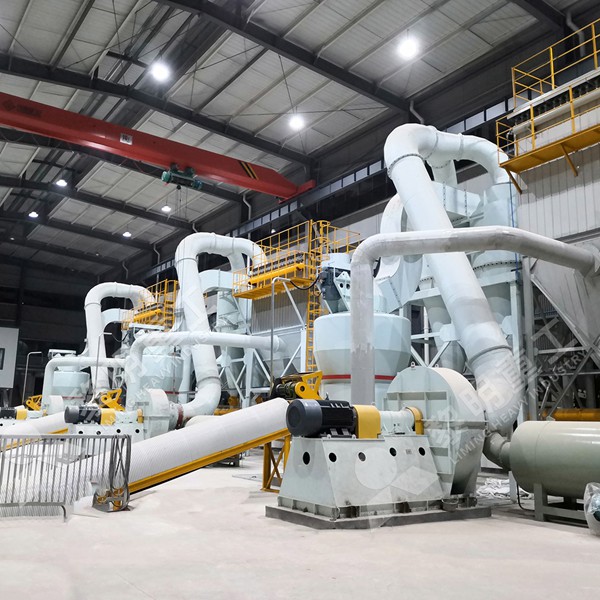
Modern large-output Raymond Mills, such as those engineered by Liming Heavy Industry, incorporate significant advancements over earlier models. Key innovations include:
- Enhanced Grinding Roller and Ring Design: Utilization of wear-resistant alloy materials and optimized curvature profiles increases the grinding area and service life, directly boosting capacity and reducing maintenance downtime.
- High-Efficiency Classifier: Advanced dynamic or static classifiers with variable-speed drives allow for real-time, precise adjustment of product fineness without stopping the mill, catering to different customer requirements from a single machine.
- Intelligent Electrical Control System: Automated systems manage the entire process—from feeding and grinding to classifying and collecting—ensuring stable operation, optimal load, and remote monitoring capabilities. This automation minimizes human error and maximizes consistent output quality.
- Integrated Drying Capability: For limestone with moderate moisture content, the hot air introduced from the air blower can simultaneously dry and grind the material, eliminating the need for a separate dryer and streamlining the production line.
- Environmental Compliance: The system is inherently a negative-pressure operation. When paired with high-efficiency pulse jet bag dust collectors, it achieves dust emission levels that meet stringent international environmental standards, making it a clean and sustainable choice.
When configured for large-scale limestone powder production, these mills offer compelling advantages. Their specific grinding action is more energy-efficient for fine to medium-fine grinding compared to ball mills, leading to lower power consumption per ton of product. The modular design and vertical structure occupy a smaller footprint, saving valuable plant space. Furthermore, the quick adjustment of fineness and stable particle size distribution are crucial for downstream processes in industries like plastics or paint, where powder consistency directly affects product performance.
Liming Heavy Industry's commitment to R&D, with its mature scientific research team focusing on technological frontiers, is evident in its grinding portfolio. While their classic Raymond Mill is a reliable workhorse, their MTW European Type Grinding Mill represents the next generation. This mill builds upon the Raymond principle with a curved arc-shaped shovel blade for better feeding, a lubricant station for the grinding roller, and a more efficient internal air channel design. For limestone powder production, the MTW series often provides even greater capacity, lower wear, and higher overall operational efficiency, embodying the company's philosophy of "scientific research tackling key problems."
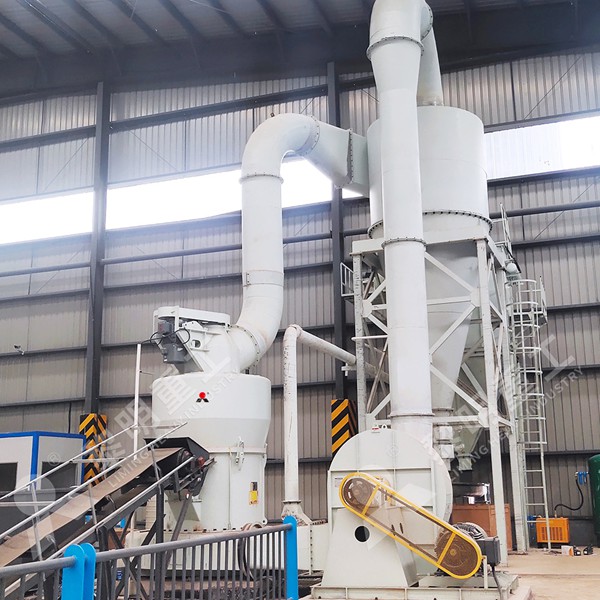
Choosing the right large-output mill requires a thorough analysis of project specifics: desired final fineness, required hourly/annual capacity, initial feed size, and moisture content. Partnering with an experienced manufacturer like Liming Heavy Industry, which possesses extensive experience in "non-metallic mineral powder making," ensures access to comprehensive technical support—from initial testing and plant layout to installation, training, and after-sales service. Their modern manufacturing bases, covering tens of thousands of square meters, are equipped to produce these large, precision machines to the highest quality standards.
In conclusion, for large-scale limestone powder making, the contemporary large-output Raymond Mill and its advanced derivatives like the MTW European Mill are engineered solutions that deliver productivity, precision, and profitability. They transform a fundamental industrial process through intelligent design, robust construction, and a focus on energy efficiency and environmental stewardship, solidifying their role as indispensable assets in modern mineral processing lines.
Frequently Asked Questions (FAQ)
- What is the typical output range of a large Raymond Mill for limestone?
Large-output Raymond Mills can have capacities ranging from several tons per hour to over 20 tons per hour, depending on the model and desired product fineness. Systems like the MTW European Mill can achieve even higher throughputs for large-scale industrial projects. - Can the mill handle limestone with moisture?
Yes, modern Raymond Mills are often equipped with integrated drying functions. By introducing controlled hot air into the grinding chamber, they can simultaneously dry and grind limestone with a certain moisture content, typically suitable for materials with humidity not exceeding 6-10%. - How fine can limestone powder be produced with this equipment?
Depending on the classifier configuration, large Raymond Mills can produce limestone powder with a fineness ranging broadly from approximately 44 microns (325 mesh) up to 200 mesh or finer. For superfine powders below 10 microns, a dedicated micro-powder mill might be recommended. - What are the main advantages over a traditional ball mill for this application?
Key advantages include higher energy efficiency for fine grinding, a smaller physical footprint, quicker adjustment of product fineness, lower noise levels, and a drier final product due to the integrated air-flow system. - Is the system environmentally friendly?
Absolutely. The grinding process operates under negative pressure in a closed circuit. When equipped with a high-efficiency baghouse dust collector (pulse precipitator), the system captures over 99.9% of airborne particles, ensuring emissions are clean and compliant with environmental regulations.


