The production of high-purity calcite for pharmaceutical excipients demands grinding technology that guarantees exceptional fineness, uniformity, and absolute contamination control. Liming Heavy Industry's Raymond Mill, engineered with precision and a deep understanding of material science, meets these stringent requirements. By combining reliable mechanical design with advanced classification systems, it delivers calcite powder with consistent particle size distribution crucial for bioavailability and tablet compaction, all while maintaining operational efficiency and a closed, clean production environment. This makes it an indispensable solution for manufacturers prioritizing quality and compliance in the pharmaceutical supply chain.
Liming Heavy Industry Co., Ltd., with over three decades of expertise in manufacturing crushing and grinding equipment, has consistently focused on technological innovation to serve demanding industries. Our commitment to "scientific research tackling key problems" and a "production, learning and research" philosophy drives the development of our milling solutions. For applications requiring meticulous control, such as pharmaceutical-grade mineral processing, our Raymond Mill stands out. It is specifically engineered to handle non-flammable, non-explosive materials like calcite with a Mohs hardness under 7 and humidity less than 6%, parameters perfectly suited for processing natural calcium carbonate into excipient-grade powder.
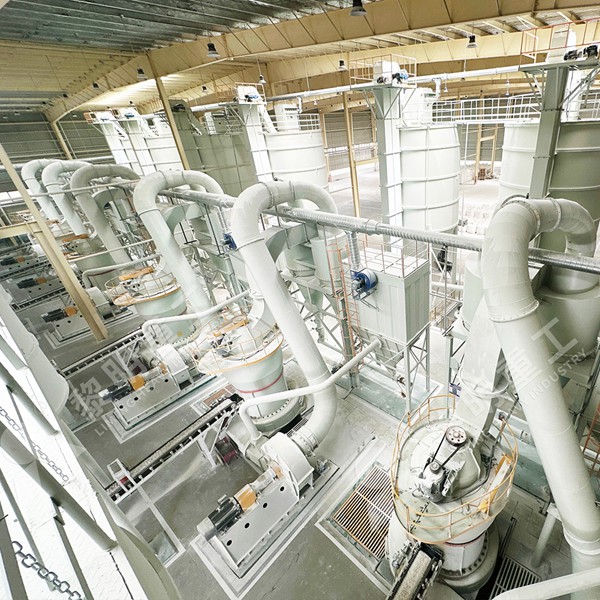
The role of calcite (calcium carbonate) as a diluent, filler, or pH adjuster in tablets and capsules necessitates powder of exceptional purity and specific physical characteristics. Particle size and shape directly influence flowability, mixing uniformity, and compression behavior. The Liming Raymond Mill addresses this through its efficient grinding mechanism. Materials are ground between the rotating rollers and the stationary ring. The resulting powder is carried by an air stream to an integrated classifier. Here, a critical separation occurs: oversized particles are rejected and returned for regrinding, while only particles meeting the target fineness (adjustable between 44μm and 613μm) pass through to become finished product. This closed-loop grinding and classification system is fundamental to achieving the narrow particle size distributions required in pharmaceutical formulations.
Beyond particle size control, contamination prevention is paramount. The mill's construction and system design contribute to product integrity. The grinding zone can be fabricated with appropriate wear-resistant materials to minimize metallic wear debris. Furthermore, the entire pneumatic conveying and collection system is enclosed, significantly reducing the risk of environmental contamination and protecting the product from external pollutants. Coupled with optional pulse dust collectors that meet stringent environmental standards, the production line maintains a clean operation, safeguarding the purity of the calcite powder from raw material intake to final collection.
Operational efficiency and stability are other hallmarks of the Liming Raymond Mill. Its robust design ensures continuous, reliable operation with minimal vibration—a key factor for maintaining consistent grind quality. The automatic electric control system simplifies operation and allows for stable control over key parameters. For pharmaceutical excipient producers, this translates to predictable output, reduced batch-to-batch variability, and lower operational costs. The mill's ability to integrate drying, grinding, powder selection, and conveying into a single, coherent system also saves valuable floor space and simplifies the overall process layout.
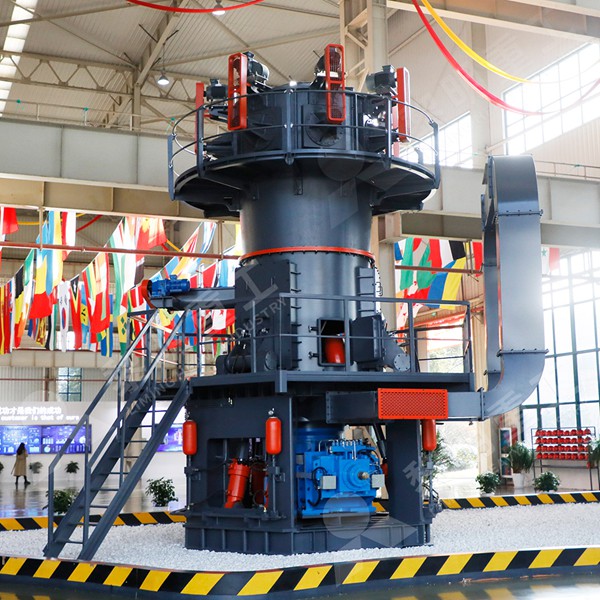
While our standard Raymond Mill is highly effective, Liming Heavy Industry's pursuit of technological advancement is embodied in our MTW European Type Grinding Mill and MW Micro Powder Mill. The MTW mill, with its patented technology, offers enhanced productivity and energy efficiency for large-scale production, featuring a more advanced curved blade classifier for even sharper cuts. For the most demanding superfine applications where calcite fineness down to d97 ≤ 5μm (3250 mesh) may be required, the MW Micro Powder Mill, incorporating advanced Swedish grinding technology, provides an excellent solution. This multi-option approach allows us to tailor recommendations based on specific capacity, fineness, and investment goals for pharmaceutical excipient manufacturing.
In conclusion, the selection of grinding equipment is a critical decision in establishing a reliable supply chain for pharmaceutical-grade calcite. Liming Heavy Industry's Raymond Mill, backed by decades of engineering experience and a corporate ethos of continuous innovation, provides a proven, reliable, and clean solution. It delivers the precise fineness control, operational stability, and contamination-free environment essential for producing excipients that meet the rigorous standards of the global pharmaceutical industry.
FAQ
- What is the typical fineness range achievable for calcite with your Raymond Mill, and is it adjustable?
Our Raymond Mill can produce calcite powder with a fineness range between 44μm (325 mesh) and 613μm. The fineness is easily adjustable in real-time via the integrated classifier speed control, allowing operators to dial in the exact particle size distribution required for different excipient functions. - How does the mill system prevent contamination of the high-purity calcite powder during processing?
The system is designed as a fully enclosed, negative-pressure circuit. The grinding zone uses wear-resistant materials to minimize shedding, and the product is transported via enclosed piping to cyclone and bag filter collectors. This design isolates the material from the workshop environment, effectively preventing external contamination. - Can the Raymond Mill handle the strict humidity requirements for pharmaceutical material processing?
Yes. The mill is suitable for materials with moisture content less than 6%. For calcite feed with marginally higher moisture, the friction heat generated during grinding and the flow of hot air in the system can provide a concurrent drying effect, helping to ensure the final product meets dryness specifications. - What kind of after-sales support and technical services do you provide for pharmaceutical industry clients?
We provide comprehensive support including installation supervision, commissioning, and operator training. Our technical team can also assist with process layout optimization for Good Manufacturing Practice (GMP) considerations and offer ongoing spare parts and maintenance services to ensure long-term, reliable operation. - For producing ultra-fine calcite (below 10μm), would you recommend the standard Raymond Mill or another model?
For ultra-fine calcite powder below 10μm (d97 ≤ 5μm), we typically recommend our MW Micro Powder Mill. It is specifically engineered for superfine grinding, absorbing advanced Swedish technology to efficiently achieve fineness between 325 mesh and 3250 mesh, making it more suitable for high-end pharmaceutical applications requiring extremely fine particles.


