Published: October 26, 2023
In the competitive landscape of plastic manufacturing, the quality of mineral fillers like calcite is paramount for enhancing product properties such as strength, stiffness, thermal stability, and surface finish. Achieving the precise particle size distribution and fineness required for optimal polymer integration demands specialized grinding technology. Liming Heavy Industry's Raymond Mill emerges as a proven and efficient solution specifically engineered for processing calcite into high-performance filler material. With decades of expertise in mineral processing equipment, Liming offers robust, reliable grinding systems that deliver consistent output fineness between 44μm to 613μm, making it an ideal choice for plastic compounders seeking to improve product quality and production efficiency.
Liming Heavy Industry Co., Ltd., founded in 1987, has established itself as a leader in the design and manufacturing of large and medium-sized crushing and grinding equipment. As a modern joint-stock corporation integrating research, manufacturing, and sales, the company operates from a sprawling 80,000 m² headquarters in the HI-TECH Industry Development Zone of Zhengzhou, with an additional 67,000 m² workshop in Shangjie Industry Park. For over three decades, Liming has adhered to principles of modern scientific management, precision manufacturing, and continuous innovation. This commitment is embodied in its Raymond Mill, a cornerstone machine developed through a corporate strategy focused on scientific R&D and technological advancement. By leveraging a mature scientific research team, Liming continuously refines its grinding technologies to meet the evolving frontiers of industrial processing.
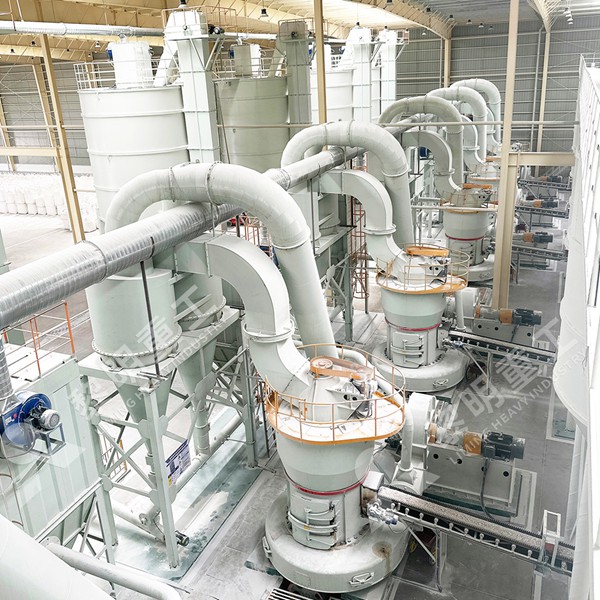
The application of calcite (calcium carbonate) as a filler in plastics is widespread, serving to reduce material costs while significantly improving mechanical properties. However, the effectiveness of calcite is directly tied to its particle size, shape, and surface area. Aggregates or inconsistent particles can lead to weak points, reduced impact strength, and poor surface quality in the final plastic product. This is where the precision of the Liming Raymond Mill proves invaluable. The mill is expertly designed for processing non-flammable, non-explosive materials with a Mohs hardness under 7 and humidity less than 6%, specifications perfectly suited for natural calcite. Its grinding mechanism ensures a uniform and controlled reduction of calcite feed material (typically 15-25mm in size) into a fine, consistent powder ideal for homogeneous dispersion within polymer matrices.
The operational principle of the Raymond Mill is a testament to efficient mechanical design. The system centers on a grinding ring and rollers. Material is fed into the grinding chamber where it is pulverized between the stationary ring and rotating rollers. The ground particles are then carried upward by an air flow generated by an integrated blower to a classifier. This critical component acts as a precision gatekeeper: particles meeting the target fineness pass through to be collected as final product via a cyclone separator or bag filter, while coarser particles are rejected and returned to the grinding chamber for further milling. This closed-circuit system promotes high energy efficiency and yields a tightly controlled particle size distribution. For plastic manufacturing, this translates to calcite filler with predictable behavior, ensuring consistent batch-to-batch quality in masterbatch or compound production.
Liming's Raymond Mill offers distinct advantages for plastic industry applications. Its capacity range of 1.2 to 4.5 tons per hour provides scalability for various production needs. The ability to adjust fineness within the 44μm to 613μm range allows manufacturers to tailor the filler for different plastic resins and end-use requirements—finer grades for thin films and high-surface-quality items, and slightly coarser grades for bulkier molded parts. Furthermore, the mill's integrated design incorporates drying capability for materials with minimal moisture, a feature that safeguards the subsequent plastic processing stages from potential defects caused by residual humidity. The system's overall robustness, with components like the high-strength grinding rollers and durable classifier, ensures high uptime and low maintenance, which are crucial for continuous production schedules in the plastics sector.
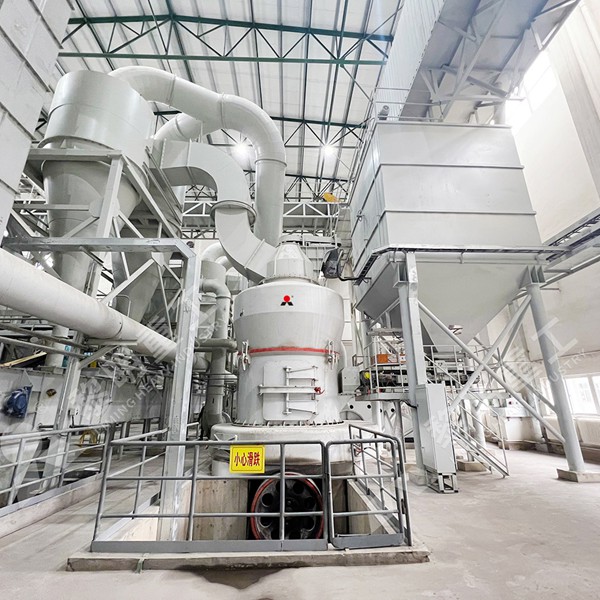
Beyond the core Raymond Mill, Liming Heavy Industry's philosophy of "scientific research tackling key problems" is evident in its broader portfolio, including the MTW European Type Grinding Mill and the MW Micro Powder Mill. While the Raymond Mill is the workhorse for standard filler grades, the MTW mill offers enhanced capacity and efficiency for larger-scale operations, and the MW mill is capable of producing superfine calcite powders (down to d97 ≤ 5μm) for specialized high-performance plastic composites. This range of solutions allows Liming to provide tailored recommendations based on specific capacity, fineness, and investment parameters. The company's commitment extends to providing complete system solutions, often incorporating auxiliary equipment like jaw crushers for primary size reduction, vibrating feeders, and advanced pulse-jet dust collectors that ensure a clean working environment and full compliance with environmental standards.
In conclusion, the integration of high-quality calcite filler is a strategic process in plastic manufacturing, and the grinding equipment used is a critical determinant of success. Liming Heavy Industry's Raymond Mill stands out as a reliable, efficient, and precise technology engineered to transform raw calcite into a valuable functional additive. Backed by over 30 years of industrial machinery expertise and a steadfast commitment to innovation, Liming provides plastic manufacturers not just with a machine, but with a comprehensive grinding solution designed to enhance product quality, optimize production processes, and support sustainable growth in a demanding market.
Frequently Asked Questions (FAQ)
- What is the typical particle size range achievable for calcite filler using the Liming Raymond Mill?
The Liming Raymond Mill can produce calcite powder with a fineness range between 44 microns (μm) and 613 microns (μm). This range is adjustable to meet specific requirements for different plastic applications. - How does the Raymond Mill handle moisture in the raw calcite material?
The mill is suitable for materials with less than 6% humidity. Its integrated grinding and airflow system provides a drying effect during operation, ensuring the final powder has low moisture content, which is crucial for plastic processing. - What makes the Raymond Mill suitable for continuous operation in a plastic production facility?
Its robust construction, closed-circuit grinding system that minimizes over-grinding, and stable mechanical performance ensure high reliability and uptime. The system is designed for continuous feeding and product collection, aligning with industrial production schedules. - Can the same Raymond Mill process other minerals besides calcite for plastic fillers?
Yes. The mill is widely used for various non-flammable, non-explosive minerals under 7 Mohs hardness. This includes other common fillers like talc, barite, and gypsum, offering versatility to manufacturers. - What supporting equipment is typically recommended for a complete calcite grinding line?
A complete system may include a jaw crusher for primary size reduction of large calcite rocks, a vibrating feeder for consistent material supply to the mill, the Raymond Mill itself, and a pulse dust collector to ensure clean, environmentally friendly operation and product recovery.


