Published: October 26, 2023
In the realm of industrial mineral processing, the industrial calcium carbonate pulverizer stands as a cornerstone technology for transforming raw limestone, marble, or chalk into finely ground powders essential across numerous sectors including construction, plastics, paints, paper, and pharmaceuticals. Calcium carbonate, as a naturally abundant and versatile mineral, requires precise comminution to achieve specific particle sizes ranging from coarse granules (e.g., 200 mesh) to ultra-fine powders (e.g., 3250 mesh). The choice of pulverizer directly impacts production efficiency, energy consumption, product quality, and operating costs. Modern industrial pulverizers integrate advanced grinding mechanisms, intelligent control systems, and environmental safeguards to meet stringent industrial standards. At Liming Heavy Industry, we offer a comprehensive portfolio of calcium carbonate grinding equipment—from high-capacity vertical roller mills and energy-efficient European trapezium mills to ultra-fine micro powder mills and robust ball mills—each engineered to address diverse throughput requirements, feed sizes, and fineness specifications. This article delves into the technical nuances, operational principles, and selection criteria for industrial calcium carbonate pulverizers, providing actionable insights for plant managers, process engineers, and procurement professionals seeking to optimize their grinding operations.
Understanding the Core Technologies for Calcium Carbonate Grinding
Calcium carbonate grinding typically involves two stages: primary crushing to reduce large rocks to manageable sizes (30–55 mm), followed by fine or ultra-fine pulverization. Each pulverizer type excels in specific applications, and the selection hinges on factors such as target particle size distribution, throughput capacity, moisture content, hardness (Mohs 3 for calcium carbonate), and desired operational flexibility. Below, we explore the principal industrial pulverizers suitable for calcium carbonate processing.
1. LM Vertical Roller Mill: High-Capacity Integrated Grinding
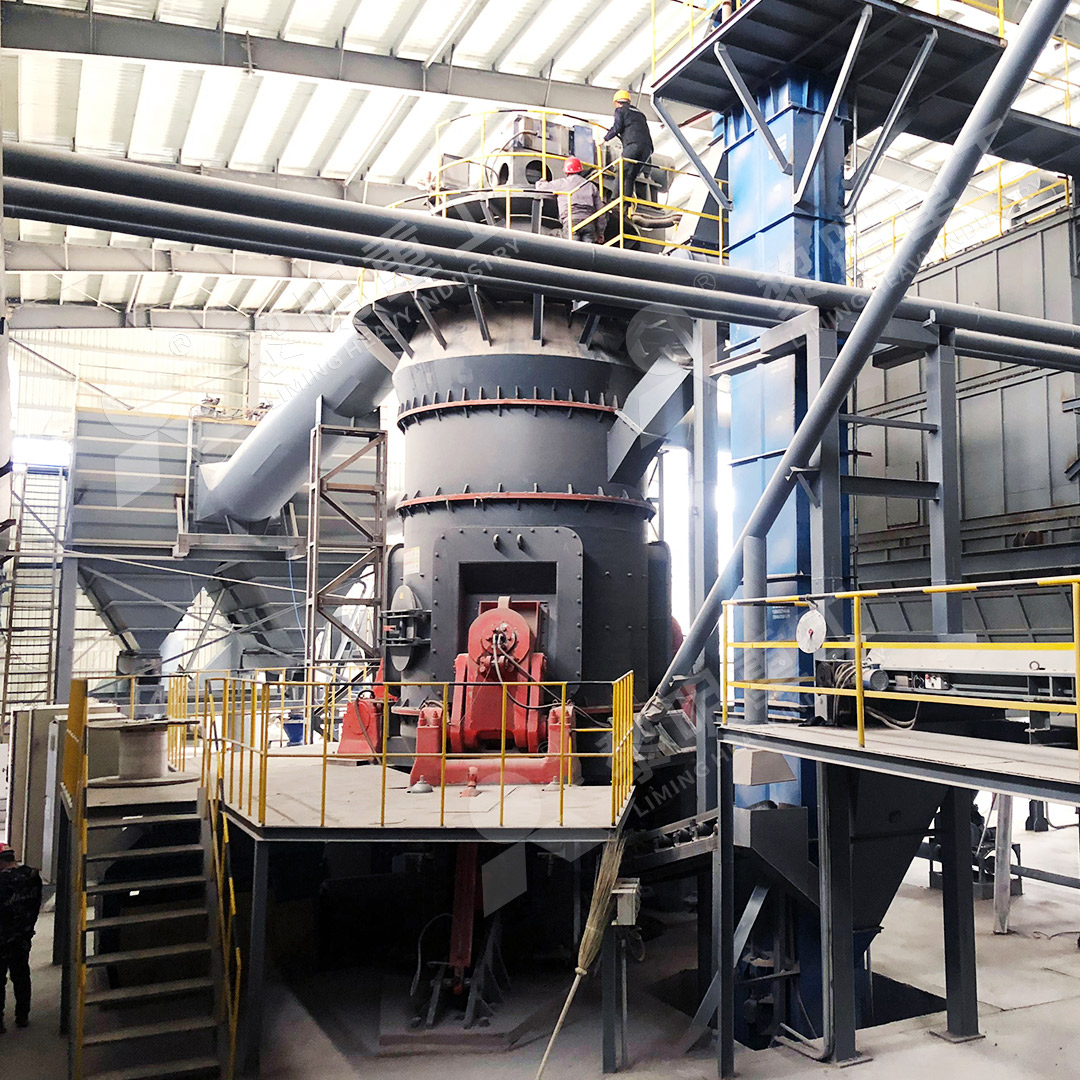
Liming's LM Vertical Roller Mill represents a paradigm shift in large-scale calcium carbonate grinding, merging drying, grinding, powder selection, and material conveying into a single, compact system. Designed for capacities ranging from 10 to 400 T/H and accepting feed sizes up to 55 mm, this mill is ideal for cement plants, power plants (desulfurization), and non-metallic mineral processing lines. The grinding table and rollers utilize hydraulic pressure to crush and shear the material, while a built-in classifier ensures precise particle size control. Its automatic electric control system optimizes energy consumption and reduces manual intervention. For calcium carbonate, the LM mill delivers consistent fineness (typically 200–400 mesh) with minimal wear, thanks to its durable alloy grinding components. The integrated drying capability is particularly advantageous when processing moist calcium carbonate, as hot gases can be introduced to evaporate moisture within the grinding zone.
2. MTW European Type Trapezium Mill: The Raymond Mill Successor
For medium-capacity applications (3–55 T/H) requiring high productivity and environmental compliance, Liming's MTW European Type Trapezium Mill is the upgraded replacement for traditional Raymond mills and pendulum mills. This patented technology incorporates a trapezoidal grinding roller and ring geometry that increases grinding efficiency by 30% compared to conventional Raymond mills. The mill’s working principle involves a closed-loop system: raw calcium carbonate (30–50 mm feed) is crushed by a jaw crusher, fed via a variable-frequency belt feeder into the grinding chamber, where rollers rotate against a stationary ring. Airflow carries ground particles upward to a separator; oversized particles fall back for regrinding, while fines are collected as product. The system is equipped with a pulse dust collector, ensuring zero dust emission and compliance with national environmental standards. MTW mills are particularly favored in power plant desulfurization and heavy calcium carbonate (GCC) production, where fineness ranges from 80 to 400 mesh and throughput stability is critical.
3. MW Micro Powder Mill: Ultra-Fine Grinding Down to 5 Microns
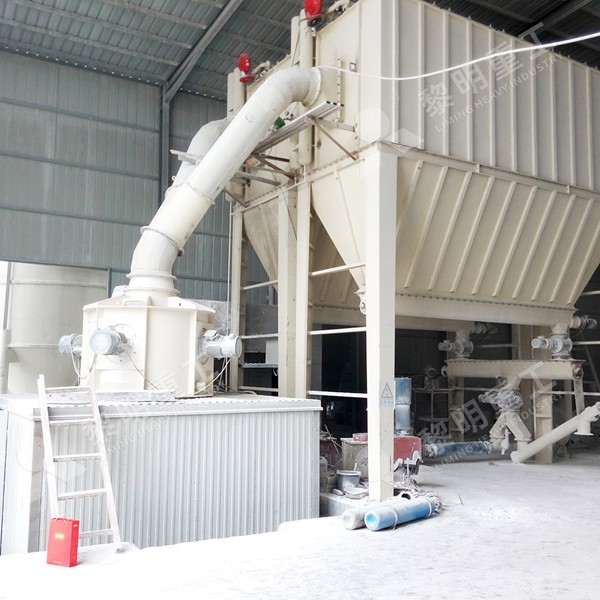
When the application demands ultra-fine calcium carbonate powder—such as for high-gloss paints, paper coatings, or pharmaceutical excipients—Liming's MW Micro Powder Mill is the optimal solution. Based on advanced Swedish grinding technology, this mill can produce powders with fineness adjustable between 325 mesh (44 μm) and 3250 mesh (≤5 μm, d97). With a capacity range of 0.5–25 T/H, it is designed for medium to small production lines. The mill’s working principle involves a multi-roller configuration driven by a reducer: the main shaft rotates the turnplate, causing dozens of rollers to grind materials against a ring raceway. Pre-crushed material (10–20 mm) is fed into a hopper, then uniformly distributed onto the grinding zone by a vibrating feeder. An integrated pulse precipitator ensures a green operation by capturing fine particles. For calcium carbonate processors targeting ultra-high specific surface area, the MW mill offers the precision and consistency required for premium markets.
4. Raymond Mill: Reliable Standard for Medium Fineness
Liming's Raymond Mill remains a workhorse for calcium carbonate grinding in applications where moderate fineness (613–44 μm) and throughput (1.2–4.5 T/H) are acceptable. Suitable for materials with Mohs hardness below 7 and humidity under 6%, the Raymond mill is widely deployed in non-metallic ore pulverizing and building materials. Its simple mechanical design—featuring a rotating grinding roller, stationary ring, and blower system—offers ease of maintenance and low initial investment. For small-scale calcium carbonate operations, the Raymond mill provides a cost-effective entry point, though its energy efficiency and capacity are limited compared to more advanced technologies.
5. Ball Mill: Versatile but Energy-Intensive
Ball mills, with capacities from 0.65 to 50 T/H and feed sizes ≤25 mm, are common in cement, beneficiation, and chemical industries for calcium carbonate grinding. The horizontal rotating cylinder contains steel balls that cascade and impact the material, producing powders typically in the 100–400 mesh range. While ball mills offer excellent reliability and can handle abrasive materials, they consume 20–40% more energy per ton than vertical roller mills or trapezium mills. For calcium carbonate, ball mills are often used in combination with classifiers to achieve finer products, but their physical footprint and noise levels are higher. They remain a viable option for operations requiring multi-material grinding flexibility.
Selection Criteria and Operational Optimization
Choosing the right industrial calcium carbonate pulverizer requires evaluating:
- Throughput requirement: LM vertical mill for >50 T/H; MTW or ball mill for medium; MW or Raymond for smaller capacities.
- Target fineness: For >400 mesh, MW micro powder mill is preferred; for 200–400 mesh, LM or MTW excel; for coarser products, Raymond or ball mill suffice.
- Feed size: Ensure upstream crushing equipment matches the mill’s maximum feed size (e.g., 30–55 mm for LM, 10–20 mm for MW).
- Moisture content: LM and MTW can handle moderate moisture (up to 5–10%) with hot gas injection; ball mills and Raymond mills require dry feed.
- Energy efficiency and environmental compliance: LM and MTW feature advanced dust collection and reduced power consumption (by 30–50% vs. ball mills).
Liming Heavy Industry’s engineers provide comprehensive after-sales support, including site layout design, installation supervision, and operational training. Our factories in Zhengzhou (80,000 m²) and Shangjie (67,000 m²) ensure timely production and quality control. Over 30 years of innovation have positioned us as a leader in grinding technology, with a portfolio that covers the entire value chain from crushing to powder collection.
Frequently Asked Questions (FAQ)
1. What is the typical feed size requirement for an industrial calcium carbonate pulverizer?
Feed size depends on the mill type. For Liming’s LM Vertical Roller Mill, feed size can be up to 55 mm. MTW European Type Trapezium Mill accepts 30–50 mm, while MW Micro Powder Mill requires smaller feed of 10–20 mm. Larger lumps should be pre-crushed using a jaw crusher to ensure efficient mill operation and prevent damage.
2. How does an industrial calcium carbonate pulverizer achieve ultra-fine powder (below 10 microns)?
Ultra-fine grinding is achieved by mills like the MW Micro Powder Mill, which uses multiple rollers and a high-speed classifier to recycle oversized particles. The mill’s rotating turnplate and ring raceway create intense shearing and compression forces, while the air classifier precisely controls cut-points. A pulse dust collector also captures ultra-fine particles, ensuring product yield meets d97 ≤ 5 μm specifications.
3. What maintenance is required for a calcium carbonate pulverizer to ensure long service life?
Regular maintenance includes: checking grinding roller and ring wear (replacement intervals vary based on material hardness and throughput), lubricating bearings and gearboxes, inspecting seals and dust collector bags, and monitoring vibration levels. Liming provides detailed maintenance manuals and recommends quarterly inspections. Automated lubrication systems are available on LM and MTW models to reduce downtime.
4. Can the same pulverizer handle both calcium carbonate and other non-metallic minerals?
Yes, many industrial pulverizers are designed for multi-material flexibility. For example, the LM Vertical Roller Mill can process cement raw materials, coal, slag, and non-metallic ores. However, when switching materials, the mill’s parameters (e.g., separator speed, grinding pressure) may need adjustment. It’s advisable to clean the grinding chamber to avoid cross-contamination, particularly for applications requiring high purity.
5. What are the key environmental features of modern calcium carbonate pulverizers?
Modern pulverizers incorporate pulse dust collectors (bag filters) with emission levels below 20 mg/Nm³, closed-loop pneumatic systems to prevent dust leakage, noise reduction enclosures (attenuating sound to <85 dB), and energy-efficient motors. Liming’s MTW and MW models also integrate variable-frequency drives to optimize power consumption during partial loads, aligning with global environmental regulations.


