Published on: October 5, 2023
In the paint industry, the quality of limestone powder directly impacts the final product's opacity, brightness, and consistency. Liming Heavy Industry Co., Ltd., established in 1987, has been at the forefront of designing and manufacturing advanced grinding solutions tailored for the rigorous demands of paint production. Our limestone grinding mills, including the LM Vertical Roller Mill, Raymond Mill, MTW European Type Trapezium Mill, MW Micro Powder Mill, and Ball Mill, are engineered to deliver ultra-fine, uniform particle sizes (down to d97 ≤ 5μm) with high efficiency and environmental compliance. With over three decades of expertise, a modern R&D center in Zhengzhou's HI-TECH zone, and a commitment to scientific innovation, Liming provides the paint industry with reliable, energy-saving equipment that enhances product performance while meeting strict environmental standards.
For paint manufacturers, the choice of grinding equipment is critical. Limestone acts as a functional filler and extender in paint formulations, contributing to viscosity control, durability, and cost reduction. However, achieving the required fineness (often between 325 mesh and 2500 mesh) without contamination requires robust, precision-engineered mills. Liming's comprehensive product line offers scalable solutions from small-batch production to large-scale industrial operations.
Why Limestone Grinding Matters in Paint
Limestone (calcium carbonate) is widely used in the paint industry due to its whiteness, low abrasiveness, and chemical inertness. Proper grinding enhances its dispersion in the paint matrix, reducing the need for expensive binders and improving the uniformity of the coating. Issues like poor grind quality can lead to sedimentation, reduced hiding power, and uneven finish. Liming's mills address these challenges through advanced design features like automatic separation, dust collection, and variable frequency feeding.
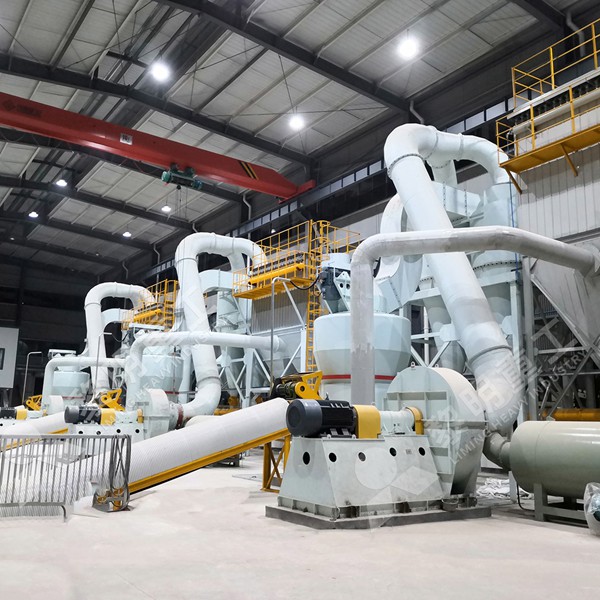
LM Vertical Roller Mill: High-Capacity Solution for Large Paint Plants
The LM Vertical Roller Mill is ideal for large-scale paint pigment and filler production. With a capacity range of 10–400 T/H and input size up to 55mm, it integrates drying, grinding, and classification in one unit. This reduces the footprint and energy consumption by up to 30% compared to traditional ball mills. The mill's automatic control system ensures consistent product fineness, crucial for paint formulations where particle size distribution affects gloss and opacity. Liming's LM series has been adopted in cement and mineral processing, and its application in the paint sector is growing due to its ability to handle high moisture content and produce powders with specific surface areas tailored for paint.
Raymond Mill: Proven Reliability for Standard Paint Grades
For mid-volume producers, the Raymond Mill remains a workhorse. It processes non-flammable, non-explosive materials with Mohs hardness under 7 and humidity below 6%. Output fineness ranges from 613 μm to 44 μm (approx. 30–325 mesh). This makes it suitable for producing standard limestone fillers for water-based paints and primers. The mill's robust construction and low maintenance requirements are backed by Liming's 30-year legacy of manufacturing. However, for ultra-fine paint applications (e.g., high-gloss enamels), the Raymond Mill's top fineness may be a limitation, which is where the MTW or MW mills become advantageous.
MTW European Type Trapezium Mill: The Upgrade for Fine-Grind Applications
Liming's MTW European Type Trapezium Mill is a direct upgrade from traditional Raymond mills, featuring patented technology for enhanced productivity and environmental protection. With capacity from 3 to 55 TPH and input size 30–50mm, it excels in limestone desulfurization and heavy calcium carbonate processing for the paint industry. The mill's working principle—using a closed-loop system with a separator, air blower, and pulse dust collector—ensures that only particles meeting the required size pass through, while oversized material is reground. This precision is vital when paint makers need narrow particle size distributions (e.g., d50 around 10–20 μm) for optimal dispersion. The MTW mill also operates with lower noise and vibration, making it suitable for plants in populated areas.
MW Micro Powder Mill: Ultra-Fine Grinding for Premium Paints
For high-performance paints requiring extreme fineness (such as automotive coatings or anti-corrosion primers), Liming's MW Micro Powder Mill is the top choice. Adopting advanced Swedish grinding technology, it achieves d97 ≤ 5 μm (equivalent to 2500–3250 mesh). The mill features multiple rotating rollers on a ring raceway, delivering high-impact grinding for soft to medium-hard materials like limestone. Capacity ranges from 0.5 to 25 T/H, with an input size of 10–20 mm. The pulse precipitator ensures that the process is dust-free, meeting global environmental regulations. In the paint industry, this mill is used to produce ultra-fine calcium carbonate that enhances hiding power and gloss while reducing the need for titanium dioxide—a major cost saving.
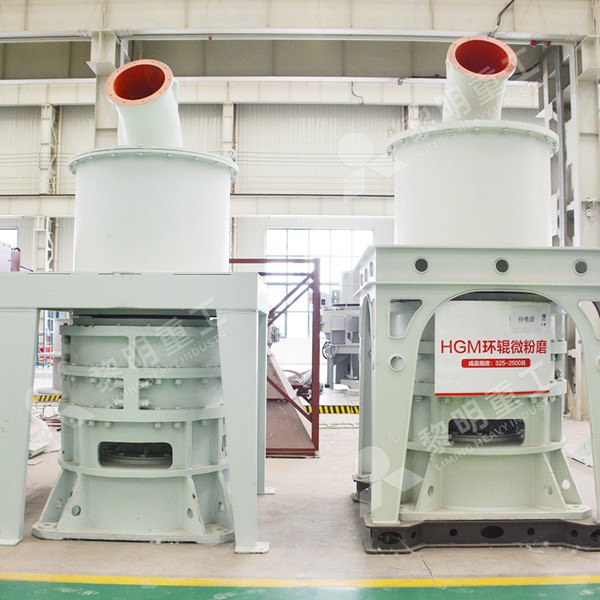
Ball Mill: Traditional Versatility for Diverse Formulations
Liming's Ball Mill remains a versatile option, especially for wet grinding applications. It is key equipment for milling after crushing, with a capacity of 0.65–50 T/H and input size ≤25 mm. The mill rotates horizontally, using steel balls to impact and grind the material. For paint manufacturers, the ball mill is often used for batch processing of specialty formulations where contamination control is less critical. However, its higher energy consumption and larger footprint compared to vertical mills make it less favored for modern dry-grind paint lines. Liming's ball mill design includes ladder and ripple liners to optimize the grinding media motion.
How Liming Supports the Paint Industry
Liming Heavy Industry's comprehensive approach includes end-to-end solutions: from jaw crushers and vibrating feeders to separators and electric cabinets. All mills are built at our facilities in Zhengzhou (80,000 m² HQ) and Shangjie (67,000 m² workshop), using precision manufacturing and modern management systems. Our scientific research team focuses on improving product competitiveness through continuous innovation, such as the development of energy-saving roller mills and closed-loop grinding systems. For the paint industry, this means lower operational costs, consistent product quality, and compliance with increasingly strict environmental norms.
Selecting the Right Mill for Your Paint Production
When choosing a limestone grinding mill, consider the following factors:
- Fineness requirements: For standard paints (50–100 μm), Raymond Mill is cost-effective. For fine paints (10–30 μm), MTW mill is ideal. For ultra-fine paints (below 10 μm), MW Micro Powder Mill is necessary.
- Capacity: Large plants benefit from LM Vertical Roller Mill (heavy duty). Smaller batches can use Raymond or ball mills.
- Moisture content: If limestone contains more than 6% moisture, the LM mill's integrated drying function is advantageous.
- Energy efficiency: Vertical roller mills and micro powder mills consume 20–40% less energy than ball mills.
Liming provides free consultation and sample testing to help paint manufacturers select the optimal configuration.
Conclusion
Limestone grinding mills are the backbone of high-quality paint production, and Liming Heavy Industry offers a diverse range of equipment to meet every need: from the high-capacity LM Vertical Roller Mill to the ultra-fine MW Micro Powder Mill. With 30+ years of experience, strong R&D capabilities, and a global reputation for reliability, Liming is the preferred partner for paint industry professionals seeking efficiency, consistency, and environmental responsibility. Contact our team to discuss your specific sizing and throughput requirements for your next paint filler project.
Frequently Asked Questions (FAQs)
Q1: What is the typical fineness required for limestone powder used in paint?
A1: For most architectural and industrial paints, the required fineness ranges from 325 mesh (44 μm) to 2500 mesh (5 μm). Ultra-fine grades (d97 ≤ 10 μm) are used in high-gloss or automotive paints to improve hiding power and surface smoothness.
Q2: Can Liming's mills handle limestone with high moisture content?
A2: Yes. The LM Vertical Roller Mill is designed with an integrated drying system that can handle materials with up to 15% moisture. For other mills like the MW Micro Powder Mill, pre-drying is recommended if moisture exceeds 6% to prevent clogging.
Q3: Which Liming mill is best for producing calcium carbonate filler for water-based paints?
A3: The Raymond Mill or MTW European Type Trapezium Mill is typically recommended for standard water-based paint fillers (325–800 mesh). For higher-grade paints requiring finer particles, the MW Micro Powder Mill is better.
Q4: How does Liming ensure environmental compliance during limestone grinding?
A4: Our mills come with advanced pulse dust collectors and closed-loop air systems that minimize dust emissions. The MTW and MW series meet stringent international environmental standards, making them suitable for plants in regulated areas.
Q5: What is the lead time for ordering a complete limestone grinding system?
A5: Lead time varies based on the model and configuration. Typically, standard mills take 30–45 days, while custom systems for large-scale paint plants may require 60–90 days. We recommend contacting our sales team with your specific capacity and fineness requirements for an accurate timeline.


