Published: October 26, 2023
Limestone grinding mills have become indispensable in the production of high-quality rubber fillers, offering a cost-effective and sustainable solution for enhancing the mechanical properties and processability of rubber compounds. As a key additive, ground calcium carbonate (GCC) derived from limestone is widely used in the rubber industry to improve tensile strength, tear resistance, and dimensional stability while reducing production costs. The selection of an appropriate grinding mill is critical to achieving the optimal particle size distribution, surface treatment, and purity required for rubber filler applications. With over 30 years of experience in manufacturing crushing and grinding equipment, Liming Heavy Industry Co., Ltd. provides a comprehensive range of mills—including vertical roller mills, Raymond mills, European type trapezium mills, micro powder mills, and ball mills—each engineered to meet specific production demands. This article explores the technical advantages, operational principles, and practical considerations for using limestone grinding mills in rubber filler production, drawing on Liming's extensive expertise and advanced manufacturing capabilities.
Importance of limestone fillers in rubber manufacturing
Limestone, primarily composed of calcium carbonate, is a versatile mineral filler that enhances the performance and cost-efficiency of rubber products. When ground to fine particle sizes ranging from 44 microns to 5 microns, limestone acts as a reinforcing agent that improves hardness, abrasion resistance, and processing characteristics. In rubber formulations, fillers like GCC reduce the need for more expensive raw materials such as carbon black or silica, while also facilitating better mixing and dispersion. The rubber industry demands consistent particle size distribution to ensure uniform properties across batches, making the grinding mill a crucial component in the production chain. Liming Heavy Industry's mills are designed to deliver precise fineness control, from coarse powders to ultra-fine grades, enabling manufacturers to tailor fillers for specific applications such as automotive tires, conveyor belts, seals, and flooring.
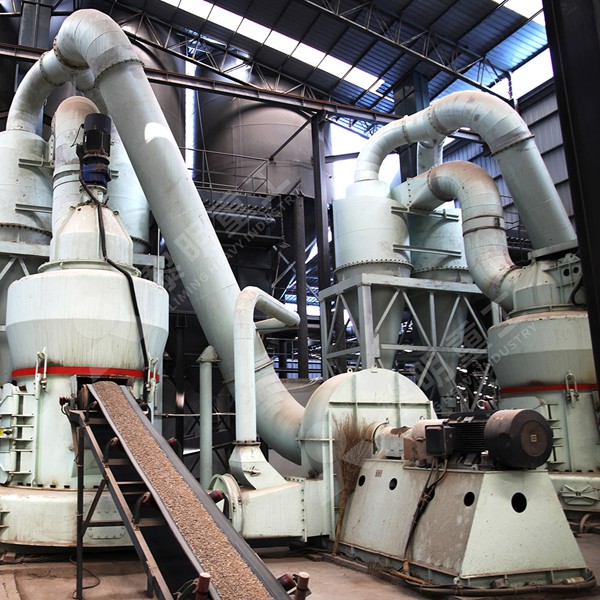
Choosing the right grinding mill for limestone filler
LM Vertical Roller Mill: High-capacity integrated solution
The LM Vertical Roller Mill is an ideal choice for large-scale limestone grinding operations requiring capacities from 10 to 400 tons per hour. This mill integrates drying, grinding, powder selection, and conveying into a single unit, significantly reducing energy consumption and footprint. For rubber filler production, the LM mill can process limestone input sizes up to 55mm and achieve fineness suitable for filler applications. Its automatic electric control system ensures stable operation and consistent product quality, which is essential for maintaining the rheological properties of rubber compounds. The vertical design minimizes vibration and noise, while the enclosed system reduces dust emissions, aligning with modern environmental standards. Liming Heavy Industry has installed numerous LM mills in non-metallic mineral processing plants, where they have demonstrated reliability and low maintenance costs over decades of operation.
Raymond Mill: Classic reliability for medium-scale production
For medium-scale rubber filler production, the Raymond Mill remains a trusted workhorse due to its simplicity and affordability. Capable of processing materials with Mohs hardness below 7 and humidity under 6%, the Raymond mill produces fineness between 613μm and 44μm, making it suitable for standard limestone fillers used in general rubber goods. With a capacity range of 1.2 to 4.5 tons per hour, it is particularly well-suited for small to medium enterprises or as a supplementary unit in larger plants. The mill's robust construction and ease of maintenance have made it a staple in the industry for decades. Liming's Raymond mills are equipped with advanced dust collectors and automatic feeding systems, ensuring compliance with safety and environmental regulations while delivering consistent output.
MTW European Type Trapezium Mill: Advanced technology for superior quality
The MTW European Type Trapezium Mill represents the evolution of traditional Raymond and pendulum mills, incorporating patented technology for enhanced performance. With a capacity of 3 to 55 tons per hour and input sizes up to 50mm, this mill offers higher productivity and energy efficiency compared to its predecessors. The trapezium-shaped grinding rollers and rings optimize the grinding zone, resulting in a more uniform particle size distribution—critical for achieving the precise filler specifications demanded by high-performance rubber applications such as automotive seals and industrial hoses. The MTW mill's closed-loop air system and pulse dust collector ensure a clean working environment, while its variable-frequency belt feeder allows for precise material flow control. This mill is especially recommended for limestone desulfurization and heavy calcium carbonate processing, where product consistency is paramount.
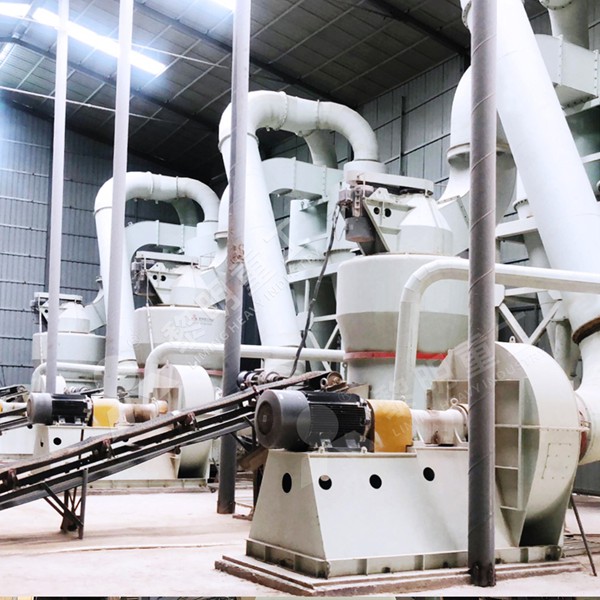
MW Micro Powder Mill: Ultra-fine grinding for specialized fillers
When rubber formulations require ultra-fine limestone fillers with particle sizes down to d97 ≤ 5μm (equivalent to 3250 mesh), the MW Micro Powder Mill is the equipment of choice. This medium-speed micro-grinding mill, which integrates advanced Swedish grinding technology, can produce fineness adjustable from 325 mesh to 3250 mesh, catering to high-end applications such as tire tread compounds and medical-grade rubber products. With a capacity of 0.5 to 25 tons per hour, the MW mill is suitable for both pilot-scale and commercial production. Its working principle involves dozens of rollers rotating against a raceway ring, driven by a main shaft and reducer, ensuring efficient particle size reduction. The pulse precipitator system minimizes dust pollution, making it an environmentally friendly option for manufacturers committed to sustainable practices.
Ball Mill: Versatile and proven technology
For operations that require a versatile and proven grinding solution, the Ball Mill remains a reliable option. With capacities ranging from 0.65 to 50 tons per hour and input sizes up to 25mm, ball mills are widely used in cement, coal, and mineral processing industries, including limestone grinding for rubber fillers. The horizontal rotating barrel uses steel balls to impact and grind materials, producing a wide range of particle sizes that can be classified by downstream separators. Ball mills are particularly advantageous for applications where contamination from metal wear is acceptable, or where the filler will undergo further surface treatment. Liming's ball mills feature ladder and ripple liners to enhance grinding efficiency, and they are designed for long-term durability with minimal maintenance requirements.
Key considerations for rubber filler production
When selecting a limestone grinding mill for rubber filler, manufacturers must evaluate several factors: required production capacity, target particle size distribution, energy consumption, capital and operational costs, and environmental compliance. Limestone fillers for rubber often demand fineness between 200 mesh and 800 mesh, with some specialty grades requiring sub-micron particles. The moisture content of the limestone feed, typically below 6%, is also important to prevent clogging and ensure efficient grinding. Liming Heavy Industry offers comprehensive technical support, including site assessments, mill sizing calculations, and after-sales service, to help customers optimize their processes. Additionally, the company's modern manufacturing facilities in Zhengzhou's HI-TECH Industry Development Zone and Shangjie Industry Park—covering a total area of 147,000 square meters—ensure strict quality control and timely delivery.
Conclusion: Partnering with Liming for success
Liming Heavy Industry Co., Ltd. has established itself as a leader in the crushing and grinding equipment sector through continuous innovation, scientific research, and a commitment to quality. Since its founding in 1987, the company has focused on integrating research, manufacturing, and sales to provide complete solutions for industries such as rubber, chemicals, and metallurgy. Whether you require a high-capacity vertical roller mill for large-scale production or an ultra-fine micro powder mill for specialized fillers, Liming's product line offers reliable and efficient options. By choosing Liming's limestone grinding mills for rubber filler production, manufacturers can achieve consistent product quality, reduce operational costs, and contribute to a more sustainable future.
Frequently Asked Questions (FAQ)
1. What particle size is recommended for limestone filler used in rubber applications?
The recommended particle size for limestone filler in rubber depends on the specific application. For general rubber goods, fineness between 200 mesh (74 μm) and 325 mesh (44 μm) is common. For high-performance applications such as tire compounds, finer grades up to 800 mesh (15 μm) or even 3250 mesh (5 μm) may be required to achieve optimal reinforcement and dispersion.
2. Can the same grinding mill process other minerals besides limestone?
Yes, many of Liming Heavy Industry's grinding mills, including the Raymond Mill, MTW European Type Trapezium Mill, and Ball Mill, can process a variety of non-metallic minerals such as gypsum, calcium carbonate, barite, and talc, as long as they meet the hardness and moisture specifications. However, the mill configuration and operating parameters may need adjustment for optimal performance with different materials.
3. What is the typical energy consumption for grinding limestone into rubber filler?
Energy consumption varies based on the mill type, target fineness, and material characteristics. For example, a Raymond mill producing 200 mesh limestone filler may consume approximately 20-30 kWh per ton, while an MW micro powder mill achieving ultra-fine grades could consume 50-70 kWh per ton. Liming's advanced mill designs, such as the LM Vertical Roller Mill, are engineered for higher energy efficiency, reducing overall operational costs.
4. How does Liming Heavy Industry ensure environmental compliance during limestone grinding?
Liming Heavy Industry incorporates pulse dust collectors and closed-loop air systems into its mill designs to minimize dust emissions and comply with national environmental protection standards. Additionally, the company offers auxiliary equipment such as bag filters and cyclones to capture fine particles. Regular maintenance and proper operation of these systems are essential for sustained compliance.
5. What after-sales support does Liming provide for its grinding mills?
Liming Heavy Industry offers comprehensive after-sales support, including installation guidance, commissioning assistance, operator training, and spare parts supply. The company's technical team is available for on-site troubleshooting and mill optimization services. With over 30 years of experience and a global network, Liming ensures reliable support throughout the equipment's lifecycle.


