High fineness limestone grinding equipment is the backbone of industries ranging from cement and power generation to chemicals and metallurgy. At Liming Heavy Industry Co., Ltd., we have spent over three decades perfecting technologies that deliver ultra-fine powders with consistent quality, energy efficiency, and environmental compliance. Our portfolio—including LM Vertical Roller Mills, Raymond Mills, MTW European Trapezium Mills, MW Micro Powder Mills, and Ball Mills—covers capacities from 0.5 T/H to 400 T/H and fineness from 613 μm down to D97 ≤ 5 μm. This article provides a professional, practical overview of our high fineness limestone grinding solutions, focusing on equipment selection, working principles, and application-specific advantages. Whether you are processing limestone for flue gas desulfurization, producing heavy calcium carbonate, or preparing pulverized coal, understanding the nuances of each mill type will help you optimize your grinding circuit.
Liming Heavy Industry Co., Ltd. was founded in 1987 and has grown into a modern joint-stock corporation that integrates research, manufacturing, and sales. Our headquarters in Zhengzhou's Hi-Tech Industry Development Zone covers 80,000 m², and our Shangjie Industrial Park workshop adds 67,000 m². Over the past 30 years, we have adhered to a modern scientific management system, precision manufacturing, and continuous innovation. This legacy has made Liming a leader in domestic and overseas machinery manufacturing.
Our strategy centers on scientific research and development, with the core goal of improving product competitiveness. We take "scientific research tackling key problems, technological progress, and technological improvement" as our main lines, supported by a mature scientific team. By targeting the technological frontier of the industry, we enhance our overall scientific and technological innovation capability.
When selecting high fineness limestone grinding equipment, several factors come into play: required capacity, desired fineness, moisture content of the feed, abrasiveness of the limestone, and environmental regulations. Limestone typically has a Mohs hardness of 3-4 and a density of 2.2-2.6 g/cm³. For coarse to medium fineness (100-200 mesh, or 150-75 μm), Raymond Mills and Ball Mills are often sufficient. For finer products (325 mesh / 44 μm and beyond), MTW European Trapezium Mills and MW Micro Powder Mills are better choices. The LM Vertical Roller Mill is ideal for large-capacity plants requiring consistent product quality and low energy consumption.
Let's examine each machine in detail, based on real-world performance data and engineering principles.
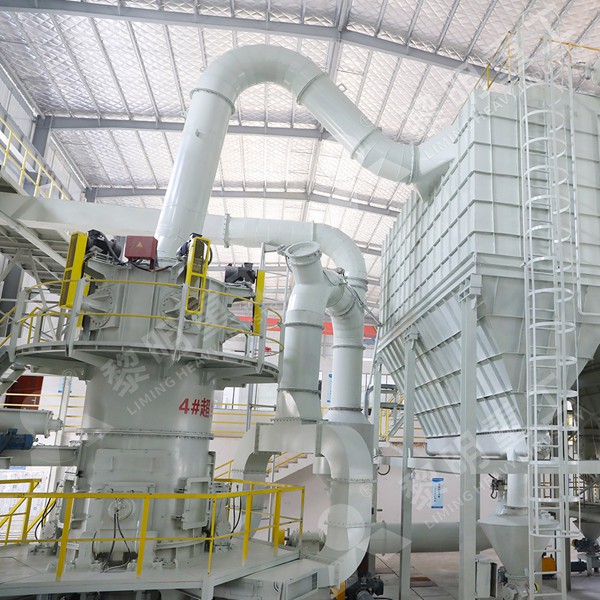
LM Vertical Roller Mill
The LM Vertical Roller Mill integrates drying, grinding, powder selection, and conveying into a single unit. It is designed for large-scale operations in cement, electricity, metallurgy, chemical, and non-metallic mineral industries, with a focus on non-metallic minerals, coal, and slag. The capacity range is 10-400 T/H, and the input size is 30-55 mm. This mill uses a new milling device and an automatic electric control system. The grinding principle involves a rotating table and stationary rollers that crush and shear the material. An internal classifier returns oversize particles for regrinding. The LM mill is particularly efficient for limestone desulfurization in power plants because it can handle high moisture content (up to 15%) while producing a consistent 200-325 mesh product. Energy savings of 30-50% compared to ball mills are typical. For high fineness limestone grinding, the LM mill's adjustable classifier speed allows precise control of product fineness.
Raymond Mill
The Raymond Mill is a classic choice for limestone grinding in medium-scale operations. Widely used in metallurgy, building materials, chemicals, and mining, it processes non-flammable, non-explosive materials with Mohs hardness under 7 and humidity below 6%. Output fineness ranges from 613 μm to 44 μm (30-325 mesh). Capacity is 1.2-4.5 T/H with an input size of 15-25 mm. The Raymond Mill uses a hanging roller system that swings outward due to centrifugal force, pressing against a stationary grinding ring. Material is fed into the mill, ground between the roller and ring, and then carried upward by an air stream to a classifier. Coarse particles fall back for regrinding, while fine particles are collected as finished product. For high fineness limestone grinding, the Raymond Mill is often used for calcium carbonate processing, gypsum crushing, power plant desulfurization, and pulverized coal preparation. It is a reliable, low-maintenance option for plants requiring moderate throughput.
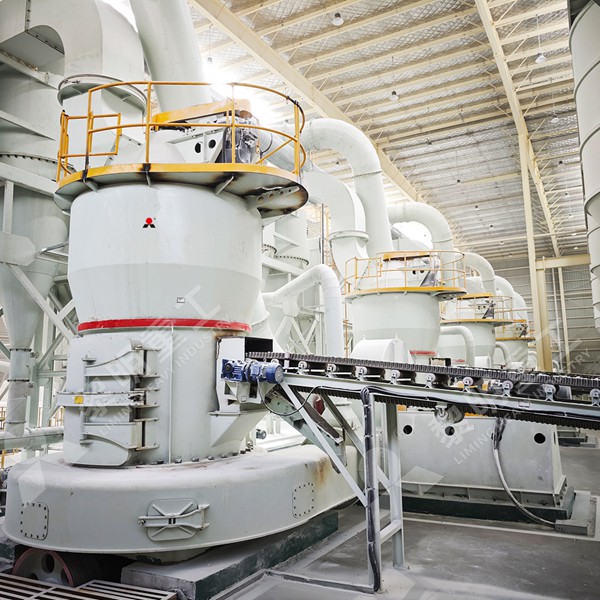
MTW European Type Trapezium Mill
The MTW European Type Trapezium Mill is an upgrade of the traditional Raymond mill and pendulum mill. It features patented technology, stable performance, high productivity, and environmental protection. This mill is committed to large-scale non-metallic mineral powder making. Applications include limestone desulfurization in power plants, heavy calcium carbonate processing, non-metallic mineral powder making, solid fuel grinding, building materials, and chemical industry. Capacity is 3-55 TPH, and input size is 30-50 mm.
Working Principle: The MTW grinding system includes a grinding mill, separator, air blower, jaw crusher, vibrating feeder, hopper, dust collector, pipe, powder collector, electric cabinet, and motors. Big lump materials are first crushed to the required size by a jaw crusher. Then, through a variable-frequency belt feeder, material is evenly and continuously fed into the mill. Material is ground between rings and rollers, then moves upward with the air flow. Particles that cannot pass the separator fall down and are reground, while others are collected as finished product. Air flow passing through the separator recycles to the air blower, creating a closed system. A pulse dust collector ensures compliance with national environmental protection standards. For high fineness limestone, the MTW mill can produce 80-325 mesh powder with extremely low noise and vibration. The trapezium-shaped roller and ring increase grinding efficiency by reducing material slip.
MW Micro Powder Mill
The MW Micro Powder Mill (Medium Speed Micro-grinding Mill) absorbs advanced Swedish grinding technology and excels at superfine powder processing. Finished products can reach D97 ≤ 5 μm, with fineness adjustable between 325 mesh and 3250 mesh. Equipped with a pulse precipitator, the production process is greener and more environmentally friendly. Capacity ranges from 0.5 to 25 T/H, and input size is 10-20 mm. Applications include calcium carbonate processing, gypsum crushing, power plant desulfurization, non-metallic ore pulverizing, and pulverized coal preparation.
Working Principle: The motor drives the main shaft and turnplate through a reducer. The reducer drives dozens of rollers to rotate against the raceway of the ring via pins. Small material crushed by a hammer crusher is transported into a hopper by an elevator. A vibrating feeder then feeds material to the central part of the upper turnplate evenly. Under centrifugal force, material falls to the circle and descends to the raceway of the ring to be crushed into powder. The MW mill is ideal for high fineness limestone grinding when ultra-fine products (e.g., 1250 mesh for PVC filler or 2500 mesh for paper coating) are required. The multi-roller design ensures uniform particle size distribution.
Ball Mill
The Ball Mill is a common grinding plant in the industry and a key equipment for milling after materials are crushed. It can grind all kinds of ores and other materials and is widely used in beneficiation, construction, and chemical industries. Applications include cement, coal, power plant desulfurization, metallurgy, chemical industry, non-metallic mineral, construction material, and ceramics. Capacity is 0.65-50 T/H, with input size ≤ 25 mm.
Working Principle: The ball mill is a horizontal rotating device transmitted by an outer gear. Materials are transferred to the grinding chamber uniformly through a quill shaft. The chamber contains ladder liners, ripple liners, and steel balls of different specifications. The centrifugal force caused by rotation of the barrel brings the steel balls to a certain height, which then impact and grind the materials. Ground materials are discharged through a discharging board to complete the process. For high fineness limestone grinding, the ball mill is often used in closed-circuit operation with a classifier to produce 90-325 mesh products. It is a durable, low-cost option for plants with moderate energy budgets, though it consumes more power per ton than vertical roller mills.
At Liming Heavy Industry, we understand that choosing the right high fineness limestone grinding equipment is critical for your operation's profitability and sustainability. Our team of engineers provides comprehensive support, from site assessment and equipment selection to installation, commissioning, and after-sales service. We also offer custom modifications to suit specific limestone feed characteristics (e.g., high moisture, high silica content) or product specifications (e.g., strict particle size distribution, brightness requirements).
Key considerations for high fineness limestone grinding include pre-crushing efficiency, moisture control, classifier performance, and dust collection. For example, when using Raymond Mills or MTW Mills for limestone with initial moisture above 6%, a hot air system or pre-drying step may be necessary. The LM Vertical Roller Mill's integrated drying capability makes it particularly suitable for such conditions. For ultra-fine grinding, the MW Micro Powder Mill's high-speed grinding and advanced classification system ensure sharp particle size cut points and minimal oversize material. All our mills are designed with safety features such as automatic shut-off in case of overload, and they meet international electrical and mechanical standards.
In conclusion, Liming Heavy Industry Co., Ltd. offers a comprehensive range of high fineness limestone grinding equipment to meet diverse industrial needs. Our machines are built on decades of experience, continuous R&D, and a commitment to quality. Whether you need a small Raymond Mill for a local plant or a large LM Vertical Roller Mill for a multi-million-ton cement facility, we have the technology and expertise to deliver.
Frequently Asked Questions (FAQ)
- What is the maximum fineness achievable with your limestone grinding equipment?
Our MW Micro Powder Mill can achieve fineness as high as D97 ≤ 5 μm (approximately 3250 mesh). The LM Vertical Roller Mill and MTW Mill typically produce 200-325 mesh, depending on the classifier setting. Raymond Mills cover 613 μm to 44 μm (30-325 mesh). Ball Mills in closed circuit can reach up to 400 mesh. - Which mill is best for grinding limestone with high moisture content (above 10%)?
The LM Vertical Roller Mill is the best choice for high-moisture limestone because it integrates drying, grinding, and classification in one unit. It can handle feed moisture up to 15-20% with the addition of hot air. For other mills, pre-drying or a separate drying system is recommended. - Can you customize the grinding equipment for specific limestone characteristics?
Yes, absolutely. Liming Heavy Industry offers customized solutions, including special wear-resistant materials for abrasive limestone, modified classifier designs for tighter particle size distribution, and additional dust collection systems for strict environmental regulations. Contact our engineering team with your raw material analysis and target product specifications. - How does the energy consumption of an LM Vertical Roller Mill compare to a Ball Mill for limestone grinding?
The LM Vertical Roller Mill consumes 30-50% less electricity than a ball mill for the same capacity and fineness. For example, grinding limestone to 200 mesh, a vertical roller mill uses approximately 15-25 kWh per ton, while a ball mill typically uses 25-40 kWh per ton. This makes the LM mill more cost-effective for large-scale operations. - What after-sales support does Liming provide for your grinding equipment?
We provide comprehensive support, including on-site installation supervision, operator training, regular maintenance schedules, spare parts supply, and 24/7 technical hotline. Our service network covers over 100 countries, and we offer remote monitoring capabilities for advanced mills to optimize performance and predict maintenance needs.


