Published on: October 26, 2023
The production of high-quality kaolin powder for paper filling demands strict adherence to particle size distribution, brightness, and chemical purity standards. Meeting these exacting specifications requires advanced grinding and classification technology. Liming Heavy Industry, with over three decades of expertise in manufacturing precision crushing and grinding equipment, provides a suite of mill solutions engineered specifically for processing non-metallic minerals like kaolin. From coarse grinding to ultra-fine micronization, our technologies—including the LM Vertical Roller Mill, MTW European Type Grinding Mill, and MW Micro Powder Mill—offer controlled, efficient, and environmentally sound pathways to produce kaolin fillers that enhance paper opacity, smoothness, and printability while optimizing production economics.
Kaolin, or china clay, serves as a critical functional filler and coating pigment in the paper industry. Its performance is intrinsically linked to its physical and chemical properties, which are directly influenced by the comminution process. The ideal filler grade kaolin requires a carefully balanced particle size distribution, high brightness (>85% ISO), low abrasion, and controlled viscosity in slurry form. Achieving this consistently on an industrial scale is a significant technological challenge. Liming Heavy Industry addresses this challenge through a philosophy of scientific research and precision manufacturing, developing grinding systems that deliver not only the required fineness but also the necessary particle morphology and system stability.
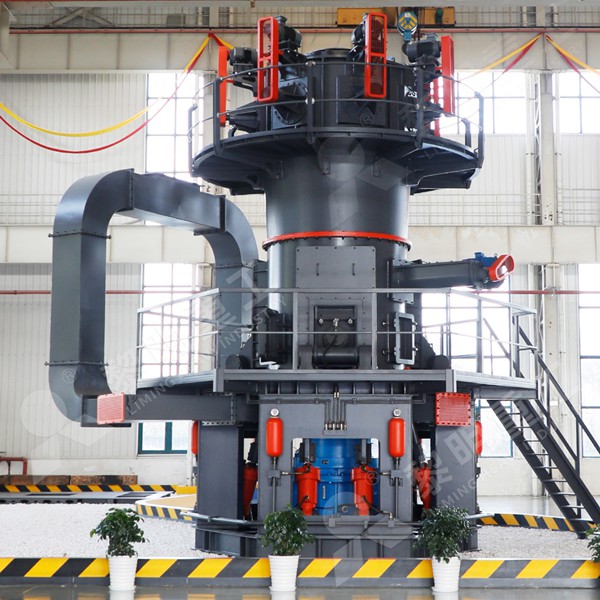
For high-capacity production of fine kaolin powders, the LM Vertical Roller Mill stands out. Integrating drying, grinding, powder selection, and conveying in a single unit, it is exceptionally suited for processing kaolin with inherent moisture. Its grinding mechanism applies pressure and shear force between rollers and a rotating table, promoting efficient size reduction with lower energy consumption per ton compared to traditional ball mills. The integrated high-efficiency classifier ensures precise top-cut control, directly impacting the filler's scattering coefficient and opacity contribution in paper. With capacities ranging from 10 to 400 T/H, it is a cornerstone for large-scale kaolin processing plants aiming for consistent, high-volume output.
When the application demands ultra-fine or narrowly classified kaolin powders, the MW Micro Powder Mill is the technology of choice. Incorporating advanced grinding principles, this mill excels in producing superfine powders up to d97 ≤ 5μm (approximately 2500 mesh). Its ability to finely adjust fineness between 325 to 3250 mesh allows producers to tailor products for specific paper grades, from standard office paper to high-quality coated art paper. The system's closed-loop design, coupled with an efficient pulse dust collector, ensures nearly zero dust emission, protecting product quality and creating a clean working environment. This mill is pivotal for producing high-value, ultra-fine kaolin that commands a premium in specialty paper markets.
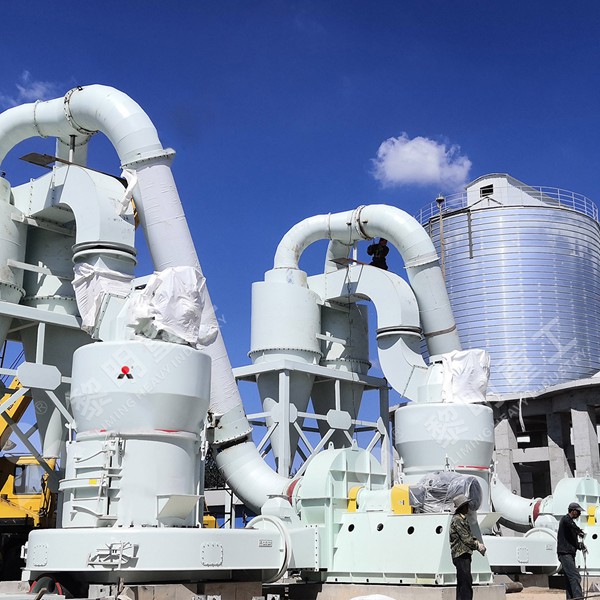
The MTW European Type Trapezium Mill represents an evolution in medium-fine grinding. It is particularly effective for producing kaolin powders in the 44μm to 0.045mm (325 mesh) range, a common specification for many paper filler applications. Its patented curved air duct and internal streamline design minimize airflow resistance and enhance powder collection efficiency. The system's stability is a key benefit, ensuring uninterrupted long-term operation—a critical factor for paper mills that rely on a steady supply of filler material. From raw kaolin crushing via the integrated jaw crusher to final collection, the MTW system offers a complete, automated grinding line that emphasizes reliability and energy savings.
Beyond the machine itself, the working principle and system design are what guarantee final product standards. In our grinding systems, material undergoes staged size reduction. Primary crushed kaolin is fed uniformly into the mill's grinding chamber. Here, the critical action occurs: particles are ground between grinding elements (rollers/balls and a raceway). The ground material is then pneumatically transported to a high-precision separator. Particles meeting the target fineness pass through and are collected as product; oversized particles are rejected back to the grinding zone for further processing. This continuous classification-grinding loop is the heart of achieving a consistent and narrow particle size distribution. The entire process is monitored and controlled by automated electric systems for optimal performance.
Environmental responsibility is integral to modern industrial operations. All Liming Heavy Industry grinding systems are designed with sustainability in mind. The fully enclosed negative-pressure operation prevents powder leakage. Standard-equipped high-efficiency pulse jet baghouse dust collectors capture over 99.9% of airborne particles, ensuring emissions are well within international environmental standards. Furthermore, the energy-efficient designs of our vertical mills and trapezium mills significantly reduce power consumption per ton of product, lowering the carbon footprint of kaolin powder production. This commitment aligns with the global paper industry's goals for sustainable sourcing and manufacturing.
Selecting the right grinding solution depends on specific project parameters: desired final fineness, required capacity, raw material characteristics (moisture, hardness), and investment considerations. Liming Heavy Industry's portfolio offers a scalable path. For coarse to fine grinding at massive scale, the LM Vertical Mill is ideal. For versatile, stable production of standard filler grades, the MTW European Mill is exemplary. For ultra-fine, high-value specialty powders, the MW Micro Powder Mill is unmatched. Our technical team leverages deep industry knowledge to help clients analyze their needs and recommend the most efficient and cost-effective system configuration, ensuring the produced kaolin powder reliably meets or exceeds industry standards for paper filling.
Frequently Asked Questions (FAQs)
1. What is the typical particle size range for paper filler kaolin, and which of your mills can achieve it?
Paper filler kaolin typically ranges from 44μm (325 mesh) to as fine as 2μm. Our MTW European Mill perfectly covers the standard range (44μm-0.045mm), while our MW Micro Powder Mill is designed for producing ultra-fine powders from 5μm down to even finer specifications.
2. Can your grinding systems handle the moisture present in natural kaolin clay?
Yes, absolutely. Our LM Vertical Roller Mill is specifically designed to integrate grinding with drying. It can handle feed materials with significant moisture content by utilizing hot air introduced into the mill, making it an excellent choice for processing natural, moist kaolin directly.
3. How do you ensure consistent particle size distribution in the final kaolin powder?
Consistency is achieved through high-precision, internal dynamic classifiers integrated into our mills (like in the LM and MTW series). These classifiers continuously separate particles, allowing only those meeting the target fineness to exit as product, while oversize material is recirculated for further grinding, ensuring a tight and stable particle size distribution.
4. Are your mills suitable for producing both filler-grade and coating-grade kaolin?
While our entire range is excellent for filler-grade production, our MW Micro Powder Mill is particularly capable of producing the ultra-fine, narrow-distribution powders required for high-quality coating-grade kaolin used in surface treatment of premium paper.
5. What are the key environmental features of your kaolin grinding systems?
Our systems feature fully enclosed, negative-pressure designs to prevent dust escape. They are standard-equipped with high-efficiency pulse jet baghouse dust collectors that ensure emissions are clean and compliant. Furthermore, our focus on energy-efficient grinding technology itself significantly reduces the overall environmental impact of the milling process.


