Published: October 26, 2023
For over two decades, Liming Heavy Industry Co., Ltd. has stood at the forefront of industrial grinding technology, specializing in the design and manufacture of high-performance Raymond Mills for processing non-metallic minerals like calcite. With a foundation built in 1987 and a steadfast commitment to scientific research, precision engineering, and innovation, the company has evolved into a leader in the global machinery manufacturing sector. Our expertise is crystallized in our advanced Raymond Mill series, engineered to deliver exceptional fineness, reliability, and energy efficiency for calcite and similar material applications, backed by comprehensive technical support and a deep understanding of client needs across diverse industries.
Our journey began in Zhengzhou, China, where our headquarters now spans an 80,000 m² state-of-the-art facility within the HI-TECH Industry Development Zone, complemented by an additional 67,000 m² workshop. This expansive infrastructure is not merely about scale; it embodies our integrated philosophy of combining research, manufacturing, and sales under one modern, joint-stock corporate structure. For thirty years, we have adhered to a management system that prioritizes scientific advancement and meticulous craftsmanship. This dedication ensures that every piece of equipment, especially our core Raymond Mill line, is a product of rigorous development and proven field performance.
The calcite Raymond Mill from Liming Heavy Industry is a testament to this legacy. Designed for minerals grinding in metallurgy, construction materials, chemicals, and mining, it is perfectly suited for processing non-flammable, non-explosive materials with a Mohs hardness under 7 and humidity below 6%. The mill achieves an adjustable output fineness between 44μm and 613μm, offering the flexibility required for various calcite powder specifications, from coarse fillers to finer grades used in plastics, paints, and coatings.
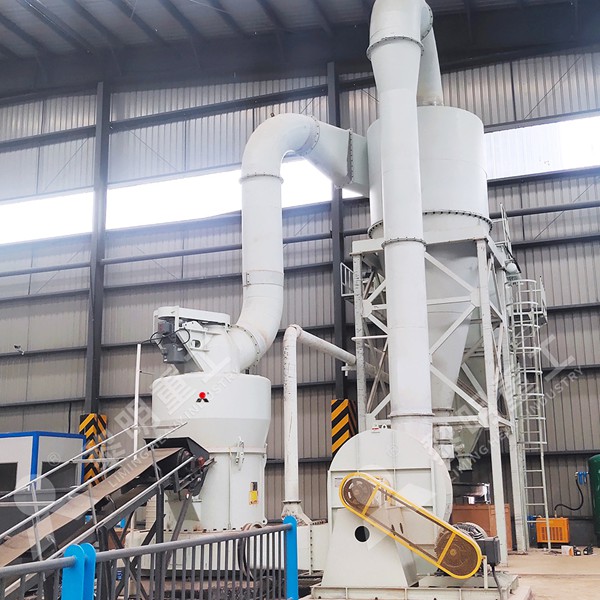
What sets our Raymond Mill apart is its robust construction and intelligent design focused on operational stability and low maintenance. The grinding system utilizes a centralized electrical control for smooth automation, integrating drying, grinding, powder classification, and conveying into a cohesive, efficient process. This is crucial for calcite processing, where consistent particle size distribution and moisture control are paramount. Our mills are engineered to handle capacities ranging from 1.2 to 4.5 tons per hour, with an input size of 15-25mm, making them ideal for medium-scale production lines seeking reliable, continuous output.
Beyond the standard Raymond Mill, our technological prowess is further demonstrated in our broader portfolio, which includes the MTW European Type Grinding Mill and the MW Micro Powder Mill. The MTW series, an advanced evolution of traditional Raymond mills, incorporates patented technology for higher productivity and significant energy savings, making it a powerful solution for large-scale calcite powder production. Meanwhile, the MW Micro Powder Mill, absorbing advanced Swedish milling technology, excels in producing superfine calcite powder up to d97 ≤ 5μm (3250 mesh), catering to high-end applications that demand ultra-fine fillers and additives.
Our commitment extends far beyond manufacturing. We implement a strategy where scientific research and product development are central to enhancing competitiveness. By focusing on "scientific research tackling key problems" and fostering a "production, learning, and research" environment, our mature R&D team continuously aims at the industry's technological frontier. This approach ensures our grinding solutions, including those for calcite, are not only current but also anticipatory of future market demands for efficiency and environmental compliance. Every mill is designed with green principles, featuring efficient pulse dust collection systems that meet stringent international environmental standards.
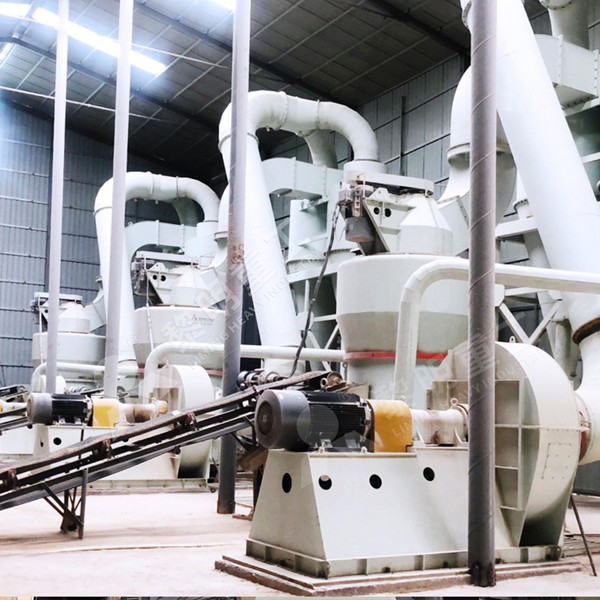
Choosing Liming Heavy Industry as your calcite Raymond Mill partner means investing in reliability forged over 20 years of specialized experience. We understand the nuances of mineral processing and provide end-to-end support, from selecting the right model to installation guidance and after-sales service. Our global clientele in sectors like power plant desulfurization, plastics, rubber, and construction materials attests to the trust placed in our equipment's performance and durability. We don't just sell machinery; we deliver integrated grinding solutions that enhance our clients' productivity and profitability.
Frequently Asked Questions (FAQ)
1. What is the typical fineness range achievable for calcite powder with your Raymond Mill?
Our standard Raymond Mill can produce calcite powder with a fineness adjustable between 44μm (~325 mesh) and 613μm. For finer requirements, our MW Micro Powder Mill can achieve superfine powder up to 5μm (3250 mesh).
2. How does your mill handle materials with moisture?
The Raymond Mill integrates a drying function within its grinding chamber. It is suitable for materials with humidity less than 6%. For feed material with higher moisture, pre-drying equipment may be recommended as part of the system solution.
3. What are the key industries served by your calcite grinding mills?
Our mills are widely used in the production of calcium carbonate for plastics, paints, coatings, rubber, and paper. They are also essential in construction materials, chemical industries, and power plant desulfurization processes.
4. What kind of after-sales support do you provide?
We offer comprehensive support including installation supervision, operator training, detailed technical documentation, and a responsive spare parts supply network. Our engineering team is available for remote and on-site troubleshooting.
5. How energy-efficient are your grinding mills compared to traditional designs?
Our mills, particularly the MTW European Type and advanced Raymond models, incorporate design optimizations like efficient grinding curves and internal powder recycling systems that significantly reduce energy consumption per ton of output compared to older mill designs.


