Published on: October 26, 2023
For manufacturers in the toothpaste industry, achieving the perfect balance of abrasive properties, brightness, and chemical purity in calcite fillers is paramount. This fine-ground calcium carbonate is a critical component, influencing texture, cleaning efficacy, and overall product quality. Selecting the optimal grinding technology is therefore not just a production step, but a strategic decision impacting final product competitiveness. Liming Heavy Industry, with over three decades of expertise in mineral processing equipment, provides a suite of advanced grinding mills engineered to produce calcite powder of exceptional fineness, uniformity, and whiteness specifically tailored for high-grade toothpaste applications. Our solutions, from high-capacity vertical roller mills to ultra-fine micro powder systems, are designed to enhance productivity while ensuring energy efficiency and environmental compliance, empowering producers to meet stringent industry standards.
The journey from raw calcite ore to a refined, safe, and effective toothpaste filler demands precision engineering at every stage. The primary requirement is achieving a tightly controlled particle size distribution. Too coarse, and the powder becomes unpleasantly abrasive; too fine, and it may lose its necessary cleaning power. Furthermore, the grinding process must preserve the natural brightness of calcite and avoid metallic contamination to ensure product safety and visual appeal. Liming Heavy Industry addresses these challenges with a scientific approach to grinding, offering technologies that deliver consistent, contaminant-free results.
For large-scale production lines requiring high throughput, the LM Vertical Roller Mill stands out. Its integrated design combines drying, grinding, classification, and conveying into a single, compact unit. This is particularly advantageous for processing calcite, which may contain inherent moisture. The mill's ability to dry and grind simultaneously streamlines the process, reducing energy consumption. With a capacity range of 10-400 T/H, it is ideal for major filler producers. The grinding mechanism, involving rollers and a rotating table, applies pressure rather than impact, yielding a uniform particle shape critical for smooth toothpaste consistency.
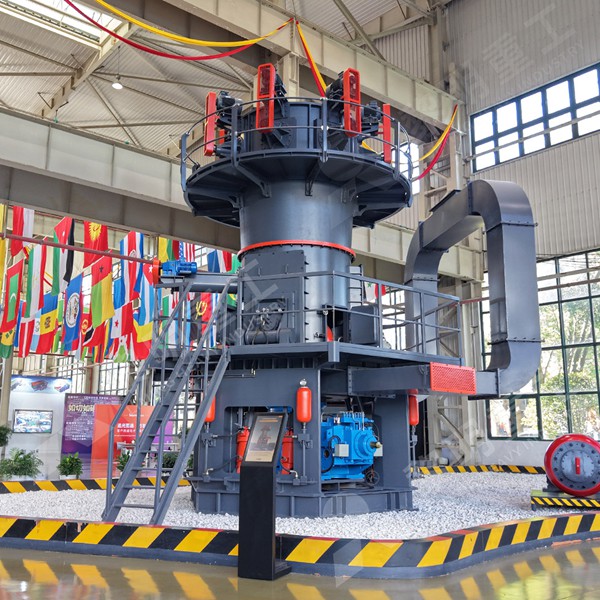
When the application calls for producing calcite powder in the traditional fine to medium-fine range (44-613μm), the Raymond Mill remains a reliable and cost-effective workhorse. Its proven pendulum roller design is excellent for achieving stable fineness with low energy consumption. For toothpaste filler, where specific mesh sizes like 400 mesh (approx. 38μm) or 800 mesh (approx. 18μm) are common targets, the Raymond Mill offers precise adjustability and reliable performance. Its closed-circuit system with a high-efficiency classifier ensures that only particles meeting the size specification are collected as finished product, guaranteeing batch-to-batch consistency.
The pursuit of ultra-fine and nano-sized calcite for advanced toothpaste formulations leads to Liming's more specialized technologies. The MTW European Type Grinding Mill, an evolution of the traditional Raymond mill, incorporates advanced curved air channels and an internal lubricating system for smoother operation and higher efficiency. It is engineered for large-scale production of fine powders with enhanced stability and lower maintenance needs. For the pinnacle of fineness, the MW Micro Powder Mill is the solution of choice. Leveraging advanced grinding technology, it can produce calcite powder with a top cut (d97) as fine as 5μm (2500 mesh and beyond). This superfine powder can impart exceptional smoothness and is often used in premium toothpaste products.
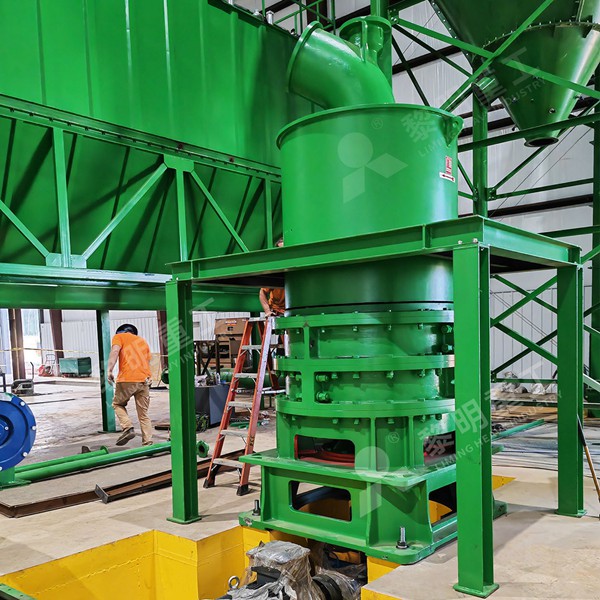
Beyond the core grinding unit, Liming Heavy Industry emphasizes a holistic system approach. A complete grinding line typically includes jaw crushers for primary size reduction, vibrating feeders for consistent material flow, pulse jet bag dust collectors to maintain a clean workshop and recover valuable product, and integrated electrical control systems for automation. This turnkey philosophy ensures all components work in harmony, maximizing overall system reliability, minimizing dust emission, and reducing manual intervention. Our commitment to "scientific research tackling key problems" means we continuously refine these systems, focusing on energy savings, longer wear-part life, and smarter controls to deliver a lower total cost of ownership for our clients.
In conclusion, the production of premium calcite filler for toothpaste is a sophisticated process that hinges on selecting the right grinding partner. Liming Heavy Industry provides not just machines, but tailored technological solutions backed by extensive R&D and manufacturing prowess. From the robust LM Vertical Mill for mass production to the precision-focused MW Micro Powder Mill for ultra-fine grades, our portfolio offers a clear path to achieving the exacting standards of the oral care industry. By partnering with Liming, manufacturers gain access to reliable, efficient, and clean technology that grinds not just minerals, but also grinds away operational uncertainties, paving the way for superior end products.
Frequently Asked Questions (FAQs)
1. What is the typical fineness range required for calcite in toothpaste, and which of your mills can achieve it?
Calcite filler for toothpaste typically ranges from 400 mesh (38μm) to 1250 mesh (10μm) or even finer for specialized applications. Our Raymond Mill and MTW European Mill are perfectly suited for the 400-800 mesh range, while our MW Micro Powder Mill is designed for ultra-fine grinding up to 2500 mesh (5μm).
2. How does your equipment prevent metallic contamination of the calcite powder during grinding?
Our mills are designed with contamination control in mind. Critical grinding components in contact with material, such as rollers and rings, can be lined with high-chromium alloy or ceramic materials. Furthermore, the MW Micro Powder Mill utilizes a physical grinding method that minimizes direct metal-to-mineral contact in the final stages, ensuring high product purity.
3. Can your grinding systems handle the moisture content in raw calcite?
Yes. Our LM Vertical Roller Mill is particularly effective as it integrates a drying function, capable of processing materials with certain moisture content by introducing hot air into the grinding chamber. For other mill systems, we can configure a pre-drying stage as part of the complete plant design.
4. What are the key factors for ensuring consistent particle size distribution batch after batch?
Consistency relies on a stable feed rate, a precise and efficient internal classifier (separator), and a well-tuned grinding mechanism. Our mills feature advanced forced turbine classifiers that provide sharp particle separation. Coupled with automated feeding systems and stable grinding pressure control, they deliver remarkably consistent output.
5. Do you offer testing services to determine the best mill for our specific calcite ore?
Absolutely. We strongly recommend conducting grinding tests in our laboratory or providing us with your raw material samples. Our technical team can analyze the ore's characteristics and perform test runs on our pilot-scale equipment to determine the optimal mill model, predict output, and recommend the most efficient process flow before you make an investment.


