Published on: October 26, 2023
In the specialized field of welding electrode manufacturing, the selection of grinding equipment for raw materials like calcite is critical to achieving consistent product quality and operational efficiency. Calcite, a primary mineral component in flux coatings for electrodes, requires precise particle size distribution and purity to ensure optimal arc stability, slag formation, and weld metal properties. Among various grinding solutions, the Raymond Mill stands out as a proven, reliable technology for processing calcite to the required fineness. With decades of expertise in industrial milling, LIMING HEAVY INDUSTRY CO., LTD. offers advanced Raymond Mill systems engineered specifically for non-metallic minerals like calcite, delivering high productivity, energy efficiency, and fine-tuned control over output specifications—key factors that directly influence the performance and consistency of welding electrodes.
LIMING HEAVY INDUSTRY, founded in 1987, has established itself as a leader in the design and manufacturing of crushing and grinding equipment. Headquartered in the HI-TECH Industry Development Zone of Zhengzhou, with extensive production facilities spanning over 80,000 m², the company combines modern management, precision engineering, and continuous innovation to serve global industries. Its commitment to scientific research and technological advancement ensures that each product, including the Raymond Mill, is optimized for performance, durability, and environmental sustainability. For welding electrode producers, this translates into a grinding solution that not only meets stringent material specifications but also integrates seamlessly into high-volume production lines.
The Raymond Mill is particularly well-suited for calcite processing due to its robust design and versatile operation. It is capable of handling materials with hardness under 7 Mohs and humidity below 6%, making it ideal for dry calcite grinding. The mill achieves a fineness range between 613μm and 44μm, allowing manufacturers to tailor the calcite powder to exact electrode formulation needs. Consistent particle size ensures uniform flux coating, which in turn promotes stable arc characteristics, reduces spatter, and enhances weld bead appearance. LIMING's Raymond Mill incorporates an integrated system for drying, grinding, powder selection, and conveying, streamlining the entire process from raw material to finished powder.
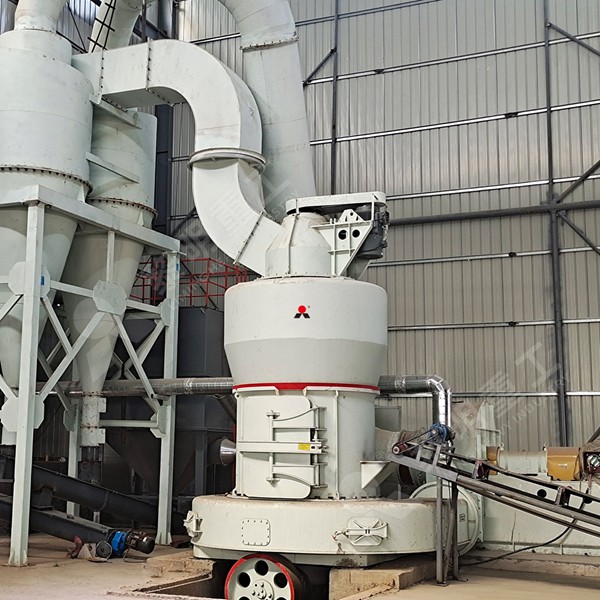
In welding electrode manufacturing, calcite serves as a fluxing agent and arc stabilizer. The quality of the ground calcite directly impacts the electrode's performance: too coarse particles may cause uneven coating and arc instability, while excessively fine powder can lead to handling issues or excessive moisture absorption. LIMING's Raymond Mill addresses these concerns through precise classifier control and efficient grinding mechanics. The system operates with closed-circuit airflow, minimizing dust emissions and ensuring a clean working environment—a crucial aspect for electrode production where contamination must be avoided. Additionally, the mill's low energy consumption and minimal maintenance requirements contribute to lower operational costs, a significant advantage for large-scale electrode manufacturers.
Beyond the standard Raymond Mill, LIMING HEAVY INDUSTRY offers complementary technologies like the MTW European Type Grinding Mill and MW Micro Powder Mill, which provide even finer grinding capabilities for specialized applications. However, for most calcite processing in electrode production, the Raymond Mill remains the workhorse due to its balance of output capacity (1.2–4.5 T/H), reliability, and ease of operation. The company's engineering team supports clients with customized solutions, ensuring the mill configuration aligns with specific plant layouts and material handling requirements. This customer-centric approach, backed by over 30 years of industry experience, makes LIMING a trusted partner for welding electrode producers worldwide.
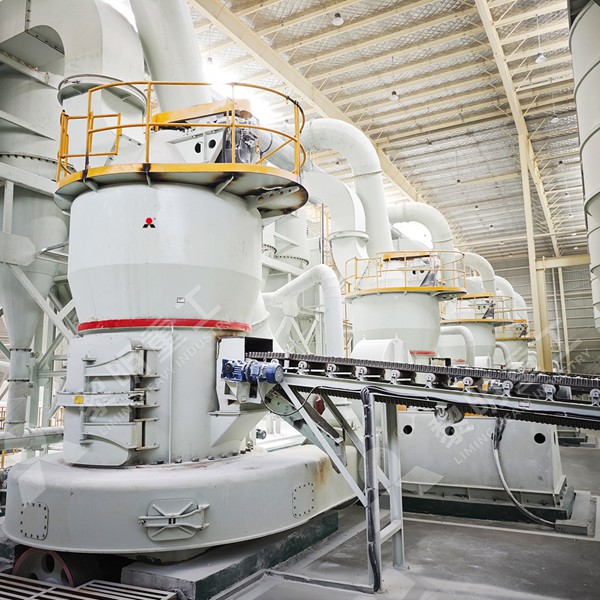
Looking ahead, the demand for high-quality welding electrodes continues to grow across construction, shipbuilding, automotive, and heavy machinery sectors. As electrode manufacturers seek to improve product consistency and adopt greener practices, the role of efficient grinding technology becomes even more prominent. LIMING HEAVY INDUSTRY continues to innovate, integrating smart control systems and energy-saving features into its Raymond Mill designs. By choosing a LIMING Raymond Mill for calcite processing, electrode manufacturers invest not only in a piece of equipment but in a comprehensive solution that enhances overall production efficiency, product quality, and sustainability—key drivers for success in a competitive global market.
Frequently Asked Questions (FAQs)
1. Why is calcite used in welding electrode manufacturing?
Calcite acts as a fluxing agent and arc stabilizer in electrode coatings. It helps form a protective slag, improves arc stability, and enhances the mechanical properties of the weld metal.
2. What fineness range can a Raymond Mill achieve for calcite?
LIMING's Raymond Mill can produce calcite powder with fineness between 613μm and 44μm, allowing precise adjustment to meet specific electrode formulation requirements.
3. How does the Raymond Mill ensure consistent particle size distribution?
The mill integrates a high-efficiency classifier that continuously separates fine particles. Oversized particles are recycled for regrinding, ensuring uniform output and stable quality.
4. Is the Raymond Mill suitable for large-scale electrode production?
Yes, with capacities ranging from 1.2 to 4.5 T/H, the Raymond Mill is designed for continuous operation and can be scaled to match high-volume production needs.
5. What after-sales support does LIMING provide for Raymond Mill installations?
LIMING offers comprehensive support including installation guidance, operator training, maintenance services, and access to spare parts to ensure long-term, reliable operation.


