Published on: October 26, 2023
The Chinese heavy machinery sector is a global powerhouse, particularly in the production of grinding equipment for non-metallic minerals like heavy calcium carbonate. Among the numerous players, a select group of manufacturers stands out for their technological innovation, production scale, and market leadership in manufacturing Raymond mills and their advanced successors. These companies drive the industry, supplying robust and efficient milling solutions that are critical for applications ranging from plastics and paints to construction materials. This article explores the landscape of China's top manufacturers in this specialized field, highlighting their capabilities, technological advancements, and the key factors that distinguish the leaders from the competition.
At the forefront of this industry is Liming Heavy Industry Co., Ltd., a name synonymous with reliability and innovation in crushing and grinding technology. Founded in 1987, Liming has evolved from a domestic machinery manufacturer into a global leader. With its headquarters and primary workshop spanning over 80,000 m² in Zhengzhou's HI-TECH Industry Development Zone and an additional 67,000 m² facility in Shangjie Industry Park, the company's scale is a testament to its manufacturing prowess. For over three decades, Liming has adhered to a philosophy of modern scientific management, precision manufacturing, and continuous pioneering innovation, building a reputation for excellence both in China and overseas.
Liming's strength lies in its unwavering commitment to research and development. The company implements a core strategy focused on enhancing product competitiveness through scientific research tackling key technological problems. By relying on a mature and skilled R&D team and fostering a "production, learning, and research" environment, Liming consistently aims at the technological frontier. This approach has resulted in a comprehensive portfolio of grinding mills specifically engineered for processing heavy calcium carbonate and other non-metallic minerals to exacting fineness specifications.
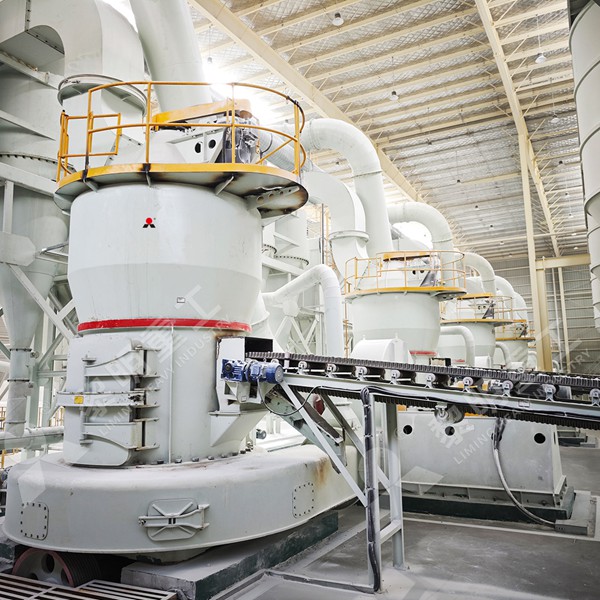
While the traditional Raymond Mill remains a workhorse for many applications, capable of processing non-flammable materials under 7 Mohs hardness to a fineness between 44μm and 613μm, Liming's expertise extends far beyond. Their product line represents the evolution of milling technology. The MTW European Type Grinding Mill, for instance, is a significant upgrade over traditional pendulum mills. It incorporates patented technology to deliver stable performance, high productivity, and notable energy savings, making it ideal for large-scale heavy calcium carbonate powder production. Its working principle involves a closed-circuit system where materials are ground between rings and rollers, classified by an efficient separator, and collected by an environmentally compliant pulse dust collector.
For superfine powder requirements, Liming offers the MW Micro Powder Mill. This mill absorbs advanced grinding technology and excels at processing heavy calcium carbonate to a remarkable fineness up to d97 ≤ 5μm (3250 mesh). Its design ensures precise particle size control, making it perfect for high-value applications where ultra-fine powder is critical. Furthermore, the LM Vertical Roller Mill integrates drying, grinding, powder selection, and conveying into a single, efficient unit, offering high capacity for extensive industrial projects. For more traditional grinding circuits, the reliable Ball Mill serves as a key equipment for milling after the crushing stage.
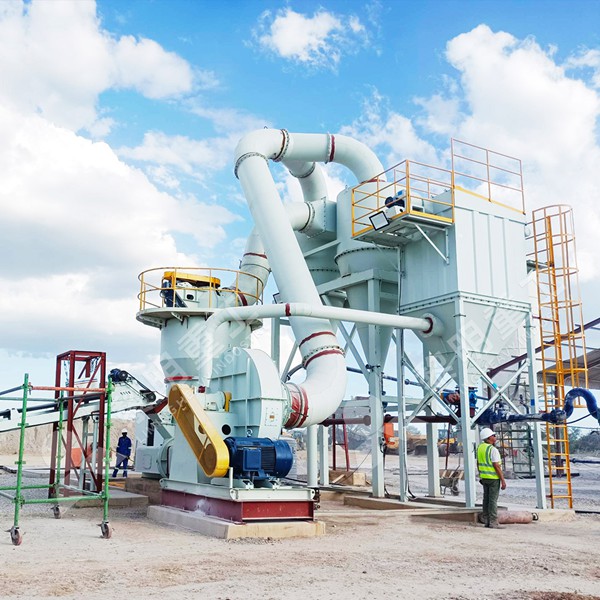
What truly positions a manufacturer among the top tier in China? Beyond the scale of facilities like Liming's, it is a combination of deep industry experience, a sustained R&D investment that yields patented technologies, a complete and scalable product range, and a global sales and service network. The leading manufacturers don't just sell machines; they provide tailored grinding solutions and support for the entire lifecycle of the equipment. They prioritize environmental sustainability through efficient, low-dust systems and focus on energy conservation, which is increasingly important for cost-conscious and eco-aware clients worldwide. When evaluating the top manufacturers, these factors—technological depth, product versatility, and commitment to customer success—are the definitive markers of leadership in the competitive field of heavy calcium Raymond mill manufacturing.
Frequently Asked Questions (FAQs)
1. What is the primary difference between a traditional Raymond mill and a European Type Grinding Mill (like MTW)?
The European Type Grinding Mill is an advanced evolution, featuring a curved air duct, internal efficient separator, and often a lubricating system. It generally offers higher capacity, better energy efficiency, finer and more adjustable product fineness, and more stable operation compared to the traditional Raymond mill structure.
2. What is the typical fineness range achievable for heavy calcium carbonate with modern mills?
Depending on the mill type, fineness can range from coarse powders around 44μm (325 mesh) with standard mills to superfine powders of 5μm (2500 mesh) or less with specialized micro powder grinding mills like the MW series.
3. How important is the mill's classification system for final product quality?
It is critical. A high-efficiency separator or classifier ensures that only particles meeting the target fineness leave the grinding chamber. This controls the particle size distribution, improves product uniformity, and prevents energy waste from over-grinding.
4. Can these mills handle materials other than heavy calcium carbonate?
Absolutely. These grinding mills are versatile and commonly used for gypsum, limestone, quartz, feldspar, barite, coal, slag, and various other non-metallic minerals with similar hardness and properties.
5. What are key factors to consider when selecting a manufacturer for a heavy calcium grinding project?
Key factors include the manufacturer's technical expertise and R&D capability, the availability of a mill model that matches your required capacity and fineness, energy consumption data, the robustness of the equipment design, the availability of after-sales service and spare parts, and the manufacturer's proven track record with similar projects.


