This comprehensive technical proposal outlines a complete heavy calcium carbonate powder production plant solution centered around Liming Heavy Industry's advanced Raymond Mill technology. We present a tailored system designed for high-efficiency, stable, and environmentally compliant processing of limestone into fine and ultra-fine calcium powder, covering raw material handling, grinding, classification, and dust collection. The solution leverages our decades of engineering expertise to deliver optimal particle size distribution, energy efficiency, and production capacity for your specific project requirements.
Liming Heavy Industry Co., Ltd., with over three decades of specialization in manufacturing crushing and grinding equipment, brings proven reliability to mineral processing plants worldwide. Our foundation in scientific research and precision manufacturing ensures that each Raymond mill-based system is not just a collection of machines, but a finely tuned production line. For heavy calcium carbonate (GCC) production, the choice of grinding technology is critical. While we offer a full portfolio including LM Vertical Roller Mills, MTW European Mills, MW Micro Powder Mills, and Ball Mills, the Raymond Mill remains a cornerstone for its exceptional balance of cost-effectiveness, operational simplicity, and ability to produce powders in the 44-613μm range—a spectrum highly demanded in industries like plastics, paints, coatings, and paper.
The proposed complete plant revolves around our latest generation Raymond Mill, engineered for minerals like calcite and limestone. Its design is suitable for processing non-flammable, non-explosive materials with Mohs hardness under 7 and humidity less than 6%. The system integrates several key components working in harmony. Primary crushed limestone of 15-25mm is fed via a vibrating feeder into the grinding chamber. Here, the core grinding action takes place between the grinding rollers and the grinding ring. The rollers, under centrifugal force, press against the ring, pulverizing the material.
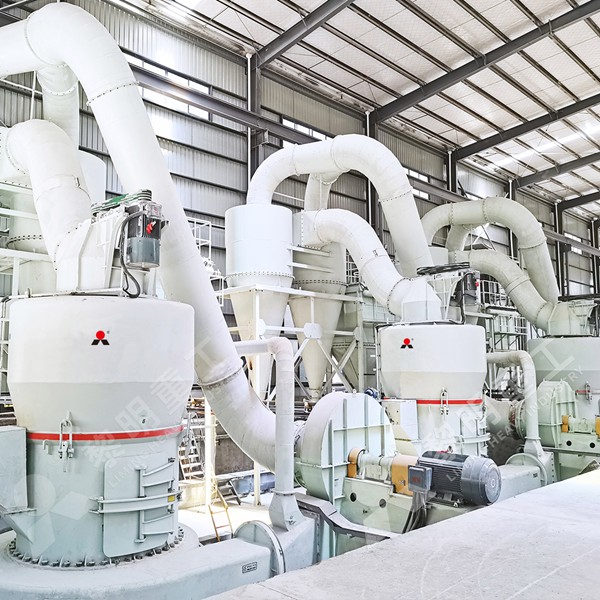
A critical subsystem is the integrated classifier. As the ground material is carried upward by the air flow from the blower, it enters the high-precision separator. Particles meeting the target fineness pass through and are conveyed to the cyclone collector and baghouse dust collector as final product. Oversize particles are rejected by the classifier and returned to the grinding chamber for further milling. This closed-circuit grinding and classifying loop is fundamental for achieving consistent product quality and high grinding efficiency. The entire air system is under negative pressure, preventing dust leakage. The inclusion of a pulse-jet bag filter dust collector ensures that emissions are controlled well within international environmental standards, making the plant a clean and responsible operation.
Beyond the mill itself, our quotation encompasses a complete material handling circuit. This typically includes a jaw crusher for primary size reduction of bulk limestone, storage hoppers, belt conveyors or bucket elevators for transportation, and automated feeding systems to ensure a steady and controlled supply of raw material to the mill. The electrical control cabinet, featuring modern PLC-based automation, allows for centralized control, monitoring of key parameters like temperature and pressure, and easy adjustment of fineness. This level of integration minimizes manual intervention and enhances operational stability.
For heavy calcium carbonate applications, the adjustability of the Raymond mill's fineness is a significant advantage. By regulating the speed of the classifier, the output can be precisely targeted from coarse fillers (around 200 mesh) to finer grades (up to 400 mesh or finer). This flexibility allows a single production line to cater to multiple product specifications for different market segments. Furthermore, the mill's robust construction and accessible design simplify maintenance. Wear parts like grinding rollers and rings are designed for long service life and can be replaced with relative ease, maximizing equipment uptime.
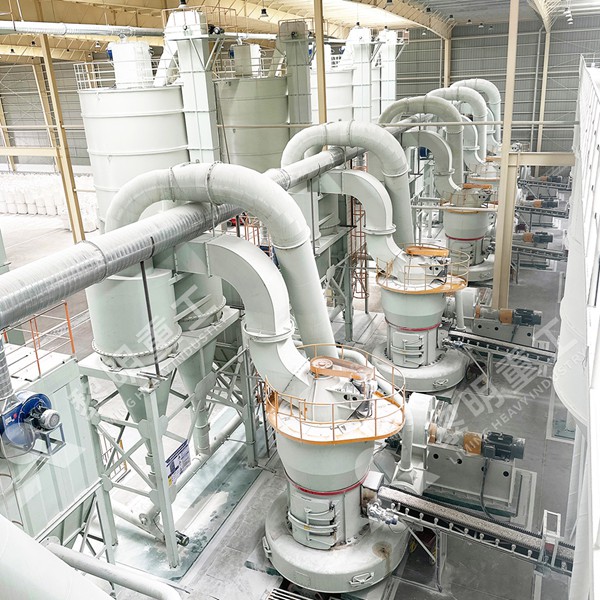
When planning a complete plant, we conduct a thorough analysis of your raw material characteristics and desired final product portfolio. Capacity is a key consideration. Our Raymond mill models offer production rates suitable for various scales of operation. The plant design will be optimized to ensure seamless flow from raw material intake to finished powder packing, with potential integration for coating or surface modification processes if required. Our commitment extends beyond equipment supply; we provide foundational layout drawings, installation guidance, comprehensive operational training, and reliable after-sales support to ensure your heavy calcium powder plant achieves its performance and profitability goals from day one.
Frequently Asked Questions (FAQ)
- What is the typical moisture content limit for limestone processed by your Raymond mill in a GCC plant?
Our Raymond mill system is designed to handle raw materials with moisture content up to 6%. For materials with higher moisture, an integrated drying system or a pre-drying stage can be incorporated into the plant design. - Can the system produce multiple fineness grades of calcium carbonate without major shutdowns?
Yes. The fineness is primarily adjusted by changing the speed of the built-in classifier, which can be done during operation. This allows for relatively quick switches between different product specifications. - How does the plant ensure environmental compliance regarding dust emission?
The core grinding and classification process operates in a fully closed, negative-pressure loop. The system is equipped with high-efficiency pulse-jet baghouse dust collectors, ensuring particulate emissions meet stringent international environmental standards. - What are the main wear parts in the Raymond mill, and what is their typical service life?
The primary wear components are the grinding rollers and the grinding ring. Their service life depends on the abrasiveness of the processed limestone but is engineered for extended durability. Replacement is a standardized procedure to minimize downtime. - Does Liming Heavy Industry provide support for plant layout and foundation design?
Absolutely. As part of our comprehensive quotation and service, we provide general layout drawings, foundation load data, and key connection points to assist your engineering team in proper plant planning and construction.


