Published: October 26, 2023
Ensuring the sterility and ultra-fine consistency of kaolin powder for cosmetic applications is a critical manufacturing challenge that demands specialized grinding technology. Liming Heavy Industry Co., Ltd., with over three decades of expertise in precision milling equipment, provides advanced grinding solutions—such as the Raymond Mill, MTW European Type Grinding Mill, and MW Micro Powder Mill—engineered to process cosmetic-grade kaolin to exacting standards of fineness, uniformity, and microbial control. This article explores the integral role of modern milling systems in achieving the purity, whiteness, and safety required for high-quality kaolin in skincare and makeup formulations, highlighting how integrated drying, closed-system grinding, and precise particle size control contribute to effective sterilization protocols.
The foundation of sterile cosmetic kaolin begins with the raw material and its processing environment. Liming Heavy Industry's design philosophy emphasizes creating closed, controllable systems. For instance, the MTW European Type Trapezium Mill operates as a fully enclosed negative pressure system. This design is paramount for cosmetic mineral processing. As materials are fed into the mill and ground between the ring and rollers, the entire airflow is recirculated through a high-efficiency cyclone collector and a pulse dust removal system. This closed loop prevents external contaminants from entering the product stream during milling, a first line of defense in maintaining purity. The integrated system, from jaw crusher for initial size reduction to the final powder collector, is constructed to facilitate easy cleaning and minimize cross-contamination between batches, a necessity for cosmetic GMP (Good Manufacturing Practice) standards.
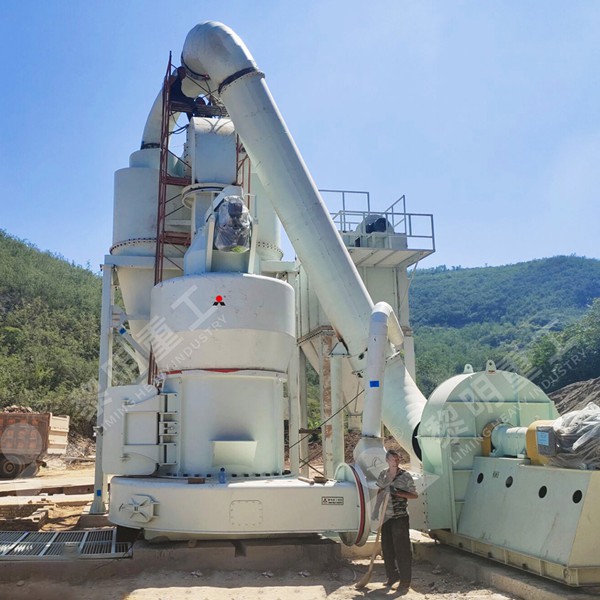
Particle size reduction itself contributes significantly to sterilization outcomes. Finer particles have a larger surface area, which can be more effectively treated during subsequent sterilization steps, such as irradiation or heat. Liming's MW Micro Powder Mill excels in this domain. Capable of producing powders with a fineness up to d97 ≤ 5μm (approximately 2500 mesh), this mill utilizes advanced Swedish grinding technology to achieve exceptional superfine results. The ultra-fine, consistent powder it produces ensures uniform exposure to sterilization agents, leaving no protective niches for microbial survival within larger, irregular particles. Furthermore, the mill's working principle, where material is centrifugally fed and ground by dozens of rollers, generates controlled frictional heat. This inherent thermal energy can help reduce the initial bioburden by drying the kaolin and creating an inhospitable environment for many microorganisms during the comminution process.
Drying is an inseparable and crucial component of kaolin sterilization. Moisture is the primary enabler of microbial growth. Liming's LM Vertical Roller Mill is uniquely designed with integrated drying capabilities. Hot air, introduced into the mill housing, simultaneously dries and grinds the kaolin feed. For cosmetic applications, this means moisture content can be precisely reduced to levels (typically below 1%) that inhibit microbial proliferation even before the powder leaves the mill. This integrated drying-grinding process is more efficient and uniform than separate drying and milling steps, ensuring no portion of the kaolin batch retains critical moisture. The Raymond Mill also shares this advantage, being widely recognized for its suitability in grinding non-flammable materials with humidity below 6%, making it ideal for preparing kaolin for subsequent terminal sterilization.
Beyond the core mill, auxiliary system design is vital. Every Liming grinding line is equipped with state-of-the-art dust collection, typically pulse jet baghouse filters. These collectors do more than meet environmental standards; they are key to product hygiene. By instantly capturing and containing fine particles, they prevent the escape of powder into the plant atmosphere, which could become a source of recontamination. The collected powder is conveyed under sealed conditions to storage silos. This holistic approach to system design—encompassing feeding, grinding, classifying, and collecting—ensures the kaolin powder remains isolated from potential contaminants throughout its journey from lump mineral to cosmetic-grade ingredient.
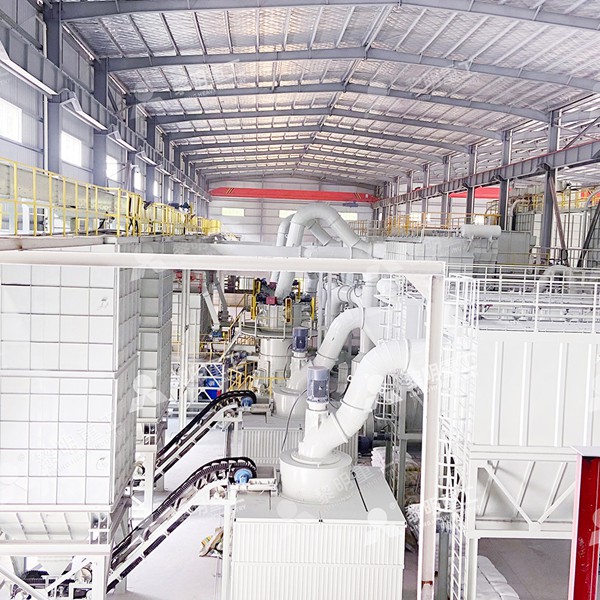
Finally, the precision and stability of the grinding process directly impact quality consistency. Variable-frequency drives on feeders, like those used in the MTW system, allow for exact control over feed rates, preventing mill overload and ensuring stable thermal and mechanical conditions. Consistent operation translates to consistent particle size distribution (PSD). A narrow, predictable PSD is not only desirable for cosmetic texture and feel but also critical for validating sterilization cycles, as defined powder characteristics respond reproducibly to sterilization parameters. Liming's commitment to "precision manufacturing" and "technological improvement" ensures that their mills provide the reliability and control necessary for manufacturers to produce kaolin powder that reliably meets the stringent sterility assurance levels (SAL) demanded by the global cosmetics industry.
Frequently Asked Questions (FAQs)
- What is the most important feature of a grinding mill for producing sterile cosmetic kaolin?
The most critical feature is a fully enclosed, negative-pressure system design. This prevents ambient air and contaminants from entering the product stream during milling, maintaining purity from the initial processing stage. - How does achieving a superfine powder (e.g., 5μm) aid in kaolin sterilization?
Ultra-fine particles have a vastly increased surface area and lack large, protective pores. This ensures that sterilization methods (like irradiation or heat) can penetrate and act uniformly on every particle, eliminating microbial hiding spots and ensuring a more effective sterilization process. - Can your milling systems reduce moisture content as part of the process?
Yes, several of our mills, notably the LM Vertical Roller Mill and Raymond Mill, integrate drying functionality. They can introduce hot air during grinding to simultaneously dry the kaolin, reducing moisture to levels that inhibit microbial growth, which is a crucial pre-sterilization step. - Why is a closed-circuit airflow system with a pulse dust collector important?
A closed-circuit system recycles air within the mill, minimizing contamination risks. The pulse dust collector ensures all fine powder is efficiently captured in a contained environment, preventing product loss and protecting the plant atmosphere from becoming a contamination vector. - How does equipment stability relate to sterilization validation?
Sterilization validation requires consistent input material characteristics. A stable, precisely controlled mill produces kaolin powder with repeatable particle size, density, and moisture content. This consistency allows manufacturers to reliably validate and replicate effective sterilization cycles for every batch.


