Published on: October 26, 2023
For manufacturers in the plastics industry, achieving a consistent, ultra-fine kaolin powder is critical for enhancing the performance, strength, and finish of extruded plastic products. The grinding process directly impacts kaolin's dispersion, brightness, and rheological properties within the polymer matrix. This article explores the technical challenges of kaolin comminution for plastic extrusion and presents advanced grinding mill technologies from LIMING HEAVY INDUSTRY, a leader in industrial milling for over three decades. We will analyze how modern systems like the LM Vertical Roller Mill and MW Micro Powder Mill deliver the precise particle size distribution, energy efficiency, and system stability required for high-quality masterbatch and compound production.
Kaolin, or china clay, serves as a vital functional filler and reinforcing agent in plastic extrusion. Its benefits include improved tensile strength, dimensional stability, enhanced surface finish, and increased resistance to chemical degradation. However, to fully unlock these properties, the kaolin must be ground to a specific fineness, typically requiring a significant portion of particles in the micron and sub-micron range. Traditional grinding methods often struggle with efficiency, heat generation (which can affect kaolin's structure), and achieving a narrow particle size distribution without excessive energy consumption.
This is where engineered grinding solutions make a definitive impact. Founded in 1987, LIMING HEAVY INDUSTRY CO., LTD. has dedicated itself to the research, manufacturing, and sales of large and medium-sized crushing and grinding equipment. With a corporate philosophy centered on scientific research, technological progress, and precision manufacturing, the company has developed a robust portfolio of mills specifically adept at handling non-metallic minerals like kaolin. Their extensive facilities in Zhengzhou's HI-TECH Industry Development Zone and Shangjie Industry Park underscore their manufacturing capacity and commitment to industrial innovation.
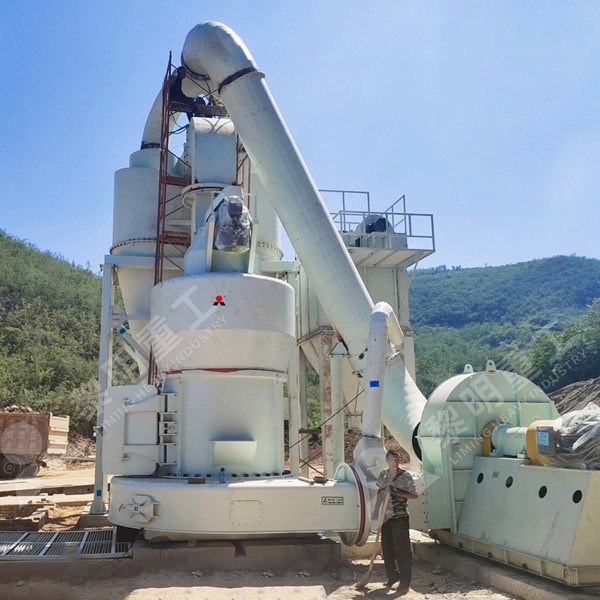
For high-capacity production lines common in plastic compounding, the LM Vertical Roller Mill presents an optimal solution. Its integrated design combines drying, grinding, powder selection, and conveying into a single, compact unit. This is particularly advantageous for kaolin, which may require residual moisture removal. The mill's grinding mechanism applies pressure and shear force between rollers and a rotating table, efficiently reducing particles with lower energy consumption compared to traditional ball mills. With a capacity range of 10-400 T/H and the ability to handle feed sizes up to 55mm, it is suited for large-scale operations demanding consistent output of fine kaolin powder for bulk plastic resin production.
When the application calls for ultra-fine or superfine kaolin powder to achieve exceptional surface properties or transparency in films, the MW Micro Powder Mill excels. This mill incorporates advanced grinding technology capable of producing powders with a fineness up to d97 ≤ 5μm (approximately 2500 mesh). Its working principle involves multiple rollers rotating against a stationary ring raceway, creating intense grinding zones that pulverize material to the sub-micron level. The closed-circuit system with an integrated pulse dust collector ensures a clean operation and high powder collection rate, preventing product loss and maintaining a clean plant environment—a crucial factor for plastics manufacturing.
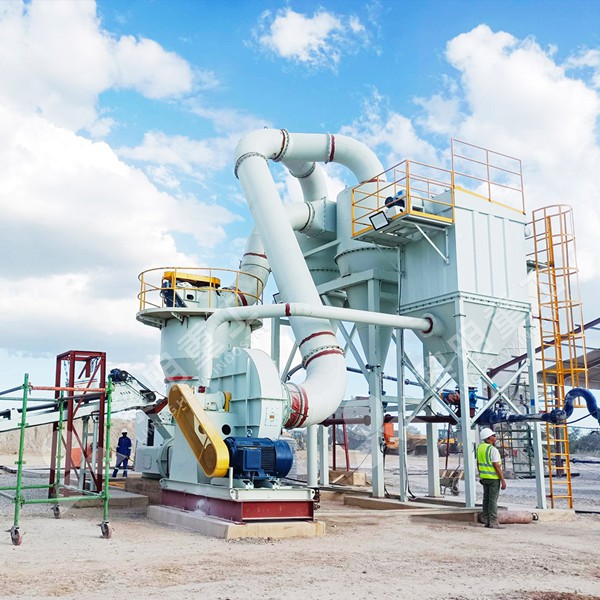
The selection of the appropriate grinding system extends beyond mere particle size. Factors such as system wear, maintenance accessibility, and the ability to maintain a stable chemical composition of the kaolin are paramount. LIMING HEAVY INDUSTRY's approach of "scientific research tackling key problems" ensures their mills are built with durable materials and feature designs that minimize contamination. Furthermore, their MTW European Type Trapezium Mill offers another robust option, especially for producing finely ground kaolin for engineering plastics. Its patented technology and curved air duct design promote smooth airflow, improving classification efficiency and yielding a sharper particle size cut.
Ultimately, investing in a dedicated, modern kaolin grinding system from a proven manufacturer like LIMING HEAVY INDUSTRY translates to tangible benefits for plastic extruders: superior filler dispersion leading to enhanced mechanical properties in the final product, reduced energy costs per ton of processed material, and greater process control for consistent batch-to-batch quality. By focusing on the core competitiveness of their products through continuous R&D, LIMING provides the machinery that forms the reliable backbone of efficient and high-quality plastic production supply chains worldwide.
Frequently Asked Questions (FAQs)
1. What is the primary advantage of using a vertical roller mill for kaolin grinding in plastic applications?
The primary advantage is its integrated drying and grinding capability combined with high energy efficiency. It can process kaolin with residual moisture and deliver a consistent, fine powder at high throughput rates (10-400 T/H), making it ideal for large-volume plastic compound production.
2. How fine can kaolin be ground using the MW Micro Powder Mill, and why is this important for plastics?
The MW Micro Powder Mill can achieve a fineness up to d97 ≤ 5μm (approx. 2500 mesh). This ultra-fine grade is crucial for achieving excellent dispersion in the polymer matrix, which improves mechanical strength, surface smoothness, and optical properties in clear or thin-film plastic products.
3. Can these grinding systems handle other minerals used as fillers in plastics, such as calcium carbonate?
Yes, absolutely. The LM Vertical Mill, MTW European Mill, and MW Micro Powder Mill are all designed for non-metallic minerals. They are extensively used for grinding calcium carbonate, gypsum, talc, and other functional fillers common in the plastics and coatings industries.
4. How does the grinding process affect the brightness and chemical properties of kaolin?
Advanced mills utilize grinding principles that minimize iron contamination and excessive heat generation. This protects the inherent brightness and crystal structure of kaolin. Closed-system designs with efficient classifiers also prevent product oxidation or contamination, preserving its chemical properties.
5. What are the key considerations for choosing between the LM Vertical Mill and the MW Micro Powder Mill for my kaolin processing line?
The choice hinges on required capacity and target fineness. The LM Vertical Mill is the choice for high-capacity (10-400 T/H) production of fine powders. The MW Micro Powder Mill is specialized for lower-capacity (0.5-25 T/H) but ultra-fine and superfine powder production where the highest levels of fineness are the critical requirement.


