Published on: October 26, 2023
For paint manufacturers seeking consistent, high-quality limestone fillers and extenders, the Raymond Mill from LIMING HEAVY INDUSTRY stands as a proven and reliable solution. This article delves into the technical merits of this established grinding technology, explaining its operational principles, specific advantages for processing paint-grade limestone, and how it aligns with modern production demands for fineness control, efficiency, and system stability. We will explore why this machine remains a cornerstone in mineral processing for the coatings sector.
In the competitive landscape of paint and coating production, the quality of raw materials is paramount. Limestone, valued for its whiteness, low cost, and functional properties as a filler and extender, must be ground to precise fineness levels to optimize opacity, durability, and rheology in the final product. This is where precision grinding equipment becomes critical. LIMING HEAVY INDUSTRY CO., LTD., with over three decades of expertise in manufacturing crushing and grinding machinery, offers robust solutions tailored for this exacting application. Our Raymond Mill series is engineered specifically for processing non-flammable, non-explosive minerals like limestone with Mohs hardness under 7 and humidity below 6%, making it an ideal match for paint industry requirements.
The core strength of the Raymond grinding machine lies in its mature and stable mechanical design. The system operates on a closed-circuit principle. Bulk limestone is first reduced by a crusher, then fed uniformly into the grinding chamber via a vibrating feeder. Inside the mill, the material is ground between stationary rings and rotating rollers. The ground powder is carried upward by an air flow to a classifier. Here, a critical separation occurs: particles meeting the target fineness pass through and are collected as product, while coarser particles are rejected back to the grinding chamber for further milling. This internal recirculation ensures high efficiency and consistent particle size distribution (PSD). For paint applications, a consistent PSD between 44μm (325 mesh) and finer specifications is crucial for achieving smooth film formation and desired gloss levels.
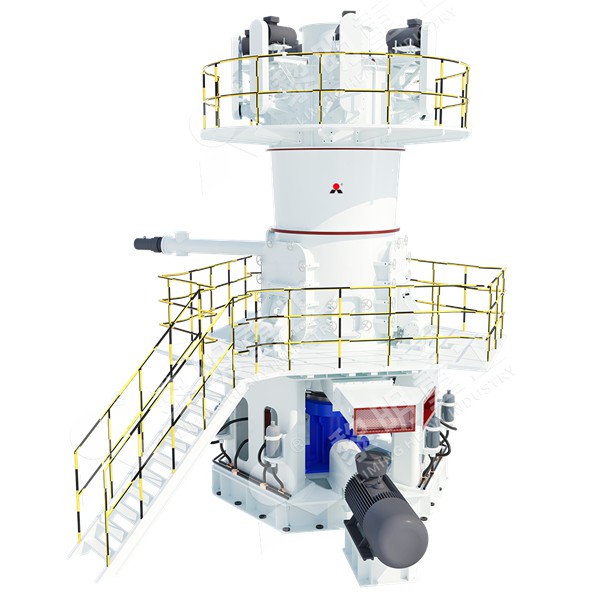
What distinguishes LIMING's approach is the continuous refinement of this classic technology. While the fundamental Raymond principle remains, our focus on "scientific research tackling key problems and technological improvement" has led to enhancements in wear part materials, grinding ring and roller profiles, and classifier efficiency. These incremental advancements translate directly to operational benefits for paint producers: reduced downtime for maintenance, lower energy consumption per ton of product, and greater control over the top-cut of the particle size to prevent gritty texture in coatings. Our manufacturing precision, honed across an 80,000 m² main facility, guarantees the mechanical integrity and reliable performance that large-scale paint production depends on.
Beyond the mill itself, LIMING HEAVY INDUSTRY provides integrated system solutions. A typical limestone grinding line for paint includes the jaw crusher, vibrating feeder, Raymond Mill, classifier, pipeline device, cyclone collector, pulse dust collector, and electrical control system. We engineer these components to work in seamless harmony. The pulse dust collector, for instance, is not an afterthought but an integral part of the design, ensuring the production process meets stringent environmental standards by capturing over 99.9% of airborne particles—a vital consideration for clean plant operation and worker safety. This turnkey philosophy, from raw material intake to finished powder packing, reduces interface risks for our clients and ensures optimal system performance.
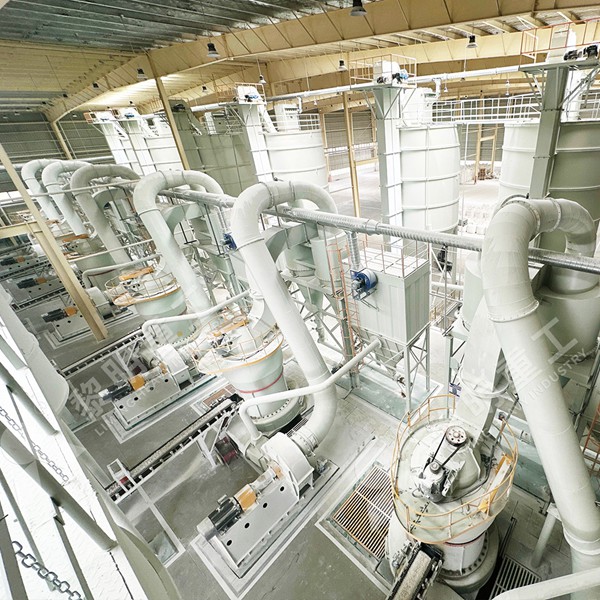
The application of Raymond-milled limestone in paint is multifaceted. It acts as a cost-effective extender pigment, improving dry hide and sheen uniformity. Its chemical inertness ensures it does not interfere with the paint's binder or other additives. Furthermore, the particle shape and size achieved through the grinding and classification process can influence critical paint properties such as scrub resistance, stain removal, and viscosity stability. By offering a fineness range from 44μm (approx. 325 mesh) down to 613μm (approx. 30 mesh), our Raymond Mill provides the flexibility to produce different grades of limestone filler for various paint tiers, from economical interior emulsions to high-performance exterior coatings.
Choosing the right grinding partner is a strategic decision. LIMING HEAVY INDUSTRY's commitment to "precision manufacturing, pioneering and innovation" is backed by a dedicated research and development team focused on the industry's technological frontier. We understand that for paint industry clients, consistency, product quality, and total cost of ownership are the ultimate metrics. Our Raymond Mill, backed by comprehensive technical support and a global supply network, delivers on these metrics by providing a dependable, efficient, and precisely controllable method for transforming raw limestone into a valuable paint ingredient.
Frequently Asked Questions (FAQs)
- What is the typical fineness range achievable for limestone using your Raymond Mill in paint applications?
Our Raymond Mill can produce limestone powder with a fineness ranging from approximately 44μm (325 mesh) up to 613μm (30 mesh). The integrated classifier allows for precise adjustment within this range to meet specific paint formulation requirements for opacity, gloss, and texture. - How does the Raymond Mill system ensure consistent particle size distribution, which is critical for paint quality?
Consistency is achieved through the closed-circuit grinding and internal classification system. Oversize particles are continuously rejected by the classifier and returned for further grinding, ensuring only particles meeting the target fineness exit as final product, resulting in a tight and repeatable PSD. - What are the key maintenance points for the Raymond Mill when grinding abrasive materials like limestone?
Primary wear parts are the grinding rollers and rings. LIMING designs these components from high-wear-resistant alloys and optimizes their geometry to extend service life. Regular inspection of these parts, along with lubrication of transmission components, forms the core of routine maintenance for sustained operation. - Can the system handle moist limestone, and is drying integrated?
The standard Raymond Mill is suitable for materials with moisture content less than 6%. For higher moisture, we can provide integrated solutions with pre-drying equipment or recommend our LM Vertical Roller Mill, which has inherent drying capabilities using hot air. - How does your Raymond Mill address environmental and dust control concerns in a plant setting?
The entire grinding system is a negative pressure, closed-loop design. It is equipped with a high-efficiency pulse jet baghouse dust collector, which captures over 99.9% of process dust, ensuring clean operation and full compliance with industrial environmental protection standards.


