Published: October 26, 2023
In the demanding world of industrial mineral processing, standard equipment often falls short when faced with unique material specifications and stringent production goals. This is particularly true for the production of specialized heavy calcium carbonate (GCC) powders, where particle size distribution, whiteness, purity, and throughput are critical. Leveraging over three decades of engineering expertise, Liming Heavy Industry has pioneered the development of customized Raymond mill solutions that transcend conventional designs. By integrating advanced grinding mechanics, intelligent control systems, and modular components, our tailored approach ensures optimal processing efficiency, superior product quality, and long-term operational reliability for clients with specific heavy calcium powder requirements.
Heavy calcium carbonate, a cornerstone material in industries ranging from plastics and paints to paper and pharmaceuticals, presents distinct grinding challenges. Standard mills may struggle with achieving the narrow particle size bands, maintaining consistent brightness, or handling the desired high-capacity output without excessive energy consumption or wear. At Liming Heavy Industry, our design philosophy begins with a deep analysis of the client's raw material characteristics—such as moisture content, feed size, and Mohs hardness—and the precise specifications of the final product. This diagnostic phase is crucial for engineering a mill that performs not just adequately, but exceptionally.
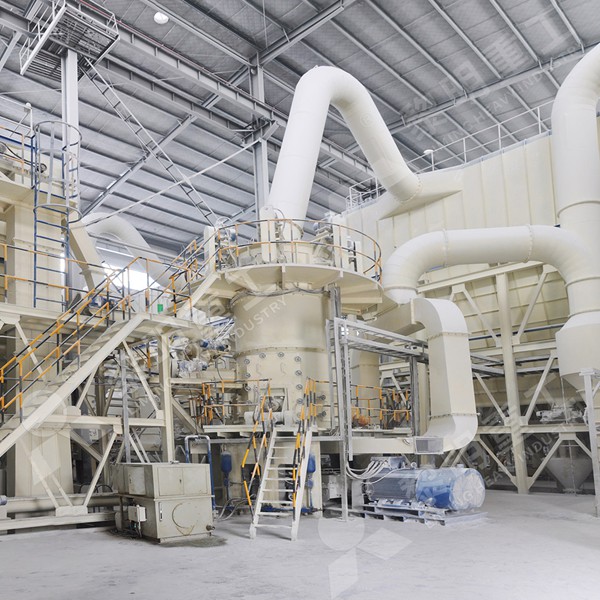
Our core customization capabilities for Raymond mill systems are multifaceted. First, we focus on the grinding assembly—the heart of the mill. For heavy calcium, we often employ specially hardened and profiled grinding rollers and rings made from high-chrome alloys or ceramic composites. These materials significantly reduce metallic contamination, a key factor in preserving the powder's whiteness, while offering exceptional wear resistance for prolonged service life and consistent fineness. The geometry of the grinding zone can be adjusted to modify the compression and shear forces applied to the calcium particles, directly influencing the final particle shape and size distribution.
Second, the classification system is meticulously tailored. The traditional static classifier in basic Raymond mills is replaced with a high-efficiency dynamic turbine classifier. This allows for real-time, precise control over the cut point. For ultra-fine or tightly graded heavy calcium powders, we integrate multi-stage classification technology. This ensures that only particles meeting the exact fineness requirement (e.g., d97 ≤ 10μm or specific mesh ranges) exit the mill, while oversize material is efficiently returned for regrinding. This closed-loop system enhances yield and eliminates product waste.
Third, the system's ancillary components are engineered for synergy. We design customized feeding systems that ensure a stable and even material flow into the grinding chamber, preventing surges that cause fineness fluctuations. Dedicated drying conduits can be integrated for materials with higher moisture content. Furthermore, the entire grinding circuit is encapsulated within a negative pressure system connected to advanced pulse-jet baghouse dust collectors. This is not merely an add-on but a core design principle, guaranteeing a dust-free workshop environment and preventing product loss, which aligns with our commitment to green and sustainable manufacturing.
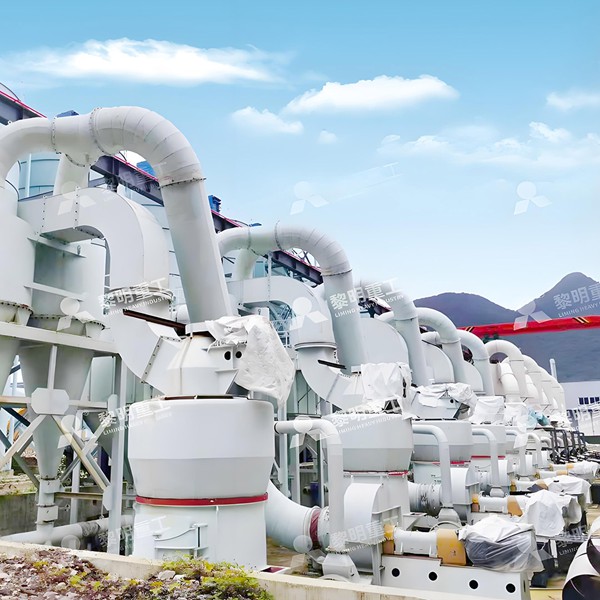
The operational intelligence of our customized mills is another critical differentiator. A centralized programmable logic controller (PLC) system monitors and regulates key parameters such as grinding pressure, classifier speed, feed rate, and temperature. Operators can input the target product specifications, and the system auto-adjusts to achieve and maintain them, ensuring batch-to-batch consistency. This level of automation reduces human error, optimizes energy usage, and allows for remote monitoring and diagnostics, a feature highly valued in modern, connected plants.
Our commitment extends beyond the drawing board and factory floor. Founded in 1987, Liming Heavy Industry has built its reputation on a foundation of scientific R&D and precision manufacturing. With headquarters and advanced workshops spanning over 147,000 square meters in Zhengzhou, our vertically integrated operations allow for strict quality control over every component. The development of these specialized Raymond mill solutions is a direct result of our "production, learning, and research" ethos, where close collaboration with clients in the non-metallic mineral sector drives technological innovation aimed at the industry's frontier.
In conclusion, for producers of heavy calcium powder who face unique market demands or seek a competitive edge through superior product quality, an off-the-shelf grinding solution is a compromise. A customized Raymond mill design from Liming Heavy Industry represents a strategic investment. It is a harmonized system where mechanical engineering, process knowledge, and digital control converge to deliver precisely the powder characteristics required, with enhanced efficiency, reliability, and environmental stewardship. By partnering with us, clients gain not just a machine, but a dedicated processing technology optimized for their success.
Frequently Asked Questions (FAQs)
- What are the key advantages of a customized Raymond mill over a standard model for heavy calcium processing?
Customization allows for optimization of the grinding mechanics, classifier precision, and system integration specifically for your calcium ore's properties and your target powder specs. This leads to superior control over fineness and particle shape, higher yield of in-spec product, reduced energy consumption per ton, and minimized contamination for better whiteness. - How does your design prevent metallic contamination to ensure powder whiteness?
We utilize specialized wear parts in the grinding zone, such as high-chrome alloy or ceramic-lined rollers and rings. These materials are much harder and more inert than standard steel, drastically reducing the rate of metallic wear debris mixing with the calcium powder, thereby preserving its brightness and purity. - Can your customized system handle the need for multiple, different fineness products from one line?
Yes, a core feature of our tailored design is the high-efficiency dynamic classifier. Its speed can be adjusted quickly, allowing the same mill to produce different fineness grades (e.g., switching between 400 mesh and 1250 mesh) with minimal downtime and high consistency, offering great production flexibility. - What kind of after-sales support and service do you provide with a customized mill?
Our support includes comprehensive installation supervision, thorough operator training, and a detailed maintenance protocol. We also provide remote monitoring assistance and maintain a ready inventory of critical wear parts specific to your machine to ensure maximum uptime and long-term performance. - Is the customized system energy-efficient compared to traditional ball mills for fine grinding calcium carbonate?
Absolutely. The customized Raymond mill, with its efficient grinding principle and precise classification, operates in a much more targeted manner. It avoids the over-grinding common in ball mills, which wastes energy. Our systems often incorporate energy-saving motors and optimized airflow designs, leading to significantly lower power consumption per ton of finished product.


