Published on: October 26, 2023
For enterprises seeking a reliable and efficient solution for producing 300-mesh heavy calcium carbonate powder, selecting the appropriate grinding equipment is paramount to achieving optimal product quality, operational stability, and long-term cost-effectiveness. This article delves into the technical considerations for such a production line, with a focus on the application and suitability of Raymond Mill technology. Drawing upon the extensive engineering expertise and product portfolio of LIMING HEAVY INDUSTRY, we will explore the capabilities of our grinding systems, compare relevant mill models, and outline the key factors that ensure a successful, high-yield powder processing operation.
Heavy calcium carbonate, a critical filler and additive in industries like plastics, paints, coatings, and paper, demands precise particle size distribution and consistent fineness. A 300-mesh specification (approximately 48 microns) sits within a crucial range where both throughput efficiency and powder quality must be balanced. Traditional Raymond Mill systems have long been the workhorse for mid-fineness grinding in non-metallic minerals. At LIMING HEAVY INDUSTRY, our Raymond Mill is engineered for processing non-flammable, non-explosive materials with Mohs hardness under 7 and humidity below 6%. Its design integrates grinding, powder selection, and conveying, making it a strong candidate for dedicated calcium carbonate lines. The mill's ability to produce powder between 44μm and 613μm allows it to comfortably meet the 300-mesh target while offering operational simplicity and proven reliability.
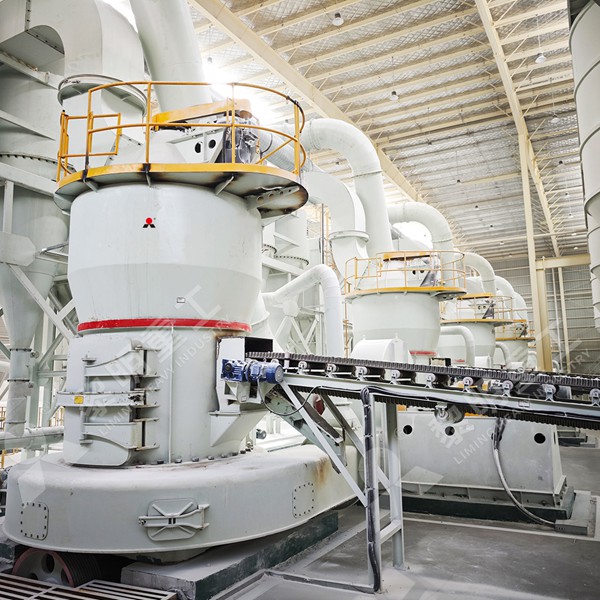
However, the evolution of grinding technology offers enhanced alternatives. Our MTW European Type Grinding Mill represents a significant advancement over traditional Raymond mill designs. Inheriting its core principles, the MTW mill incorporates patented technological improvements that boost productivity, enhance energy efficiency, and improve the stability of the finished product. For a 300-mesh heavy calcium production line, the MTW mill's optimized grinding curve and more efficient classifier system can lead to higher output and lower energy consumption per ton. Its commitment to large-scale non-metallic mineral powder making aligns perfectly with the demands of modern, high-capacity calcium carbonate plants. The working principle involves grinding materials between rings and rollers, with airflow carrying the powder to a high-efficiency separator. Oversized particles are returned for regrinding in a closed-circuit system, ensuring precise control over the final fineness.
When planning a complete production line, the mill is just the heart of the system. A full circuit from LIMING HEAVY INDUSTRY typically includes auxiliary equipment such as a jaw crusher for primary size reduction, a vibrating feeder for consistent material flow, a pulse dust collector ensuring environmentally friendly operation compliant with standards, and an electrical control cabinet for automated process management. This integrated approach guarantees that the entire line works in harmony, maximizing the mill's performance and minimizing downtime. For producers aiming for even finer powders or requiring more flexibility in fineness adjustment, our MW Micro Powder Mill, capable of reaching d97 ≤ 5μm, presents another sophisticated option, though for a dedicated 300-mesh line, the MTW or Raymond Mill often provides the most cost-effective balance.
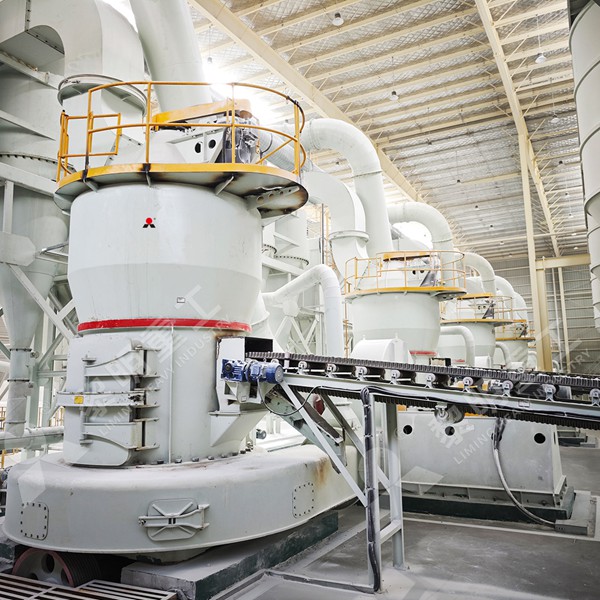
Founded in 1987, LIMING HEAVY INDUSTRY has built its reputation on precision manufacturing and continuous innovation in crushing and grinding equipment. With over three decades of experience and a modern R&D-driven management system, we provide not just machinery but comprehensive solutions. Our engineers can assist in selecting the optimal mill model—be it the stalwart Raymond Mill, the advanced MTW European Type Mill, or others—based on specific raw material characteristics, desired capacity, and plant layout. The goal is to deliver a production line that is not only productive but also durable, energy-efficient, and capable of producing consistently high-quality 300-mesh heavy calcium powder to strengthen our clients' competitive edge in their respective markets.
Frequently Asked Questions (FAQ)
- What is the main difference between your Raymond Mill and MTW European Type Mill for grinding heavy calcium?
The MTW mill is an upgraded version featuring patented technology for higher productivity, better energy efficiency, and more stable performance. It is designed for larger-scale operations and often provides a more favorable output-to-energy consumption ratio for 300-mesh production. - Can your grinding system achieve fineness finer than 300 mesh if needed in the future?
Yes. While our Raymond and MTW mills are excellent for the 300-mesh range, our MW Micro Powder Mill is specifically designed for superfine grinding up to 3250 mesh, offering future scalability for finer product lines. - How does your equipment ensure environmental protection in the production line?
Our grinding systems are equipped with efficient pulse jet dust collectors that recycle air in a closed circuit and capture airborne particles, ensuring emissions meet stringent national environmental protection standards. - What kind of after-sales support do you provide for the entire production line?
We provide comprehensive support including installation guidance, operational training, maintenance manuals, and readily available spare parts to ensure minimal downtime and long-term reliability of your investment. - Do you offer customized solutions based on our specific raw material properties and factory space?
Absolutely. Our engineering team can tailor the production line configuration, including crusher selection, mill model, and layout design, to optimally match your raw material feed size, hardness, humidity, and available plant area.


