Published: October 26, 2023
In the high-value world of industrial minerals, kaolin stands out for its critical applications in ceramics, paper, paints, and advanced materials. Its value is intrinsically linked to its purity, particularly the absence of metallic contamination introduced during processing. This article explores the challenges of non-metallic contamination kaolin grinding and details how modern, specialized milling equipment from LIMING HEAVY INDUSTRY—such as the LM Vertical Roller Mill, MTW European Type Grinding Mill, and MW Micro Powder Mill—provides engineered solutions. By leveraging advanced design principles, closed-system operations, and wear-resistant materials, these technologies ensure the production of high-purity kaolin powders while enhancing efficiency, energy savings, and environmental compliance.
The pursuit of purity in kaolin processing is not merely a quality goal but a technical imperative. Metallic contamination, often introduced through abrasion and wear of grinding media and mill internals, can severely degrade kaolin's whiteness, chemical inertness, and performance in sensitive applications like high-grade ceramics or specialty coatings. Traditional grinding methods, while effective for throughput, often fall short in this specific aspect. The industry's shift towards non-metallic contamination grinding necessitates a holistic re-evaluation of equipment design, material science, and system engineering.
At the core of this technological evolution is the principle of minimizing metal-to-mineral contact. LIMING HEAVY INDUSTRY addresses this through several innovative approaches integrated into its grinding portfolio. A prime example is the LM Vertical Roller Mill. Its design utilizes a grinding table and rollers that can be lined with high-chromium or ceramic materials, drastically reducing the wear rate and the consequent release of metallic particles into the product stream. The grinding process itself—where material is ground between the roller and the table under hydraulic pressure—creates a stable material bed, which acts as a protective layer, further isolating the mineral from direct metal contact. This mill integrates drying, grinding, classification, and conveying, creating a streamlined, enclosed process that limits external contamination.
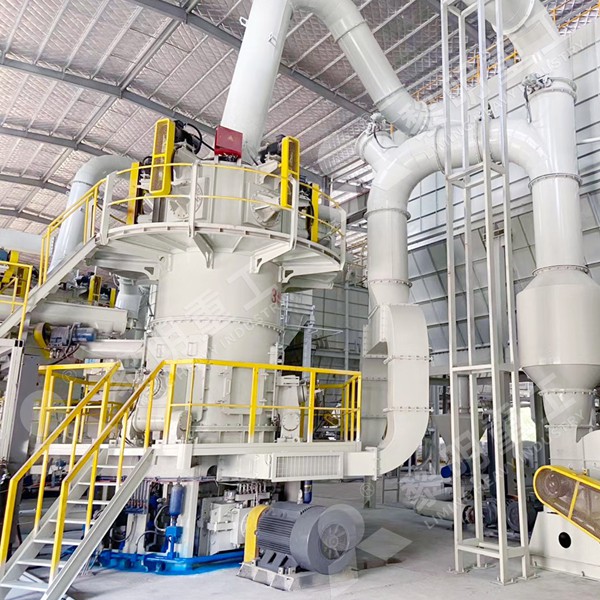
For fine and ultra-fine grinding requirements where precision is paramount, the MW Micro Powder Mill presents a sophisticated solution. This mill is engineered for superfine powder processing down to d97 ≤ 5μm. Its working mechanism involves dozens of rollers rotating against a stationary ring. The critical components in the grinding chamber can be manufactured from specially hardened or composite non-metallic materials upon request, offering an unparalleled level of protection against ferrous and non-ferrous contamination. Furthermore, its fully negative pressure operation and integration with high-efficiency pulse dust collectors ensure that the product is not only pure but also handled in an environmentally sealed manner from start to finish.
The MTW European Type Trapezium Mill represents another milestone, specifically engineered for large-scale non-metallic mineral powder production. Its advanced curved air duct and internal separator design promote smooth airflow and efficient classification with minimal turbulence and particle impact on metal surfaces. The system's closed-circuit design, as detailed in its working principle, ensures that air and materials are recirculated within a controlled environment. The jaw crusher for primary size reduction and the variable-frequency feeder work in harmony to provide a consistent feed to the mill, preventing erratic operation that could cause undue wear. The entire circuit, compliant with stringent environmental standards, underscores a commitment to purity that extends from the product to the plant's emissions.
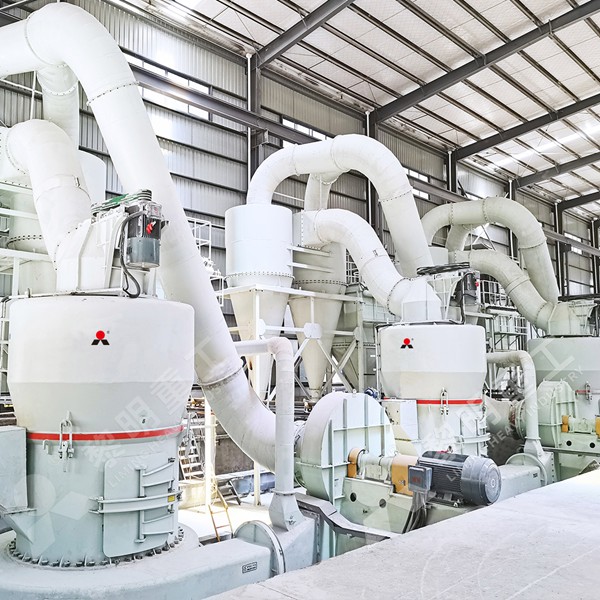
Beyond specific machine features, LIMING's philosophy of "scientific research tackling key problems" is evident in its system-level approach. Every grinding line is conceived as an integrated system where compatibility between the crusher, feeder, mill, classifier, and collector is optimized. This holistic engineering prevents bottlenecks and ensures consistent operating parameters, which is vital for maintaining grinding media and liner integrity over long periods. The company's large-scale manufacturing facilities and precision manufacturing capabilities guarantee that the equipment is built to exacting tolerances, directly contributing to reliable, low-wear performance essential for contamination-sensitive grinding.
In conclusion, the challenge of non-metallic contamination in kaolin grinding is effectively met by a new generation of intelligent milling technology. By prioritizing designs that reduce abrasive contact, incorporating advanced wear-resistant materials, and implementing fully enclosed automated systems, LIMING HEAVY INDUSTRY's grinding solutions deliver the dual benefits of exceptional product purity and superior operational economics. For producers aiming to secure a competitive edge in high-end markets, investing in such targeted technology is not just an operational upgrade but a strategic necessity for the future.
Frequently Asked Questions (FAQs)
1. What are the primary sources of metallic contamination in kaolin grinding, and how are they mitigated?
The main sources are abrasion from grinding media (balls, rollers), mill liners, and classifier parts. Mitigation strategies include using mills with material-bed compression grinding (like LM Vertical Mill), lining critical components with high-chromium alloys or ceramics, and employing fully enclosed system designs to prevent external ingress.
2. Can your grinding mills handle the specific moisture content often found in crude kaolin?
Yes, several of our mills integrate drying functions. The LM Vertical Roller Mill, for instance, can simultaneously dry and grind materials with hot air, efficiently processing kaolin with varying moisture levels to achieve a dry, fine powder without the need for a separate drying step.
3. What fineness range can be achieved for high-purity kaolin powder with your equipment?
Our equipment covers a very wide range. The Raymond Mill and MTW European Mill can produce powders from 44μm to 613μm. For ultra-fine applications, the MW Micro Powder Mill can consistently achieve fineness between 325 mesh to 2500 mesh (approximately 5μm to 40μm), which is ideal for high-value kaolin products.
4. How does the closed-system design of your grinding lines contribute to environmental protection?
Closed systems, such as those in the MTW and MW series, recirculate air internally and are equipped with high-efficiency pulse jet dust collectors. This ensures that nearly all particulate matter is captured and returned to the process, resulting in near-zero dust emissions and a cleaner, safer workplace, fully complying with environmental standards.
5. For a new kaolin processing plant, what factors should be considered when selecting the most suitable grinding mill from your range?
Key factors include: the required production capacity (from 0.5 to over 400 T/H), the target fineness of the final product, the initial moisture and feed size of the crude kaolin, and the specific purity (contamination tolerance) requirements. Our technical team can analyze these parameters to recommend the optimal solution, be it an LM Vertical Mill for large-scale integrated processing or an MW Micro Powder Mill for specialized ultra-fine grades.


