Published: October 26, 2023
Stepping into the sprawling industrial complexes of LIMING HEAVY INDUSTRY CO., LTD. offers a profound insight into the engineering excellence behind modern limestone grinding solutions. This visit, centered on their state-of-the-art production lines for vertical roller mills, European-type trapezium mills, and micro powder mills, reveals a commitment to precision manufacturing, sustainable innovation, and tailored performance that meets the rigorous demands of global industries from cement and power generation to chemicals and construction.
Founded in 1987, LIMING HEAVY INDUSTRY has evolved from a domestic machinery manufacturer into a leader in the global crushing and grinding equipment sector. The scale of operations is immediately apparent upon arrival at their Hi-Tech Industry Development Zone headquarters in Zhengzhou, covering 80,000 square meters, with an additional 67,000-square-meter workshop in the Shangjie Industry Park. This physical footprint is matched by a corporate philosophy deeply rooted in a "production, learning, and research" model. The company's strategy prioritizes scientific research and technological advancement as the core drivers of product competitiveness, relying on a mature R&D team to continuously innovate at the industry's technological frontier.
The factory tour began at the assembly line for the LM Vertical Roller Mill. Observing the integration of drying, grinding, powder selection, and conveying into a single, automated system was a lesson in efficiency. Engineers explained how its design, handling input sizes of 30-55mm and capacities up to 400 T/H, is particularly suited for large-scale limestone processing in power plant desulfurization and heavy calcium carbonate production. The automated electric control system ensures consistent product quality while optimizing energy consumption—a critical factor for cost-sensitive operations.
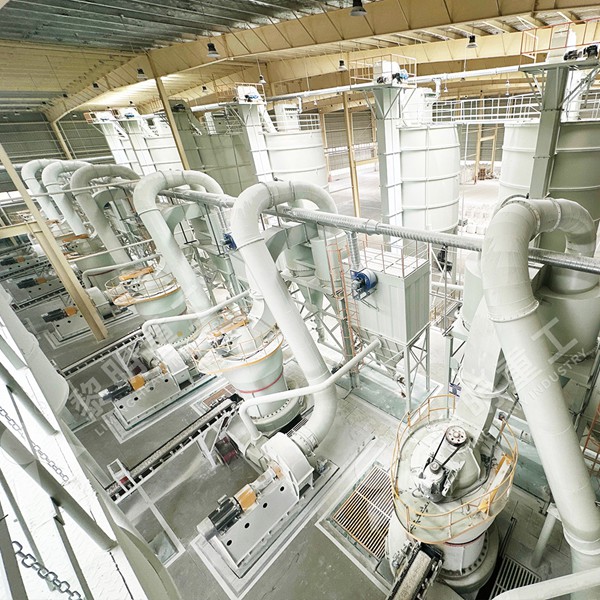
Moving to the section dedicated to medium-speed grinding, the MTW European Type Trapezium Mill stood out. As an upgrade over traditional Raymond and pendulum mills, it embodies patented technology focused on stability and environmental compliance. The working principle was demonstrated via a full system mock-up, including jaw crusher, vibrating feeder, and pulse dust collector. The closed-loop airflow system, where materials are ground between rings and rollers and then classified by a separator, ensures minimal dust emission and high powder collection efficiency. This mill, with a capacity range of 3-55 TPH, is engineered for producing fine limestone powders used in plastics, paints, and industrial fillers.
For ultra-fine applications, the production of the MW Micro Powder Mill was particularly impressive. This mill, which incorporates advanced Swedish grinding technology, achieves fineness levels up to d97 ≤ 5μm (3250 mesh). In its dedicated workshop, technicians calibrated the intricate system where motors drive turnplates and rollers against a raceway ring. The process, starting with a hammer crusher and elevator feeding system, highlights the precision required for superfine limestone powder used in high-value sectors like pharmaceuticals and advanced ceramics. The integrated pulse precipitator ensures the process adheres to stringent environmental standards, aligning with global trends towards greener manufacturing.
While the visit focused on limestone, the versatility of LIMING's portfolio was evident. The Raymond Mill line, a workhorse for processing non-explosive materials under 7 Mohs hardness, and the robust Ball Mill for general ore and material milling, were also in various stages of assembly and testing. Each product line follows a rigorous quality control protocol, from material sourcing and casting of heavy-duty components to dynamic balancing tests and final performance verification.
The research and development center was the final stop. Here, engineers utilize advanced simulation software and pilot-scale test beds to optimize grinding parameters, wear resistance of components, and system integration for specific customer requirements. This relentless focus on R&D, coupled with a modern joint-stock corporate structure that tightly integrates research, manufacturing, and sales, explains the company's enduring market leadership. It’s not merely about building machines; it’s about delivering reliable, efficient, and sustainable grinding solutions that enhance the productivity of their clients' operations worldwide.
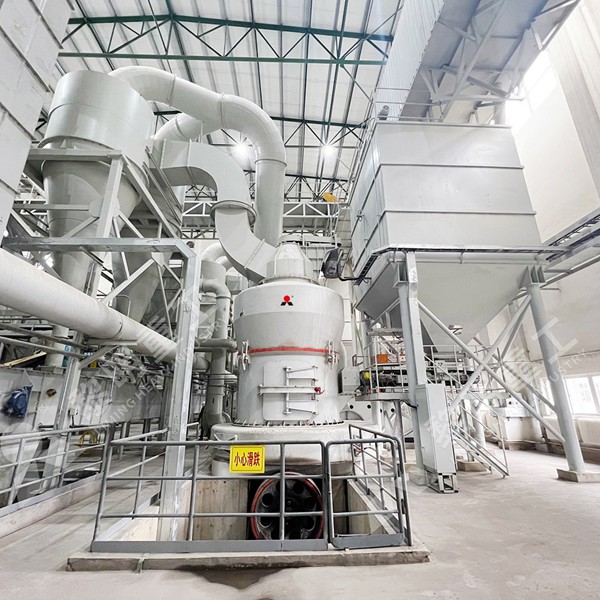
In conclusion, a factory visit to LIMING HEAVY INDUSTRY transcends a simple equipment inspection. It is an immersion into a culture of scientific management, precision engineering, and forward-looking innovation. Their limestone grinding equipment, from high-capacity vertical mills to ultra-fine micro powder systems, is built with a clear understanding of industrial challenges, ensuring reliability, energy efficiency, and environmental responsibility—cornerstones for the future of mineral processing.
Frequently Asked Questions (FAQs)
- What is the primary advantage of the LM Vertical Roller Mill for large-scale limestone grinding?
Its key advantage is the integration of drying, grinding, classification, and conveying into one automated system, offering high throughput (up to 400 T/H), significant energy savings, and consistent product quality, making it ideal for power plant desulfurization and large mineral processing plants. - How does the MTW European Type Trapezium Mill improve upon traditional Raymond mill technology?
It incorporates patented technological upgrades that enhance stability, increase productivity, and improve energy efficiency. Its closed-loop system with an efficient separator and pulse dust collector ensures higher fineness control and better environmental performance. - What fineness range can be achieved with the MW Micro Powder Mill for specialty limestone products?
The MW Micro Powder Mill is capable of producing superfine powders with a fineness adjustable between 325 mesh to 3250 mesh, achieving a final product size up to d97 ≤ 5μm, which is essential for high-value applications in industries like coatings and advanced materials. - Can these grinding systems handle materials other than limestone?
Absolutely. While optimized for limestone, the equipment is designed for a broad spectrum of non-metallic minerals, coal, slag, gypsum, and various ores. The application lists include cement, chemicals, metallurgy, and power generation, highlighting their versatility. - What measures are taken to ensure the environmental friendliness of the grinding systems?
Systems are equipped with integrated pulse-jet dust collectors that meet national and international environmental standards. Designs emphasize closed-loop airflow, reduced noise, and energy-efficient operation, minimizing the overall ecological footprint of the grinding process.


