Published: October 26, 2023
In the demanding world of mineral processing, achieving a fine, consistent grind for materials like limestone without compromising on operational costs is a universal challenge. For companies seeking a reliable, proven, and cost-effective solution, the Raymond Mill remains an industry cornerstone. LIMING HEAVY INDUSTRY CO., LTD., with over three decades of engineering excellence, has refined this classic technology to deliver a limestone Raymond mill that stands out for its competitive operational value, robust construction, and adaptability. This article explores how our mill's design philosophy, centered on durability, energy efficiency, and low maintenance, translates into long-term savings and superior performance for your grinding operations, making it an intelligent investment for processing non-metallic minerals.
Since its founding in 1987, LIMING HEAVY INDUSTRY has grown from a domestic machinery manufacturer into a global leader, guided by a steadfast commitment to scientific management, precision manufacturing, and continuous innovation. Our sprawling production facilities, encompassing over 147,000 square meters in Zhengzhou's HI-TECH Industry Development Zone and Shangjie Industry Park, are the birthplaces of heavy-duty grinding and crushing equipment. We persist in a strategy where scientific research and product competitiveness are inextricably linked. By focusing on technological frontiers and leveraging a mature R&D team, we develop solutions that are not just advanced but also pragmatically designed to enhance our clients' profitability. Our Raymond Mill for limestone is a prime example of this philosophy in action.
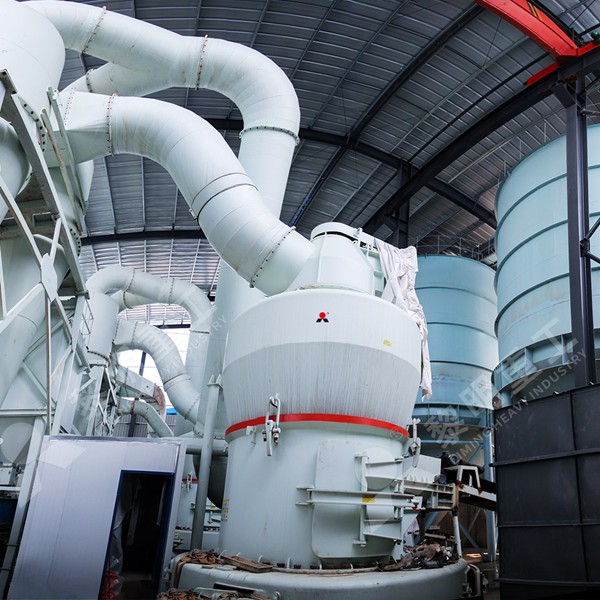
The classic Raymond Mill design is revered for its simplicity and effectiveness. At its core, it is engineered for processing non-flammable, non-explosive materials with a Mohs hardness under 7 and humidity below 6%, making limestone an ideal feedstock. Our mill grinds materials through the relentless action of grinding rollers against a stationary grinding ring. The crushed powder is then carried by an air stream to a classifier. Here, a critical separation occurs: oversized particles are rejected and returned for further grinding, while perfectly sized product passes through. This closed-circuit system ensures precise particle size control, with fineness adjustable between 44μm (325 mesh) and 613μm. For limestone destined for applications in construction, agriculture, or as a filler, this consistency is paramount.
Where our Raymond Mill establishes its competitive edge is in its meticulous engineering for operational economy. Every component, from the heavy-duty mainframe and forged grinding rollers to the high-efficiency classifier and cyclone collector, is built for longevity. Reduced wear part replacement frequency directly lowers long-term costs. Furthermore, the system's aerodynamic flow path is optimized to minimize pressure drop, which reduces the energy required by the driving blower. Compared to some simpler or more rudimentary grinding systems, this attention to detail in airflow dynamics results in significant power savings over thousands of hours of operation. The mill's integrated design also simplifies layout and reduces the footprint required for installation.
Versatility is another key strength. While optimized for limestone, our Raymond Mill is a capable workhorse for a range of non-metallic minerals, including gypsum, talc, calcite, and marble. This makes it a strategic asset for operations that process multiple materials. The system supports capacities ranging from approximately 1.2 to 4.5 tons per hour, offering a scalable solution for small to medium-scale production lines. Its reliability ensures continuous operation, which is essential for meeting tight production schedules and maintaining supply chain commitments.
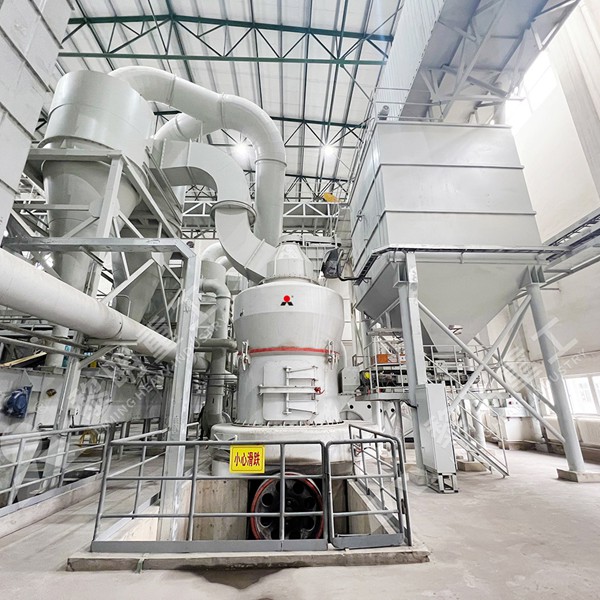
We understand that a mill is part of a larger ecosystem. Therefore, we offer comprehensive support, from initial consultation and system design to installation guidance and after-sales service. Our technical team can advise on the optimal configuration to integrate the Raymond Mill with necessary auxiliary equipment like jaw crushers for primary size reduction, vibrating feeders, and dust collection systems, ensuring a cohesive and efficient production line that complies with environmental standards.
In conclusion, the competitive price proposition of a LIMING Raymond Mill for limestone is not merely about its initial acquisition cost. It is a function of its durable construction, energy-efficient operation, low maintenance demands, and proven grinding performance. It represents a synthesis of traditional grinding reliability and modern manufacturing precision. For businesses looking to establish or upgrade their mineral processing capabilities with a focus on lifecycle value and consistent output quality, this mill offers a compelling and intelligent solution backed by a company with a 30-year legacy of industrial leadership.
Frequently Asked Questions (FAQs)
- What is the typical fineness range achievable for limestone with your Raymond Mill?
The mill can produce a finished powder with a fineness ranging from 44 microns (approximately 325 mesh) up to 613 microns. The desired fineness can be adjusted via the built-in classifier to meet specific application requirements. - Besides limestone, what other materials is this mill suitable for?
It is excellent for grinding various non-flammable, non-explosive materials with Mohs hardness below 7, such as gypsum, calcite, potash feldspar, talc, marble, and other similar non-metallic minerals. - How does the mill system handle dust and ensure environmental compliance?
The system operates as a negative pressure closed circuit. It is typically equipped with a high-efficiency pulse dust collector or cyclone collector, which captures airborne particles, ensuring clean operation and compliance with standard environmental regulations. - What are the main factors influencing the capacity of the Raymond Mill?
Capacity depends on the material's hardness, humidity, required fineness, and feed size. Ensuring the feedstock is properly crushed to the recommended input size (15-25mm) and has low moisture content is crucial for achieving optimal throughput. - What kind of after-sales support does LIMING HEAVY INDUSTRY provide?
We provide comprehensive support including installation supervision, operational training, detailed technical documentation, and a global network for spare parts supply and maintenance services to ensure long-term, trouble-free operation.


