Published: October 26, 2023
In the demanding world of mineral processing, achieving fine limestone powder with high efficiency, consistent quality, and minimal environmental impact is paramount. For operations prioritizing a quieter, cleaner, and more controlled milling environment, the Low Noise Raymond Mill from LIMING HEAVY INDUSTRY represents a significant technological advancement. This specialized grinding solution combines decades of engineering expertise with modern innovations to deliver superior performance in limestone pulverization, specifically engineered to mitigate operational noise while maintaining high throughput and precise fineness control from 613μm to 44μm. It stands as an ideal choice for applications ranging from power plant desulfurization and heavy calcium carbonate production to the broader construction and chemical industries, where sustainable and neighbor-friendly operations are increasingly critical.
Founded in 1987, LIMING HEAVY INDUSTRY CO., LTD. has built its reputation on the research, manufacturing, and sales of large and medium-sized crushing and grinding equipment. With headquarters spanning 80,000 m² in Zhengzhou's HI-TECH Industry Development Zone and an additional 67,000 m² workshop, the company's growth over three decades is rooted in a steadfast commitment to modern scientific management, precision manufacturing, and continuous innovation. This corporate philosophy of "scientific research tackling key problems" and reliance on a mature R&D team ensures that every product, including the Raymond Mill series, is at the technological forefront, designed to improve the overall competitiveness and capability of our clients' operations.
The core challenge in traditional limestone powder production often involves balancing high grinding efficiency with environmental considerations, particularly noise pollution and dust emission. Our Low Noise Raymond Mill addresses this directly. Its design incorporates advanced damping materials, optimized gear transmission systems, and an enclosed grinding chamber that significantly reduces sound levels compared to conventional mills. This is not merely an add-on feature but an integral part of the mill's architecture, ensuring that noise reduction does not come at the expense of durability or power.
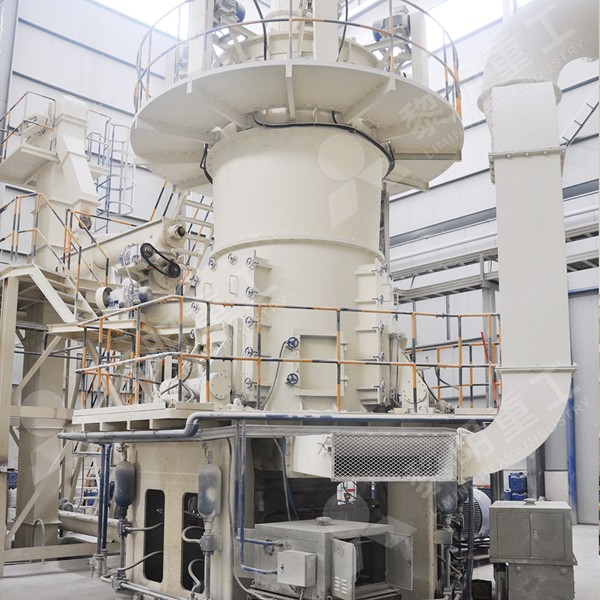
The working principle remains robust and proven. The system, comprising the mill, separator, air blower, crusher, feeder, and pulse dust collector, forms a highly efficient closed-circuit loop. Large limestone lumps are first reduced by a jaw crusher and then evenly fed into the grinding chamber. Here, the materials are ground between the grinding roller and the fixed ring. The ground powder is carried upward by the air flow to the classifier, where oversized particles are separated and returned for regrinding, while the qualified fine powder is collected as the final product. This closed-loop system, paired with a high-efficiency pulse dust collector, ensures that the entire process is not only quiet but also exceptionally clean, with dust emissions meeting stringent international environmental standards.
What sets this mill apart for limestone processing is its specific optimization for non-flammable, non-explosive materials with Mohs hardness under 7 and humidity less than 6%—a perfect match for limestone characteristics. The adjustable fineness allows operators to produce everything from coarse fillers to finer powders for specialized applications like PVC compounding or paper coating, all with remarkable consistency. The integration of automatic electric control systems further enhances operational stability, reducing manual intervention and the potential for human error, which contributes to both safety and product uniformity.
Beyond the immediate benefits of low noise and high efficiency, this Raymond Mill is a testament to LIMING HEAVY INDUSTRY's dedication to sustainable industrial development. The reduced noise footprint improves workplace conditions and facilitates compliance with community and regulatory noise ordinances, allowing plants to operate closer to sensitive areas. Furthermore, the system's energy-efficient design and minimal waste output align with global trends towards greener manufacturing processes. For companies looking to modernize their mineral processing lines, investing in such technology is a step towards future-proofing their operations.
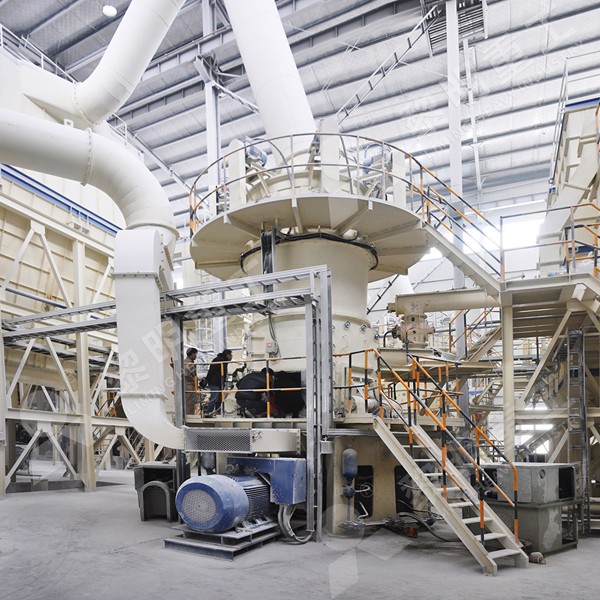
In conclusion, the Low Noise Limestone Powder Raymond Mill is more than just a piece of machinery; it is a comprehensive solution engineered for the modern era. It embodies LIMING HEAVY INDUSTRY's core mission of leveraging scientific research and technological progress to solve real-world industrial challenges. By delivering exceptional grinding performance within a quieter, cleaner, and more automated package, it empowers businesses in the non-metallic mineral sector to achieve their production goals while responsibly managing their environmental and social impact.
Frequently Asked Questions (FAQ)
1. What is the primary application of this Low Noise Raymond Mill?
It is primarily designed for grinding non-flammable and non-explosive materials like limestone, calcium carbonate, and gypsum into fine powder (613μm to 44μm), widely used in power plant desulfurization, construction materials, chemicals, and mining.
2. How is the 'low noise' feature achieved in this mill?
The low noise operation is achieved through a combination of engineered solutions including vibration-damping foundations, sound-insulating materials on the housing, precision-balanced rotating assemblies, and an optimized, fully enclosed grinding system that contains operational sound.
3. What is the typical capacity range for processing limestone?
The capacity varies based on desired fineness and material characteristics, but our Raymond Mill series for such applications typically offers a throughput range of 1.2 to 4.5 tons per hour.
4. How does the system control dust and ensure environmental protection?
The mill operates as a negative-pressure closed-circuit system. It is integrally equipped with a high-efficiency pulse jet bag dust collector, which captures over 99.9% of airborne particles, ensuring emissions comply with national environmental protection standards.
5. Can the fineness of the final powder be adjusted during operation?
Yes, the fineness can be precisely and steplessly adjusted between 613μm and 44μm by modifying the speed of the integrated classifier. This allows for quick changes in product specification without stopping the mill.


